Realistic Online Clothing Business Ideas for Beginners
Did you know that up to 80% of new e-commerce apparel stores shut down within their first 18 months? The main culprit isn’t a lack of fashion sense; it’s because founders skip one crucial step: they overinvest thousands of dollars into physical inventory before ever proving there is a demand for their designs.
If you are looking for online clothing business ideas that won’t require a second mortgage to start, you are in the right place. Transitioning into the fashion industry doesn’t require massive warehouse space anymore. Whether your ultimate goal is to build a reliable side hustle, generate passive income, or achieve total financial freedom, success starts with choosing a beginner-friendly model. In this comprehensive guide, we will break down the most accessible ways to start a digital apparel brand from your laptop, minimize your financial risk, and start generating real revenue.
What You’ll Need to Get Started
The digital economy has completely democratized the fashion industry. You no longer need bulk manufacturing connections to launch a brand. However, executing these online clothing business ideas requires a specific, low-cost toolkit.
Required Tools & Platforms:
- E-Commerce Platform: A digital storefront like Shopify, WooCommerce (for WordPress), or an Etsy seller account.
- Design & Sourcing Software: Canva Pro or Adobe Illustrator for creating designs; Printful or Printify for sourcing on-demand apparel.
- Marketing Infrastructure: A professional email address, dedicated social media accounts (Instagram/TikTok), and basic accounting software.
Initial Investment Breakdown:
- Domain & Hosting: $15–$50/year.
- Platform Fees: Shopify starts around $39/month, while Etsy charges $0.20 per listing.
- Sample Products: $50–$100 to order and test the quality of your own products before selling to customers.
Skill Requirements & Free Alternatives: You do not need a degree in fashion design. Basic graphic design skills and digital marketing knowledge are key. If you are on a strict $0 budget, skip Shopify and launch entirely on a free-to-list marketplace like Depop or Poshmark to validate your style first.
Want a tastier portfolio? Get the recipe for success with these market-tested strategies and share your own financial creations!
From Side Hustle to Full-Time: How I Replaced My 9-5 Income Online
How to Start a Profitable Blog in 2026: A Beginner’s Blueprint
Affiliate Marketing for Beginners: How to Earn Your First $1,000
The 5 Most Profitable Online Business Niches That Will Transform Your Financial Future This Year
How to Start a Blog and Make Money: The Ultimate Beginner’s Blueprint for 2026
Dropshipping vs. E-commerce: Which Online Business Model is Right for You?
How to Build a Niche Website from Scratch and Generate Passive Income Through Affiliate Marketing
Time Investment
Treating your new apparel store like a legitimate business requires an upfront time investment, though it allows you to eventually work from home on your own schedule.
- Setup Time Required: 20 to 30 hours to design your first batch of products, set up your storefront, and optimize your product listings.
- Daily/Weekly Time Commitment: 10 to 15 hours per week dedicated to marketing, customer service, and creating social media content.
- Timeline to First Earnings: Most beginners see their first consistent sales in 60-90 days with focused effort.
- The Reality Check: Unlike traditional income methods where you get paid hourly from day one, an online business requires upfront sweat equity. However, the long-term payoff is a scalable asset that can generate digital income while you sleep.
Step-by-Step Implementation Guide
Step 1: Choose Your Niche and Target Audience
Do not try to sell generic t-shirts to “everyone.” The most profitable online earnings come from highly specific niches. Are you targeting eco-conscious yogis? Minimalist streetwear enthusiasts? Dog moms?
- Pro Tip: Use tools like Google Trends or TikTok search to find rising micro-trends before they hit mainstream retailers.
Step 2: Select Your Production Model
Choose how you will fulfill orders. If you want zero inventory, choose Print-on-Demand (POD). If you want high margins and sustainability, choose thrift flipping (upcycling vintage clothes).
- Common Question: “Do I have to ship the items myself?” If you use POD or dropshipping, your supplier handles shipping. If you thrift flip, you will be packing boxes.
Step 3: Create Your Digital Storefront
Set up your shop on Shopify or Etsy. Focus heavily on clean, mobile-responsive design.
- Insider Trick: Ensure your website navigation is effortless. A confused buyer never buys. Use clear categories (e.g., Hoodies, Tees, Accessories).
Step 4: Design and Source Your Products
If using POD, upload your designs to a partner like Printful and sync them to your store. Order physical samples to test the fabric quality and print durability. Never sell a garment you wouldn’t wear yourself.
Step 5: Launch and Drive Targeted Traffic
An empty store makes no money. Launch with a strong social media presence. Use TikTok and Instagram Reels to show the behind-the-scenes of your design process. Authentic storytelling converts much better than generic product photos.
Income Potential & Earnings Breakdown
Fashion is a multi-trillion-dollar industry. Understanding your potential profit margins is key to managing your expectations and scaling your revenue streams.
- Beginner Level (Months 1-3): $100 to $500/month. You are testing designs, finding your audience, and covering basic software costs.
- Intermediate Level (Months 4-12): $1,000 to $3,000/month. You have consistent traffic, repeat customers, and optimized marketing campaigns.
- Advanced Level (1-2+ Years): $5,000 to $10,000+/month. You are leveraging paid ads, influencer partnerships, and potentially buying in bulk to increase margins.
Payment Structures: Earnings are typically processed through Stripe, PayPal, or Shopify Payments, depositing directly into your business bank account within 2-3 business days.
Alternative Methods & Variations
If launching a traditional brand feels overwhelming, consider these niche-specific variations of online clothing business ideas:
- The Print-on-Demand (POD) Route: You upload designs, and a third-party prints and ships the apparel only when a customer orders. Incredible for cash flow, though profit margins are lower (usually 15-25%).
- Thrift Flipping & Upcycling: Buy vintage clothing from local thrift stores, alter or embroider them, and resell them online for a premium. This model boasts massive profit margins (often 300%+) and appeals to eco-conscious buyers.
- Selling Digital Sewing Patterns: If you are a skilled seamstress, create digital PDF patterns. This is pure passive income. Create the product once and sell it infinitely with a 100% profit margin.
- Boutique Dropshipping: Curate unbranded clothing from overseas suppliers. This requires higher customer service management due to longer shipping times but offers a wider variety of styles.
Best Practices & Optimization Tips
To maximize your income potential and stand out in a crowded market, employ these advanced monetization strategies:
- Master SEO Product Descriptions: Don’t just label an item “Blue Shirt.” Use descriptive keywords like “Oversized Vintage Wash Blue Denim Button-Down.”
- Leverage User-Generated Content (UGC): Encourage your first customers to post photos wearing your clothes in exchange for a discount code. Social proof is the highest-converting marketing asset.
- Implement Email Marketing: Use Klaviyo or Mailchimp to capture emails. Send abandoned cart reminders and exclusive VIP drops. Email marketing is a massive driver of backend digital income.
Common Mistakes to Avoid
In the apparel world, small mistakes can eat up your capital quickly. Keep these honest warnings in mind:
- Ignoring Shipping Costs: Many beginners fail because they miscalculate shipping. Always weigh your products and integrate accurate shipping calculators at checkout to avoid eating those costs.
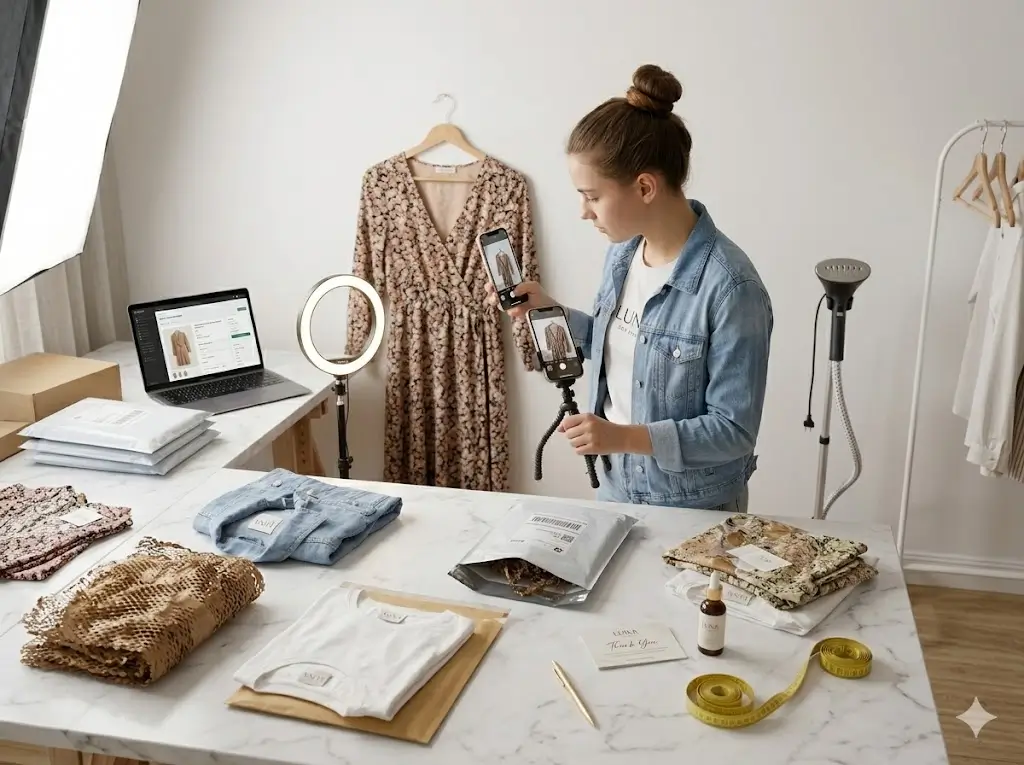
- Poor Product Photography: In online fashion, the photo is the product. Blurry, poorly lit mockups will kill your conversion rates. Invest in good lighting or high-quality digital mockups.
- Chasing Every Trend: Don’t pivot your entire brand identity just because neon green is trending this week. Stay true to your core niche to build brand loyalty.
Long-Term Sustainability & Growth
Turning a side hustle into a sustainable, long-term business requires strategic planning.
- Reinvestment Strategies: For the first six months, take zero profit. Reinvest every dollar back into better designs, sampling, and marketing to fuel growth.
- Diversification: Once your apparel is selling well, expand your product lines naturally. Add complementary accessories like tote bags or hats to increase your Average Order Value (AOV).
- Automation Opportunities: As your volume grows, automate your customer service with AI chatbots for basic queries (like sizing charts or shipping times), allowing you to focus on high-level design and brand partnerships.
Conclusion
Breaking into the fashion industry has never been more accessible. By selecting low-risk online clothing business ideas like print-on-demand or upcycling, you can validate your concepts, build a loyal audience, and establish a highly profitable side hustle. Remember, the key is to start lean, focus heavily on your specific niche, and prioritize high-quality marketing over massive inventory.
Ready to start your journey? Drop your questions in the comments below! Let us know which clothing business model you want to try, subscribe for weekly monetization strategies, and share your progress in our community!
FAQs
How much money can I realistically make selling clothes online?
Most dedicated beginners can scale to $500–$1,000 a month in profit within their first 3 to 6 months. Long-term income potential is uncapped, with successful independent brands frequently generating five or six figures annually.
Do I need prior experience in fashion design?
No prior fashion experience is required. For models like Print-on-Demand, basic graphic design skills (or the ability to hire a freelance designer) and an understanding of digital marketing are much more important.
What’s the initial investment to start?
You can start for as little as $50 to $100. This covers a domain name, basic e-commerce platform fees (like Shopify or Etsy), and ordering a few physical samples to test quality.
How long until I see results?
If you are consistently creating content and optimizing your store, most beginners see their first sales within 60 to 90 days. Building a recognizable, trusted brand typically takes 6 to 12 months.
Is the Print-on-Demand method still working in 2026?
Is the Print-on-Demand method still working in 2026? Yes, but the barrier to entry is higher in terms of quality. To succeed in 2026, you cannot just slap a generic quote on a standard t-shirt. You need unique, high-quality designs and a strongly defined niche audience.
What are the risks involved with an online clothing store?
The biggest risk is ordering bulk inventory before proving there is a demand, which can lead to thousands of dollars in unsold stock. Using low-inventory models like Print-on-Demand or dropshipping eliminates this financial risk almost entirely.