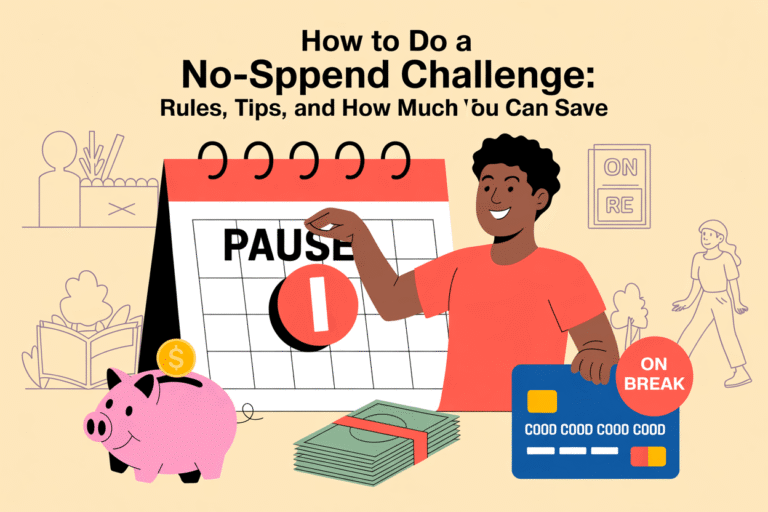

Monthly Money Saving Challenge for Beginners: Your Gateway to Financial Freedom
Did you know that 67% of aspiring online entrepreneurs fail simply because they run out of seed capital before their business can take off? Many people dream of achieving financial freedom, quitting their 9-to-5, and building a lucrative work from home lifestyle. Yet, they skip the one crucial foundational step: mastering the money they already have.
Before you can build robust passive income or launch a successful side hustle, you need capital. That is exactly where a structured Monthly Money Saving Challenge comes in. By committing to a focused, 30-day financial reset, you can rapidly accumulate the initial funds needed to kickstart your journey toward true wealth.
This isn’t just about depriving yourself of daily lattes; it’s about treating your personal finances like a business. By expanding your personal profit margins, you’ll free up the cash required to invest in courses, inventory, or platforms that generate real online earnings. Let’s dive into how you can transform your financial trajectory in just one month.
What You’ll Need to Get Started
How much could YOU save by following these steps?
Enter your current estimated monthly spending below to generate your personalized 30-day challenge projection.
You don’t need a degree in finance to succeed at a Monthly Money Saving Challenge. In fact, starting requires zero monetary investment. Here is your required toolkit to get started:
- A Financial Tracking Tool: * Free Alternative: Google Sheets, Excel, or a simple pen-and-paper ledger.
- Premium Option: Budgeting apps like YNAB (You Need A Budget) or Monarch Money ($10-$15/month).
- A Dedicated Savings Account: A High-Yield Savings Account (HYSA) where you can safely park your saved cash away from your primary checking account.
- Your Last 30 Days of Bank Statements: Crucial for establishing your financial baseline.
- Skill Requirements: Basic addition and subtraction, a willingness to confront your spending habits, and the discipline to stick to the plan for 30 days.
Love watching your savings grow? Check out these top saving strategies and get inspired to share your own smart money habits!
How to Save Money on Electricity: 15 Surprisingly Simple Tips That Could Cut Your Bills in Half
Best Cashback Apps: How I Earn Over $500 Back a Year on Normal Shopping
How to Lower Your Bills: The Ultimate Guide to Negotiating Your Cable, Phone, and Insurance Rates
Master Your No Spend Challenge: The Ultimate Guide to Rules, Tips, and Incredible Savings in 2025
50 Easy Ways to Save Money on Groceries Without Coupons: Transform Your Food Budget Today

Time Investment
Building a platform for digital income can take months or years, but optimizing your current budget yields almost immediate returns.
- Setup Time Required: Expect to spend 1 to 2 hours on your first day to review your past statements and establish your spending limits.
- Daily/Weekly Time Commitment: 5 to 10 minutes a day to log your expenses, plus a 15-minute weekly review to ensure you’re on track.
- Timeline to First Results: Immediate. You will literally see cash remain in your account by the end of week one. Most beginners see transformative results in 30 days, building habits that last a lifetime.
- Note: Compared to traditional income methods like asking for a raise, this challenge is the fastest, most controllable way to increase your available cash flow.
Step-by-Step Implementation Guide
Follow these actionable steps to execute your Monthly Money Saving Challenge effectively.
1. Establish Your Financial Baseline
Before you can save, you need to know where your money is going. Print out your last month’s bank and credit card statements. Highlight every non-essential expense (dining out, entertainment, impulse buys). This total is your absolute maximum savings potential for the month.
2. Define a Crystal-Clear Goal
Don’t just say, “I want to save money.” Say, “I want to save $500 this month to fund the web hosting and initial marketing for my new side hustle.” Giving your money a specific purpose drastically increases your success rate.
3. Implement the ‘Cut the Fat’ Strategy
During this 30-day challenge, ruthless prioritization is key.
- Pro Tip: Pause all non-essential subscriptions for one month. You can always restart them on day 31, but you’ll likely find you didn’t miss them at all.
- Insider Trick: Commit to a “pantry challenge” where you primarily cook meals using ingredients already in your home, cutting your grocery bill in half.
4. Automate the Transfer
Treat your savings goal like a mandatory bill. On day one of your Monthly Money Saving Challenge, manually transfer your target savings amount into your separate High-Yield Savings Account. If the money isn’t in your checking account, you can’t spend it.
5. Track Weekly Progress
Schedule a 15-minute “money date” every Sunday to review your spending. If you overspent in one category (like gas), adjust another category (like entertainment) to stay on track.
Income Potential & Earnings Breakdown
While a money saving challenge doesn’t generate “new” income, it directly increases your income potential by retaining cash that would have otherwise vanished. Here is a realistic breakdown of what a beginner can “earn back” during a 30-day challenge:
| Savings Category | Estimated Monthly Savings (Beginner) | Potential Annual Impact |
|---|---|---|
| Dining Out / Coffee | $150 – $300 | $1,800 – $3,600 |
| Paused Subscriptions | $40 – $100 | $480 – $1,200 |
| Impulse Shopping Bans | $100 – $250 | $1,200 – $3,000 |
| Grocery Optimization | $100 – $200 | $1,200 – $2,400 |
| Total Retained Capital | $390 – $850/mo | **$4,680 – $10,200/year** |
Disclaimer: Individual savings will vary based on your starting salary, geographical location, and prior spending habits. This table is for illustrative purposes only.
Alternative Methods & Variations
If a strict 30-day challenge feels overwhelming, try these proven variations to free up cash for your monetization strategies:
- The No-Spend Weekend: Commit to zero non-essential spending from Friday night to Monday morning. Do this four times a month.
- The 52-Week Challenge: Save $1 week one, $2 week two, up to $52 in week 52. It’s a lower-investment alternative that builds massive momentum over a year.
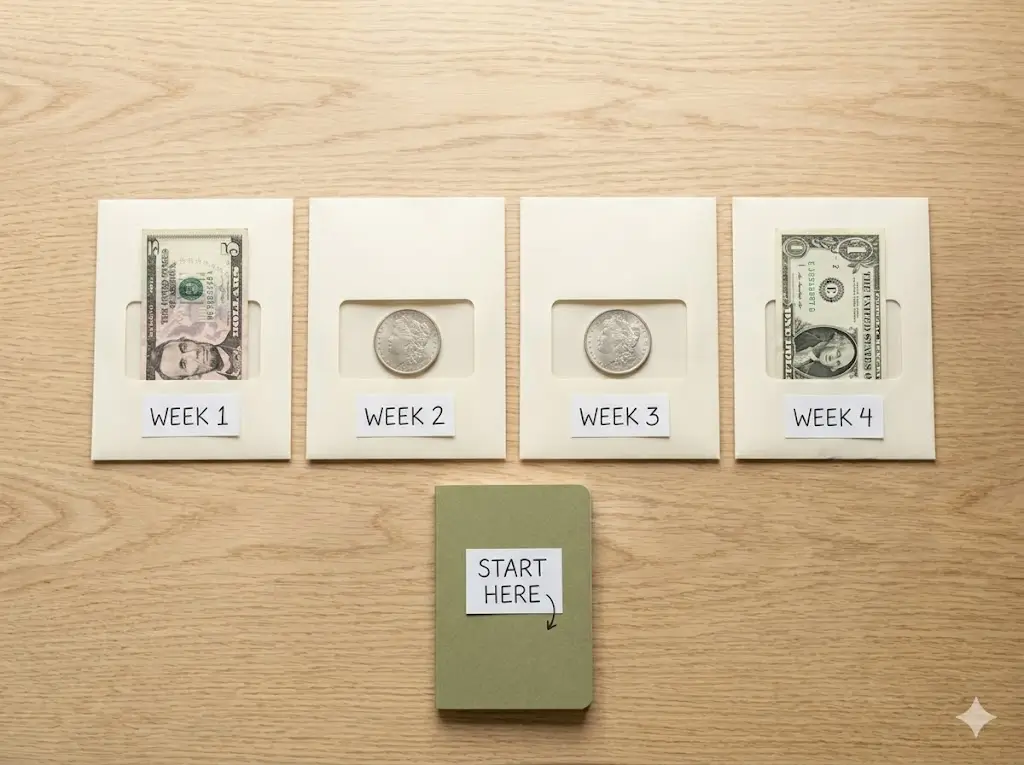
- The Cash Envelope System: Withdraw your monthly “fun money” in cash. Once the envelope is empty, you are done spending for the month. No exceptions.
Best Practices & Optimization Tips
To guarantee success and maximize the funds you can redirect into new revenue streams, keep these optimization tips in mind:
- Use Cash-Back Apps: For the essentials you do buy (like groceries), use apps like Rakuten, Ibotta, or Fetch Rewards to earn micro-rebates.
- Gamify the Process: Join online forums or Facebook groups where people post their daily challenge updates. Community accountability reduces failure rates by up to 50%.
- Sell the Clutter: Boost your 30-day challenge results by selling unused items around your house on eBay or Facebook Marketplace. Add these immediate online earnings directly to your savings goal.
Common Mistakes to Avoid
Even highly motivated beginners stumble. Avoid these common pitfalls to ensure you complete the challenge:
- Frugal Fatigue: Cutting out everything you love (like your favorite $3 coffee and your Netflix and your gym) all at once often leads to a massive spending binge on day 15. Allow yourself one small, affordable luxury.
- Not Having a “Why”: Saving just to save is boring. Saving to fund your path to financial freedom is deeply motivating.
- Ignoring Small Leaks: Brushing off a $5 daily expense because “it’s just five bucks” will drain $150 from your monthly potential. Track every single penny.
Long-Term Sustainability & Growth
Completing a 30-day challenge is a fantastic achievement, but it is merely the starting line. Once the month is over, the goal is long-term sustainability.
Take the $500 you saved and deploy smart reinvestment strategies. Don’t let it just sit there—put it to work. Buy a domain name, invest in dividend stocks, fund a small e-commerce store, or take an upskilling course. By continuously running a Monthly Money Saving Challenge a few times a year, you create a systematic loop of freeing up capital and investing it into assets that generate sustainable passive income. Future-proof your finances by transitioning from a “saver” to an “investor.”
Conclusion
Taking on a Monthly Money Saving Challenge is the most empowering first step you can take toward taking control of your financial destiny. By establishing a baseline, cutting unnecessary expenses, and automating your savings, you are actively building the foundation required for lasting wealth.
Remember, creating a successful business or securing early retirement isn’t just about making more money—it’s about maximizing what you keep.
Ready to start your journey? What is your target savings goal for this month? Drop your numbers and questions in the comments below! Don’t forget to subscribe for weekly money-making strategies and share your progress in our community.
FAQs
How much money can I realistically save in one month?
While it heavily depends on your income and current spending habits, most beginners realistically save between $300 and $800 during their first highly focused 30-day challenge by eliminating dining out, impulse buys, and unused subscriptions.
Do I need prior budgeting experience to start?
Not at all. This challenge is designed for complete beginners. If you can track your daily spending in a simple notebook or a free app, you have all the experience required.
What’s the initial investment for this challenge?
Zero dollars. The beauty of this method is that it requires absolutely no financial investment—only an investment of your time and discipline.
How long until I see results?
You will see results immediately. The very first day you choose to pack a lunch instead of spending $15 at a restaurant, you have generated a positive return for your challenge.
Is this method still working in the current economy?
Yes, it is arguably more important now than ever. With inflation impacting everyday expenses, intentionally auditing your spending is one of the most effective ways to maintain your purchasing power.
What are the risks involved?
There is zero financial risk in saving your own money. The only psychological risk is “frugal fatigue” if you restrict yourself too heavily, which is easily prevented by keeping your goals realistic and allowing minor, budgeted treats.
Your Feedback Informs Our Service
There are no reviews yet. Be the first one to write one.