
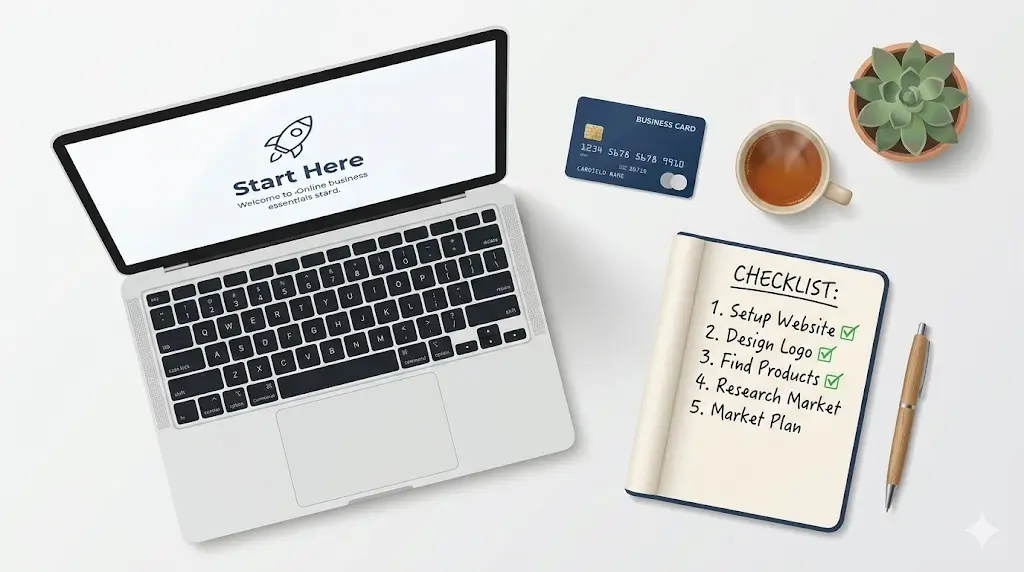
Starting a Small Online Business: A Simple Guide
Disclaimer: Earnings discussed in this article are estimates based on industry averages. Individual results will vary based on effort, market conditions, and strategy.
Introduction
Did you know that nearly 20% of traditional businesses fail within their first year, yet entrepreneurs who pivot to digital-first models are significantly more likely to find sustainable success? If you’re feeling overwhelmed by the thought of leaving the traditional 9-to-5 grind, you are not alone.
Starting a small online business is often portrayed as a fast track to overnight wealth, but the reality is much more grounded. It requires patience, strategic planning, and a willingness to learn. Whether you are looking to build a full-time digital income or simply want a reliable side hustle to work from home, establishing a proper foundation is the single most critical factor in your success. In this simple guide, we will cut through the noise, skip the “get-rich-quick” myths, and provide you with a data-driven blueprint to launch your digital venture successfully.
Quick Answer
Starting a small online business requires identifying a profitable niche, setting up a digital platform (like a website or social storefront), and applying consistent marketing efforts. With an initial investment of under $100 and a commitment of 10-15 hours a week, most beginners can establish a foundation and start seeing realistic online earnings within 60 to 90 days.
What You’ll Need to Get Started for Starting a Small Online Business
You do not need a massive business loan or technical wizardry to launch your digital venture. Today’s landscape offers incredible, beginner-friendly tools to help you reach financial freedom. Here is your essential toolkit:
- A Domain Name & Hosting: This is your digital real estate. (Cost: $50–$100/year; Alternative: Free platforms like Medium or social media, though less customizable.)
- A Content Management System (CMS): WordPress is the industry standard for blogging and eCommerce. (Cost: Free software, requires hosting.)
- Email Marketing Software: Essential for building an audience. (Cost: Free up to 1,000 subscribers using tools like Mailchimp or ConvertKit.)
- Basic Design Tools: Canva for creating logos and social media graphics. (Cost: Free tier available.)
- Required Skills: Basic computer literacy, a willingness to learn SEO, and consistency. No advanced coding is necessary!
Time Investment
One of the biggest misconceptions about starting a small online business is the time required. While it offers flexibility, it is not “set-it-and-forget-it” in the beginning.
- Setup Time: 1 to 2 weeks to build your website, set up social profiles, and create your initial product or content strategy.
- Weekly Commitment: 10 to 15 hours per week. This is perfect for those building a side hustle alongside a full-time job.
- Timeline to First Earnings: Most beginners see their first tangible results in 60-90 days with consistent effort. Unlike traditional brick-and-mortar stores that take years to become profitable, digital income models can reach positive cash flow much faster.
Step-by-Step Implementation Guide
Follow this sequential roadmap to navigate the process of starting a small online business without feeling overwhelmed.
1. Identify Your Niche and Validate the Market
Don’t try to sell everything to everyone. Find a specific problem you can solve. Use free tools like Google Trends or AnswerThePublic to see what people are searching for.
- Pro Tip: Look for a crossover between your passions and high commercial intent. If people are already spending money in that space, there is room for you.
2. Establish Your Digital Assets
Register your domain name and set up your website. Keep the design clean, mobile-responsive, and fast-loading.
- Pro Tip: Choose a domain name that is easy to spell, memorable, and ends in “.com” whenever possible.
3. Implement Monetization Strategies
Decide how you will generate revenue. Will you sell physical products, offer digital courses, or use affiliate marketing to earn a commission?
- Pro Tip: Don’t rely on just one method. Creating multiple revenue streams (e.g., combining AdSense with affiliate links) protects your business from market fluctuations.
4. Create a Content and Marketing Plan
Content is how you attract customers without paying for ads. Start a blog related to your niche, or create helpful YouTube tutorials.
- Pro Tip: Optimize your content using SEO best practices. Target long-tail keywords that have lower competition but high buyer intent.

Income Potential & Earnings Breakdown
When evaluating the income potential of starting a small online business, it is crucial to remain realistic. Here is a general timeline of what you might expect when building passive income and active revenue streams:
| Business Stage | Estimated Monthly Earnings | Focus Area | Profit Margins |
|---|---|---|---|
| Months 1-3 | $0 – $100 | Audience building, SEO setup | Low (Reinvesting) |
| Months 4-6 | $100 – $1,000 | First sales, affiliate commissions | 30% – 50% |
| Months 6-12 | $1,000 – $3,000+ | Scaling traffic, product launches | 50% – 80% |
| Year 2+ | $5,000+ | Optimization, passive revenue | 70%+ (Digital goods) |
Data example: A recent survey of digital creators showed that those who sell digital products (like templates or eBooks) enjoy profit margins exceeding 80% compared to traditional retail.
Alternative Methods & Variations
If the traditional eCommerce or blogging route doesn’t appeal to you, there are numerous other ways to build digital income:
- Freelancing & Consulting: A low-investment side hustle where you trade skills (writing, coding, graphic design) for capital. Once you have cash flow, you can transition to passive models.
- Dropshipping: Sell physical products without holding inventory. This lowers your upfront costs but comes with slimmer profit margins.
- Digital Products: Create once, sell forever. Planners, Notion templates, and stock photography are excellent for generating passive income.
- The “No-Cost” Alternative: Start exclusively on YouTube or TikTok to build an audience organically, then funnel that audience to affiliate offers before ever buying a website.
Best Practices & Optimization Tips
To maximize your online earnings, efficiency is key. Implement these best practices:
- Capture Emails from Day One: Social media algorithms change, but you own your email list. Offer a free guide in exchange for email addresses.
- Focus on One Platform First: Trying to master SEO, Pinterest, YouTube, and Instagram simultaneously leads to burnout. Master one traffic source before expanding.
- Automate Where Possible: Use tools like Buffer for social media scheduling or Zapier to connect your apps. Time saved is money earned.
Common Mistakes to Avoid
When starting a small online business, avoiding pitfalls is just as important as doing the right things.
- The Perfection Trap: Spending three months tweaking a logo while creating zero content. Solution: Launch ugly. You can refine your branding as you grow.
- Ignoring SEO: Relying entirely on social media for traffic. Statistic: Organic search drives over 50% of all website traffic. If you aren’t optimizing for search engines, you are leaving money on the table.
- Giving Up Too Early: Over 90% of blogs are abandoned within the first six months. Success in the digital space compounds over time. Consistency beats intensity.
Long-Term Sustainability & Growth
Once you hit your first income milestones, the goal shifts from starting to scaling. To ensure your business survives long-term:
- Reinvest Your Profits: During your first year, aim to reinvest 20-30% of your earnings back into the business—whether that means hiring a freelance writer, buying better hosting, or running ads.
- Diversify Revenue Streams: If your income relies 100% on one affiliate program, a policy change could wipe you out overnight. Introduce your own products or additional services.
- Future-Proofing: Stay updated on industry trends, adapt to new technologies (like AI tools), and consistently survey your audience to ensure you are still solving their core problems.
Conclusion
Starting a small online business is a realistic, accessible pathway to building a flexible lifestyle and securing financial freedom. By choosing a clear niche, keeping your initial investments low, avoiding the trap of perfectionism, and consistently providing value, you set yourself up for long-term digital success.
Ready to start your journey? Drop your biggest roadblock or question in the comments below! Don’t forget to subscribe to our newsletter for weekly money-making strategies, and share this guide with a friend who is ready to build their own work-from-home empire.
FAQs about Starting a Small Online Business
How much money can I realistically make?
Earnings vary wildly. While some reach six figures within a few years, a realistic goal for a beginner dedicating 10-15 hours a week is to reach $500 to $1,000 a month within their first 6 to 12 months.
Do I need prior experience?
No prior experience is necessary. The internet is filled with free resources, tutorials, and communities. Willingness to learn digital marketing, basic tech setup, and customer service is more important than a formal business degree.
What’s the initial investment?
You can start a small online business for less than $100. This covers a domain name and a year of basic web hosting. Many promotional tools and social platforms are completely free to use.
How long until I see results?
If you are relying on organic traffic (SEO), it typically takes 60 to 90 days to start seeing consistent visitors and initial revenue. Paid advertising can yield faster results but requires a higher budget.
Is this method still working in the current year?
Yes. In fact, global eCommerce and digital product sales are growing annually. The tools are more accessible now than ever before; however, the emphasis today is on building genuine trust and authority rather than quick hacks.
What are the risks involved?
The financial risks are incredibly low compared to physical businesses. The primary risk is your time investment. You may spend months working on a project that doesn’t gain traction, which is why market validation in step one is crucial.
Your Feedback Informs Our Service
There are no reviews yet. Be the first one to write one.