Stock Market Investing Tips for Long-Term Success
Did you know that nearly 80% of active day traders eventually lose money, while long-term investors who simply track the S&P 500 have historically seen an average annual return of about 10% over decades? If you’re tired of trading hours for dollars and want to build true wealth, understanding how to make your money work for you is critical.
Stock market investing is often misunderstood as a chaotic gamble reserved for Wall Street insiders. In reality, it is one of the most reliable and accessible pathways to achieving financial freedom from the comfort of your home. Whether you are looking to create a reliable stream of passive income, build a lucrative side hustle researching assets, or simply grow your digital income over time, getting the basics right is your first step. In this guide, we will break down the strategies you need to approach the market with confidence and patience.
Disclaimer: The information provided in this article is for educational purposes only and does not constitute financial advice. All investments carry risks, and past performance is not indicative of future results. Individual income potential and returns will vary.
Quick Answer
Stock market investing involves buying shares of public companies or exchange-traded funds (ETFs) to build wealth over time. To get started, you need to open a reputable brokerage account, define your financial goals, start with as little as $10 using fractional shares, and consistently invest using a strategy like dollar-cost averaging.
What You’ll Need to Get Started
You don’t need a finance degree or millions of dollars to start generating online earnings through the stock market. Thanks to modern technology, building a digital income portfolio is incredibly accessible. Here is what you need:
- A Brokerage Account: Platforms like Fidelity, Charles Schwab, or Vanguard. (Cost: Free to open; many offer $0 commission trades.)
- Initial Capital: You can begin with as little as $10 to $50 using brokers that support fractional share investing.
- Research Tools: Free platforms like Yahoo Finance, Morningstar, or Finviz for basic company analysis.
- A Secure Bank Account: To link to your brokerage for seamless deposits and withdrawals.
- The Right Mindset: Patience is your most valuable asset. Beginner-friendly investing is about long-term growth, not overnight riches.
Time Investment
One of the greatest benefits of stock market investing is that it can easily be managed as a work from home endeavor alongside your primary career.
- Setup Time: Opening and funding a brokerage account usually takes 15 to 30 minutes.
- Ongoing Commitment: If you choose a passive index-fund strategy, you might spend just 1 to 2 hours per month reviewing your portfolio and making contributions.
- Timeline to First Earnings: While you might receive dividend payouts within 60-90 days, substantial capital appreciation takes years. Stock market investing is a marathon, not a sprint.
- Comparison: Unlike an active side hustle that requires constant daily labor, passive investing decouples your time from your revenue streams.

Step-by-Step Implementation Guide
Follow this actionable roadmap to begin your stock market investing journey safely and effectively.
Step 1: Open Your Brokerage Account
Choose a reputable broker that offers low or zero commission fees. Follow their online prompts to create your account, verify your identity, and link your primary bank account.
- Pro Tip: Look for brokers that offer “paper trading” (simulated investing with fake money) so you can practice navigating the platform before risking real cash.
Step 2: Determine Your Budget and Fund the Account
Decide how much you can comfortably invest without impacting your daily living expenses or emergency fund. Transfer this initial seed capital into your brokerage account.
- Insider Trick: Automate a monthly transfer from your checking account to your brokerage. Consistency is more important than the initial amount.
Step 3: Choose Your Investment Strategy
Decide whether you want to invest in individual stocks (higher risk, higher potential reward) or ETFs/Index Funds (broad diversification, lower risk). For most beginners, broad-market ETFs are the safest entry point.
Step 4: Execute Your First Trade
Search for the ticker symbol (e.g., VOO for the Vanguard S&P 500 ETF), select “Buy,” enter the dollar amount or number of shares you wish to purchase, and submit the order.
- Common Question: Should I use a Market or Limit order? For highly liquid ETFs during normal market hours, a Market order is fine. For individual stocks, use a Limit order to control the exact price you pay.

Income Potential & Earnings Breakdown
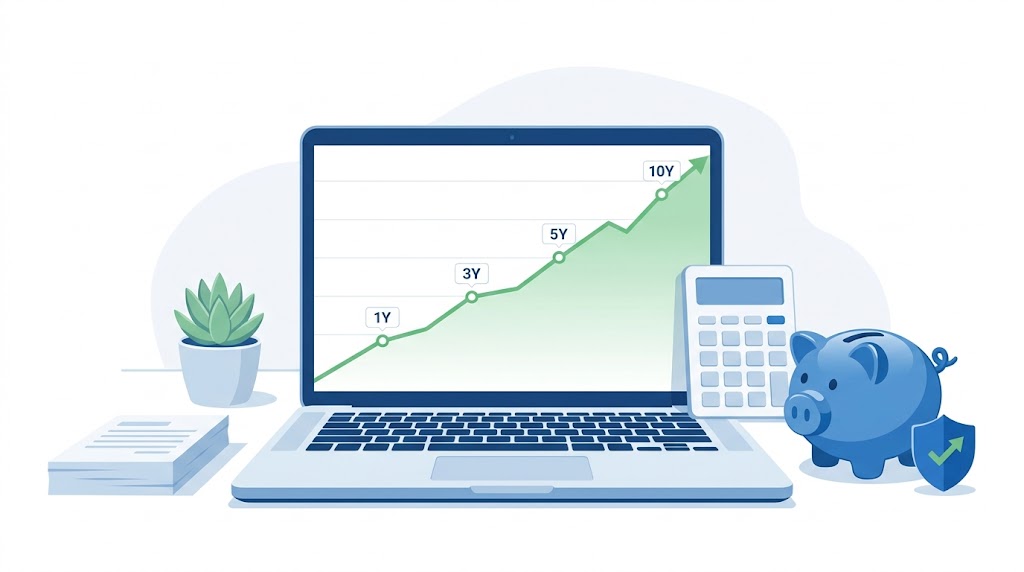
Understanding the income potential of your investments requires looking at both dividend payouts and long-term capital appreciation. Here is a realistic projection of how consistent contributions can grow, assuming a conservative 7% annual inflation-adjusted return:
| Monthly Investment | 10 Years | 20 Years | 30 Years |
|---|---|---|---|
| **$100 / month** | ~$17,300 | ~$49,000 | ~$113,000 |
| **$250 / month** | ~$43,000 | ~$122,000 | ~$283,000 |
| **$500 / month** | ~$86,000 | ~$245,000 | ~$566,000 |
Data Note: This table illustrates the power of compound interest. Your actual profit margins and total returns will fluctuate based on market volatility, but extending your timeline drastically reduces the probability of loss.
Ready for higher returns?
How to Use AI to Start an Online Business: Revolutionary Tools and Profitable Ideas for 2026
Starting a Pet Sitting Side Hustle: Your Complete Step-by-Step Guide to Landing Your First Client
How to Make Money Online Surveys: Your Complete Guide to Earning Extra Cash in 2026
15 Proven Side Hustles for Beginners to Make an Extra $1,000/Month in 2025
How I Made $2,000 Selling Printables on Etsy: Your Complete Step-by-Step Blueprint
7 Online Side Hustles You Can Start with Just Your Phone
Alternative Methods & Variations
If traditional stock picking or ETF investing feels overwhelming, consider these alternative approaches to optimize your monetization strategies:
- Robo-Advisors: Platforms like Betterment or Wealthfront automate your investments based on a questionnaire about your risk tolerance. It’s entirely hands-off.
- Dividend Investing: Focus specifically on companies that pay regular dividends. This is an excellent way to build predictable revenue streams that can act as a supplementary digital income.
- REITs (Real Estate Investment Trusts): A way to invest in real estate through the stock market without actually buying property. They generally offer high dividend yields.
- Employer-Sponsored Plans (401k/403b): A low-friction way to start investing directly from your paycheck, often with the added benefit of an employer match (which is essentially free money).
Best Practices & Optimization Tips
To maximize your stock market investing efficiency and safeguard your capital, adopt these professional strategies:
- Dollar-Cost Averaging (DCA): Invest a fixed amount of money at regular intervals, regardless of market conditions. This lowers the average cost per share over time.
- Utilize Tax-Advantaged Accounts: Before investing in a standard taxable account, max out your IRA or Roth IRA to shield your gains from heavy taxes.
- Keep Emotions in Check: The market will have red days. Avoid the urge to check your portfolio daily.
- Reinvest Dividends: Turn on DRIP (Dividend Reinvestment Plan) through your broker so that any cash dividends you earn automatically buy more shares, accelerating your compound growth.
Common Mistakes to Avoid
The path to financial freedom is often derailed by avoidable errors. Watch out for these common pitfalls:
- Trying to Time the Market: Waiting for the “perfect” time to buy usually results in missed opportunities. Prevention: Time in the market always beats timing the market.
- Lack of Diversification: Putting all your money into one trendy tech stock. Real-world example: Investors who went all-in on single meme stocks in 2021 experienced devastating losses.
- Panic Selling: Selling your assets during a market correction locks in your losses. Lesson: Successful investors view market dips as buying opportunities, not reasons to flee.
- Ignoring Fees: High expense ratios on mutual funds can eat away at your profit margins. Always look for low-cost index funds.
Long-Term Sustainability & Growth
To ensure your portfolio continues to grow and align with your future goals, you must treat it like a well-oiled machine:
- Annual Portfolio Rebalancing: Once a year, check if your asset allocation has drifted. If stocks have grown to represent 90% of your portfolio when your target was 80%, sell some off to buy bonds or other assets.
- Adjusting Risk Over Time: As you get closer to retirement (or your financial goal), gradually shift your investments from volatile growth stocks to more stable, income-producing assets.
- Continuous Education: The financial landscape evolves. Dedicate time each month to read market news, study new asset classes, and refine your financial literacy.
Conclusion
Mastering stock market investing is one of the most powerful steps you can take toward securing long-term wealth. By choosing the right platform, committing to regular contributions, and avoiding emotional decision-making, you transform the stock market from a perceived gamble into a calculated engine for financial freedom.
Ready to start your investing journey? Drop your questions in the comments below—whether you’re confused about ETFs or looking for broker recommendations! Subscribe to our newsletter for weekly money-making strategies, and be sure to download our free beginner’s portfolio checklist to get started today.
FAQs
How much money can I realistically make?
Your returns depend entirely on your initial capital, monthly contributions, and market performance. Historically, broad market index funds return an average of 7-10% annually over long periods, meaning your money could roughly double every 7 to 10 years.
Do I need prior experience?
No prior experience is necessary. Modern brokerage platforms are designed for beginners, and passive investing strategies (like buying S&P 500 ETFs) require zero financial background to execute successfully.
What’s the initial investment?
Thanks to fractional shares, you can begin investing with as little as $5 or $10. There are no longer massive barriers to entry for everyday investors.
How long until I see results?
While you may see daily fluctuations immediately and receive dividend payments within 60 to 90 days, meaningful compounding results typically take 5 to 10 years to become highly visible.
Is this method still working in the current year?
Absolutely. Despite short-term economic fluctuations, investing in the equities of productive companies remains one of the only proven ways to outpace inflation and build generational wealth.
What are the risks involved?
The primary risk is market volatility, which can cause the value of your investments to drop in the short term. Additionally, investing in single stocks carries the risk of the company going bankrupt. Diversification mitigates this significantly.
Your Feedback Informs Our Service
There are no reviews yet. Be the first one to write one.