
How to Start Investing in Stocks: A Beginner’s Guide
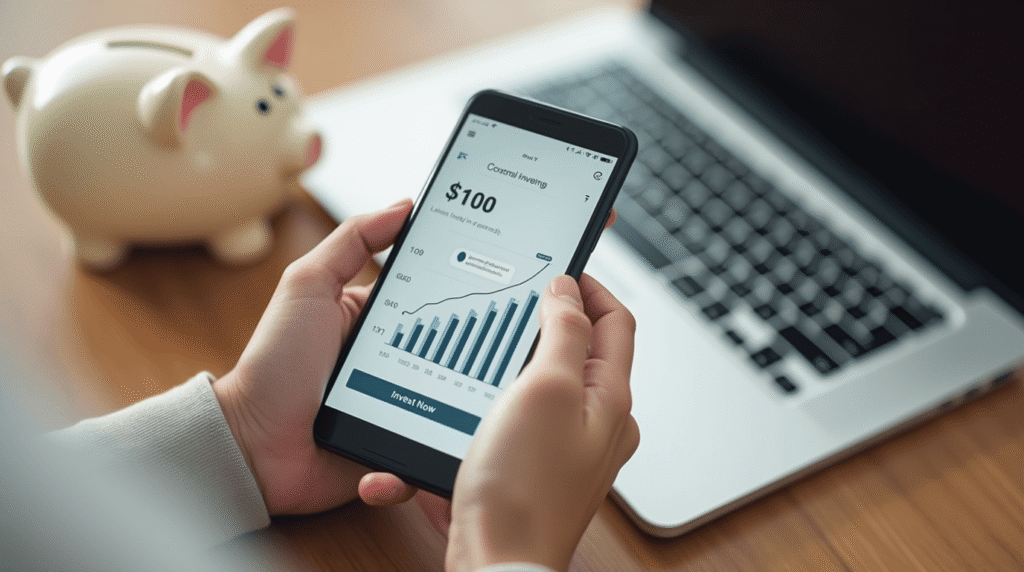
Remember that sinking feeling when you realized your savings account was earning 0.01% interest while inflation was eating away at your purchasing power? I was there too – staring at my bank statement, watching my hard-earned $100 lose value every month instead of growing. The stock market seemed like this mysterious, intimidating club reserved for Wall Street professionals and wealthy retirees. But here’s what changed everything: discovering that you don’t need thousands of dollars or a finance degree to start building wealth through stock investing. What you’re about to learn is how to start investing in stocks with just $100 – the exact same strategies that helped me transform that initial small investment into a growing portfolio that now works harder for my future than any savings account ever could.
Why $100 is Enough to Start Your Investment Journey
The Power of Starting Small
Many aspiring investors believe they need substantial capital before they can learn how to start investing in stocks effectively. This misconception keeps millions of people on the sidelines while their money loses purchasing power to inflation.
Historical Context:
- In 1975, minimum stock purchases required $1,000+ due to high commissions
- Today’s zero-commission brokerages have eliminated traditional barriers
- Fractional shares allow ownership of expensive stocks with any dollar amount
- Compound interest works the same whether you start with $100 or $10,000
The $100 Advantage:
- Lower emotional pressure: Easier to make rational decisions with smaller amounts
- Learning opportunity: Mistakes cost less while you develop skills
- Habit formation: Regular small investments build discipline
- Accessibility: Nearly anyone can find $100 to begin their journey
Mathematical Reality of Small Investments
Understanding the long-term potential of your initial $100 investment provides crucial motivation during your learning phase.
Growth Scenarios for $100 Initial Investment:
| Time Period | 7% Annual Return | 10% Annual Return | 12% Annual Return |
|---|---|---|---|
| 1 Year | $107 | $110 | $112 |
| 5 Years | $140 | $161 | $176 |
| 10 Years | $197 | $259 | $311 |
| 20 Years | $387 | $673 | $964 |
| 30 Years | $761 | $1,745 | $2,996 |
Note: These calculations assume no additional contributions. Regular monthly additions dramatically increase these projections.
Psychological Benefits of Starting Small
Learning how to start investing in stocks with $100 provides psychological advantages that larger initial investments cannot offer:
Stress Reduction Benefits:
- Manageable loss potential reduces anxiety
- Lower stakes encourage experimentation
- Success builds confidence for larger investments
- Failure provides affordable education
Stock Market Basics Every Beginner Must Know
What Stocks Actually Represent
Before you learn how to start investing in stocks, understanding what you’re actually buying is crucial for making informed decisions.
Stock Ownership Fundamentals:
- Equity stake: You own a tiny piece of the company
- Voting rights: Shareholders influence major company decisions
- Profit sharing: Dividends represent your share of company profits
- Growth participation: Stock price appreciation reflects company value increases
How Stock Prices Move
Stock prices fluctuate based on supply and demand dynamics influenced by multiple factors:
Primary Price Drivers:
- Company financial performance and earnings reports
- Economic conditions and market sentiment
- Industry trends and competitive positioning
- Investor emotions (fear and greed)
- News events and analyst recommendations
Different Types of Stocks
Understanding stock categories helps you make appropriate choices when learning how to start investing in stocks:
By Company Size:
- Large-cap stocks: Established companies worth $10+ billion
- Mid-cap stocks: Growing companies worth $2-10 billion
- Small-cap stocks: Smaller companies worth $300 million-$2 billion
By Investment Style:
- Growth stocks: Companies expanding rapidly with reinvested profits
- Value stocks: Underpriced companies trading below intrinsic value
- Dividend stocks: Companies regularly paying shareholders cash distributions
- Income stocks: Reliable dividend payers for steady cash flow
Risk and Return Relationship
Every investment decision involves balancing potential returns against possible losses:
Risk Categories:
| Risk Level | Expected Return | Volatility | Best For |
|---|---|---|---|
| Conservative | 4-6% annually | Low | Risk-averse beginners |
| Moderate | 6-9% annually | Medium | Balanced investors |
| Aggressive | 9-15%+ annually | High | Risk-tolerant growth seekers |
How to Choose the Right Brokerage Account
Essential Features for Beginning Investors
Selecting the right brokerage is crucial when you learn how to start investing in stocks, as it affects your costs, available investments, and overall experience.
Must-Have Brokerage Features:
- Zero commission trades: Eliminates transaction costs on stock purchases
- Fractional shares: Allows investing in expensive stocks with small amounts
- Low or no minimum balance: Accommodates $100 starting investments
- Educational resources: Provides learning materials for beginners
- User-friendly interface: Simple navigation for new investors
Top Brokerages for $100 Investors
Detailed Brokerage Comparison:
| Brokerage | Minimum Deposit | Commission | Fractional Shares | Educational Resources | Mobile App Rating |
|---|---|---|---|---|---|
| Fidelity | $0 | $0 | Yes | Excellent | 4.8/5 |
| Charles Schwab | $0 | $0 | Yes | Excellent | 4.7/5 |
| E*TRADE | $0 | $0 | Yes | Very Good | 4.6/5 |
| TD Ameritrade | $0 | $0 | No | Excellent | 4.5/5 |
| Robinhood | $0 | $0 | Yes | Limited | 4.2/5 |
| Webull | $0 | $0 | Yes | Good | 4.3/5 |
Hidden Costs to Watch For
While most major brokerages offer commission-free stock trades, other fees can impact your returns:
Potential Additional Costs:
- Account maintenance fees (usually waived for active accounts)
- Wire transfer fees ($15-$30 per transfer)
- Paper statement fees ($1-$3 monthly)
- Options trading fees ($0.50-$0.65 per contract)
- Mutual fund transaction fees (varies by fund)
- Currency conversion fees for international stocks
Account Types for Beginners
Understanding different account types helps you choose the best structure for your investment goals:
Taxable Investment Accounts:
- Individual account: Full control, immediate access to funds
- Joint account: Shared ownership with spouse or partner
- Tax implications: Pay taxes on dividends and capital gains
Tax-Advantaged Retirement Accounts:
- Traditional IRA: Tax-deductible contributions, taxed withdrawals
- Roth IRA: After-tax contributions, tax-free growth and withdrawals
- Contribution limits: $6,500 annually for 2023 (under age 50)

Setting Up Your Investment Account in 5 Easy Steps
Step 1: Gather Required Documentation
Before you can learn how to start investing in stocks practically, prepare these essential documents:
Required Information:
- Social Security number or Individual Taxpayer Identification Number
- Government-issued photo ID (driver’s license or passport)
- Proof of address (utility bill or bank statement)
- Employment information and annual income
- Bank account details for funding transfers
Step 2: Complete the Online Application
Most brokerages offer streamlined online applications that take 10-15 minutes to complete:
Application Process:
- Personal information: Name, address, date of birth, contact details
- Financial profile: Income, net worth, investment experience
- Investment objectives: Growth, income, speculation, retirement
- Risk tolerance: Conservative, moderate, or aggressive
- Account funding: Link bank account for deposits
Step 3: Fund Your Account
Transfer your initial $100 investment from your bank account to your new brokerage account:
Funding Options:
| Method | Processing Time | Fees | Best For |
|---|---|---|---|
| ACH Bank Transfer | 1-3 business days | Free | Most investors |
| Wire Transfer | Same day | $15-$30 | Urgent funding |
| Mobile Check Deposit | 1-2 business days | Free | Convenience |
| Debit Card | Instant | $0-$3 | Immediate trading |
Step 4: Verify Your Identity
Brokerages must verify your identity to comply with federal regulations:
Verification Process:
- Upload photos of required documents
- Answer security questions based on your credit history
- Wait for approval (usually within 24 hours)
- Receive account confirmation via email
Step 5: Explore the Trading Platform
Before making your first investment, familiarize yourself with the platform interface:
Key Platform Features:
- Research tools: Company information, analyst ratings, financial data
- Order types: Market orders, limit orders, stop-loss orders
- Portfolio tracking: Real-time balances, performance metrics
- News and analysis: Market updates and investment insights
Best Investment Strategies for $100 Portfolios
Dollar-Cost Averaging Strategy
Dollar-cost averaging represents one of the most effective approaches when you learn how to start investing in stocks with limited capital:
How Dollar-Cost Averaging Works:
- Invest the same amount regularly regardless of market conditions
- Buy more shares when prices are low, fewer when prices are high
- Reduces the impact of market volatility on your portfolio
- Builds discipline and consistent investing habits
Example: $100 Monthly Investment in S&P 500 ETF:
| Month | Investment Amount | Share Price | Shares Purchased | Total Shares | Portfolio Value |
|---|---|---|---|---|---|
| 1 | $100 | $400 | 0.25 | 0.25 | $100 |
| 2 | $100 | $350 | 0.286 | 0.536 | $188 |
| 3 | $100 | $450 | 0.222 | 0.758 | $341 |
| 4 | $100 | $380 | 0.263 | 1.021 | $388 |
| 5 | $100 | $420 | 0.238 | 1.259 | $529 |
Diversification Strategies for Small Portfolios
Diversification becomes challenging with only $100, but these strategies help spread risk effectively:
Core-Satellite Approach:
- Core holdings (70-80%): Broad market ETFs for stability
- Satellite holdings (20-30%): Individual stocks or sector ETFs for growth potential
Geographic Diversification:
- Domestic stocks (60-70%): U.S. companies for stability and familiarity
- International developed markets (20-30%): European, Japanese, Australian companies
- Emerging markets (5-10%): Higher growth potential with increased risk
Buy and Hold vs. Active Trading
Understanding different investment approaches helps you choose the strategy that matches your goals and time availability:
Buy and Hold Strategy:
- Time commitment: Minimal ongoing management required
- Costs: Very low due to infrequent trading
- Stress level: Low emotional involvement
- Expected returns: Market average (historically 7-10% annually)
- Best for: Long-term wealth building, busy professionals
Active Trading Strategy:
- Time commitment: Several hours daily for research and monitoring
- Costs: Higher due to frequent transactions and research tools
- Stress level: High emotional involvement and pressure
- Expected returns: Potentially higher but statistically difficult
- Best for: Experienced investors with substantial time availability
Target Allocation by Age
Your investment strategy should evolve based on your age and time horizon until retirement:
Age-Based Allocation Guidelines:
| Age Range | Stock Allocation | Bond Allocation | Cash Allocation | Rationale |
|---|---|---|---|---|
| 20-30 | 90-100% | 0-10% | 0-5% | Maximum growth time |
| 30-40 | 80-90% | 10-20% | 0-5% | Aggressive growth |
| 40-50 | 70-80% | 20-30% | 0-5% | Balanced approach |
| 50-60 | 60-70% | 30-40% | 0-10% | Risk reduction begins |
| 60+ | 50-60% | 40-50% | 5-10% | Capital preservation |
Top Stock Picks for Beginning Investors
Blue-Chip Dividend Stocks
When learning how to start investing in stocks, blue-chip companies provide stability and consistent returns through economic cycles:
Characteristics of Quality Dividend Stocks:
- Consistent dividend payments for 10+ years
- Payout ratios below 70% of earnings
- Strong competitive advantages (moats)
- Stable or growing market share
- Conservative debt levels
Top Beginner-Friendly Dividend Stocks:
| Company | Ticker | Dividend Yield | Years of Increases | Sector |
|---|---|---|---|---|
| Coca-Cola | KO | 3.0% | 61 years | Consumer Staples |
| Microsoft | MSFT | 0.7% | 20 years | Technology |
| Johnson & Johnson | JNJ | 2.6% | 61 years | Healthcare |
| Procter & Gamble | PG | 2.4% | 67 years | Consumer Staples |
| Realty Income | O | 4.4% | 28 years | Real Estate |
Growth Stocks for Long-Term Wealth Building
Growth stocks offer higher potential returns but come with increased volatility:
Growth Stock Selection Criteria:
- Revenue growth exceeding 15% annually
- Expanding market opportunities
- Strong competitive positioning
- Experienced management teams
- Reasonable valuation relative to growth prospects
Promising Growth Stock Categories:
- Technology: Cloud computing, artificial intelligence, cybersecurity
- Healthcare: Biotechnology, medical devices, digital health
- E-commerce: Online retail, digital payments, logistics
- Renewable energy: Solar, wind, energy storage
- Consumer trends: Electric vehicles, plant-based foods, gaming
Index Fund Alternatives
For beginners who prefer diversification over individual stock selection:
Popular Index Fund Options:
| Fund Type | Example ETF | Expense Ratio | Holdings | Best For |
|---|---|---|---|---|
| Total Market | VTI | 0.03% | 4,000+ stocks | Complete diversification |
| S&P 500 | SPY | 0.09% | 500 large-cap stocks | Large-cap focus |
| Growth | VUG | 0.04% | 250+ growth stocks | Growth investors |
| Value | VTV | 0.04% | 350+ value stocks | Value investors |
| International | VXUS | 0.08% | 7,000+ foreign stocks | Global exposure |
ETFs vs Individual Stocks: What’s Best for Beginners
Exchange-Traded Funds (ETFs) Explained
ETFs provide an ideal starting point when you learn how to start investing in stocks, offering instant diversification with small amounts:
ETF Advantages:
- Instant diversification: One purchase provides exposure to hundreds or thousands of stocks
- Professional management: Fund managers handle stock selection and portfolio maintenance
- Low costs: Expense ratios typically range from 0.03% to 0.20% annually
- Liquidity: Trade throughout market hours like individual stocks
- Transparency: Holdings disclosed daily
ETF Disadvantages:
- Average returns: Cannot outperform the market, only match it
- Less control: Cannot choose specific companies or timing
- Management fees: Annual expenses reduce returns slightly
- Dividend timing: Distributions typically quarterly rather than monthly
Individual Stock Benefits and Risks
Owning individual stocks provides more control but requires additional research and monitoring:
Individual Stock Advantages:
- Unlimited upside: Successful companies can provide extraordinary returns
- Full control: Choose exactly which companies to own
- No management fees: Eliminate ongoing expense ratios
- Learning opportunity: Develop company analysis skills
- Dividend variety: Some companies pay monthly dividends
Individual Stock Disadvantages:
- Concentration risk: Poor performance of one holding significantly impacts portfolio
- Research requirements: Successful stock picking demands substantial analysis
- Emotional challenges: Individual stock volatility tests investor discipline
- Time commitment: Ongoing monitoring and research required
Hybrid Approach for $100 Portfolios
Combining ETFs and individual stocks provides benefits of both approaches:
Recommended $100 Portfolio Structure:
| Investment Type | Allocation | Purpose | Example |
|---|---|---|---|
| Core ETF Holdings | 60-70% | Market exposure, stability | Total market index fund |
| Individual Growth Stocks | 20-30% | Higher growth potential | 2-3 carefully selected companies |
| Dividend Stocks | 10-15% | Income generation | 1-2 established dividend payers |
| Cash Reserve | 5-10% | Opportunity fund | High-yield savings for next purchase |
When to Choose ETFs Over Stocks
Choose ETFs When:
- You’re brand new to investing and learning fundamentals
- You have limited time for research and monitoring
- You prefer steady, predictable returns over volatility
- You want maximum diversification with minimum capital
- You’re investing for retirement 20+ years away
Choose Individual Stocks When:
- You enjoy researching companies and following business news
- You’re willing to accept higher volatility for potential higher returns
- You have strong convictions about specific companies or industries
- You want to learn detailed stock analysis skills
- You’re comfortable with concentrated risk
Building Your First $100 Portfolio
Portfolio Construction Steps
Creating your first portfolio when you learn how to start investing in stocks requires systematic planning:
Step 1: Define Your Investment Goals
- Time horizon: When will you need this money?
- Risk tolerance: How much volatility can you handle?
- Return expectations: What annual return do you hope to achieve?
- Income needs: Do you need dividends for current expenses?
Step 2: Asset Allocation Planning Based on your goals, determine your stock-to-bond ratio and domestic-to-international mix:
Conservative Portfolio (Age 50+ or Risk-Averse):
- 60% Domestic stocks
- 20% International stocks
- 20% Bonds or cash
Moderate Portfolio (Balanced Approach):
- 70% Domestic stocks
- 15% International stocks
- 15% Bonds or cash
Aggressive Portfolio (Young Investors):
- 80% Domestic stocks
- 20% International stocks
- 0% Bonds or cash
Sample $100 Portfolio Allocations
Portfolio Option 1: Simple ETF Approach
- $70 – Total Stock Market ETF (VTI): Provides broad U.S. market exposure
- $20 – International ETF (VXUS): Adds global diversification
- $10 – High-yield savings: Cash for next investment opportunity
Portfolio Option 2: Core-Satellite Strategy
- $50 – S&P 500 ETF (SPY): Core market exposure
- $25 – Technology growth stock: Higher growth potential
- $15 – Dividend stock: Income generation
- $10 – Cash reserve: Future investment fund
Portfolio Option 3: Sector Diversification
- $30 – Technology ETF: Growth potential
- $25 – Healthcare ETF: Defensive stability
- $20 – Financial services ETF: Economic growth play
- $15 – Consumer staples stock: Recession resistance
- $10 – Cash reserve: Opportunity fund
Rebalancing Your Small Portfolio
Portfolio maintenance ensures your allocation stays aligned with your goals:
Rebalancing Frequency:
- Quarterly review: Check allocation percentages
- Annual rebalancing: Realign to target allocations
- Threshold rebalancing: Rebalance when any asset class deviates 5+ percentage points
Rebalancing Example: If your target allocation is 70% stocks/30% bonds, but market growth has shifted it to 80% stocks/20% bonds, sell some stock gains and buy bonds to restore the 70/30 balance.
Adding Money to Your Portfolio
Growing your portfolio beyond the initial $100 requires systematic contribution planning:
Monthly Contribution Strategies:
| Monthly Addition | Annual Investment | 10-Year Value (7% return) | 20-Year Value (7% return) |
|---|---|---|---|
| $25 | $300 | $4,158 | $12,298 |
| $50 | $600 | $8,317 | $24,596 |
| $100 | $1,200 | $16,634 | $49,193 |
| $250 | $3,000 | $41,585 | $122,982 |
Common Mistakes New Investors Make (And How to Avoid Them)
Mistake #1: Emotional Investing
Emotional decision-making destroys more investment returns than market crashes or economic downturns.
Common Emotional Mistakes:
- Panic selling: Selling during market downturns locks in losses
- FOMO buying: Purchasing stocks after major price increases
- Analysis paralysis: Endless research without taking action
- Overconfidence: Taking excessive risks after early successes
Solutions:
- Automate investments: Set up automatic monthly contributions
- Write investment rules: Document your strategy when thinking clearly
- Focus on time in market: Long-term perspective reduces emotional stress
- Limit news consumption: Daily market news often misleads more than helps
Mistake #2: Chasing Hot Stocks and Trends
New investors often chase yesterday’s winners instead of building diversified portfolios:
Warning Signs of Trend Chasing:
- Investing in stocks featured in financial media
- Buying companies without understanding their business
- Switching strategies based on short-term performance
- Concentrating too much money in trendy sectors
Prevention Strategies:
- Stick to your plan: Maintain predetermined allocation regardless of market trends
- Research thoroughly: Understand businesses before investing
- Diversify systematically: Spread investments across multiple sectors and companies
- Think long-term: Focus on 10+ year holding periods
Mistake #3: Neglecting Fees and Expenses
Small fees compound over time and significantly impact long-term returns:
Hidden Costs That Erode Returns:
| Fee Type | Annual Impact on $100 | 10-Year Impact | 30-Year Impact |
|---|---|---|---|
| 1% Expense Ratio | $1 | $11 | $74 |
| 2% Expense Ratio | $2 | $22 | $148 |
| 3% Management Fee | $3 | $34 | $234 |
| High Trading Commissions | $10-50 | $110-550 | $740-3,700 |
Cost Minimization Strategies:
- Choose brokerages with zero commission stock trades
- Select ETFs with expense ratios below 0.20%
- Avoid actively managed funds with high fees
- Minimize portfolio turnover to reduce tax implications
Mistake #4: Inadequate Diversification
Concentrating investments in too few stocks or sectors amplifies risk unnecessarily:
Diversification Requirements by Portfolio Size:
| Portfolio Value | Minimum Stock Holdings | Recommended Strategy |
|---|---|---|
| $100-$500 | 1-2 ETFs | Broad market index funds |
| $500-$2,000 | 3-5 holdings | Mix of ETFs and large-cap stocks |
| $2,000-$10,000 | 8-12 holdings | Individual stocks across sectors |
| $10,000+ | 15-25 holdings | Full diversification possible |
Mistake #5: Ignoring Tax Implications
Tax-inefficient investing can significantly reduce your after-tax returns:
Tax-Smart Investing Strategies:
- Use tax-advantaged accounts: IRAs and 401(k)s for retirement investing
- Hold investments long-term: Qualify for lower capital gains tax rates
- Tax-loss harvesting: Offset gains with losses to minimize taxes
- Asset location: Place tax-inefficient investments in retirement accounts
Growing Your Investment From $100 to $1,000
Systematic Contribution Plans
The fastest way to grow your portfolio is through regular, systematic contributions rather than trying to time the market:
Contribution Growth Strategies:
The $25 Weekly Plan:
- Weekly investment: $25
- Annual investment: $1,300
- Time to $1,000 portfolio: 9-10 months (depending on returns)
The Pay Raise Strategy:
- Invest percentage of salary increases
- Start with 1% of income monthly
- Increase by 1% annually
- Painless wealth building over time
The Side Hustle Method:
- Dedicate all side income to investments
- Examples: freelancing, selling items, cashback rewards
- Accelerates portfolio growth without impacting lifestyle
- Creates positive reinforcement loop
Performance Tracking and Optimization
Key Metrics to Monitor:
| Metric | Calculation | Target Range | Review Frequency |
|---|---|---|---|
| Total Return | (Current Value – Initial Investment) / Initial Investment | 7-10% annually | Monthly |
| Portfolio Allocation | Asset percentages vs. target | Within 5% of target | Quarterly |
| Expense Ratio | Weighted average of fund fees | Below 0.20% | Annually |
| Dividend Yield | Annual dividends / portfolio value | 1-3% | Quarterly |
Scaling Strategies Beyond $1,000
Once your portfolio reaches $1,000, new opportunities and strategies become available:
Enhanced Diversification Options:
- Individual stock positions in 8-12 companies
- Sector-specific ETFs for targeted exposure
- International developed and emerging market funds
- Real estate investment trusts (REITs)
- Bond funds for stability and income
Advanced Investing Techniques:
- Options strategies: Covered calls for additional income
- Dollar-cost averaging: Into individual stocks monthly
- Tax optimization: Strategic asset location between account types
- Rebalancing: More sophisticated portfolio maintenance
Milestone Celebration and Goal Setting
Portfolio Milestone Rewards:
| Portfolio Value | Achievement Reward | Next Goal Setting |
|---|---|---|
| $500 | Calculate your first $100 in gains | Target $1,000 in 12 months |
| $1,000 | Review and optimize asset allocation | Target $2,500 in 18 months |
| $2,500 | Consider adding individual stocks | Target $5,000 in 24 months |
| $5,000 | Implement tax-loss harvesting | Target $10,000 in 36 months |
Tax Considerations for New Stock Investors
Understanding Investment Taxes
When you learn how to start investing in stocks, understanding tax implications helps you keep more of your returns:
Types of Investment Income:
Dividends:
- Qualified dividends: Taxed at capital gains rates (0%, 15%, or 20%)
- Non-qualified dividends: Taxed as ordinary income
- Tax reporting: Received on Form 1099-DIV annually
Capital Gains:
- Short-term gains: Held less than one year, taxed as ordinary income
- Long-term gains: Held more than one year, preferential tax rates
- Tax reporting: Reported on Schedule D of tax return
Tax Rates by Income Level (2023):
| Filing Status | 0% Capital Gains Rate | 15% Capital Gains Rate | 20% Capital Gains Rate |
|---|---|---|---|
| Single | Up to $44,625 | $44,626-$492,300 | Over $492,300 |
| Married Joint | Up to $89,250 | $89,251-$553,850 | Over $553,850 |
Tax-Advantaged Account Options
Traditional IRA:
- Tax deduction: Contributions may be tax-deductible
- Tax-deferred growth: No taxes on gains until withdrawal
- Required distributions: Must begin at age 73
- Early withdrawal penalty: 10% penalty before age 59½
Roth IRA:
- After-tax contributions: No immediate tax deduction
- Tax-free growth: No taxes on qualified withdrawals
- No required distributions: Money can stay invested indefinitely
- Contribution flexibility: Can withdraw contributions penalty-free
401(k) Plans:
- Employer matching: Free money through employer contributions
- Higher contribution limits: $22,500 for 2023 (plus $7,500 catch-up if 50+)
- Automatic payroll deduction: Makes investing effortless
- Loan provisions: Some plans allow borrowing against balance
Tax-Efficient Investment Strategies
Asset Location Optimization:
- Tax-advantaged accounts: Hold tax-inefficient investments (REITs, bonds)
- Taxable accounts: Hold tax-efficient investments (index funds, individual stocks)
- Growth vs. income: Place high-dividend investments in retirement accounts
Tax-Loss Harvesting:
- Offset gains: Sell losing investments to offset taxable gains
- Carry-forward losses: Excess losses reduce future tax obligations
- Wash sale rule: Cannot repurchase same security within 30 days
- Annual limit: $3,000 in losses can offset ordinary income annually

Tools and Resources for Beginner Investors
Essential Investment Apps and Platforms
Portfolio Tracking Apps:
| App Name | Cost | Key Features | Best For |
|---|---|---|---|
| Personal Capital | Free | Portfolio analysis, net worth tracking | Comprehensive financial overview |
| Mint | Free | Budgeting, investment tracking | Overall financial management |
| Yahoo Finance | Free | Real-time quotes, news, research | Basic market information |
| Morningstar | Free/Premium | In-depth analysis, ratings | Investment research |
Educational Resources
Free Learning Platforms:
- Khan Academy: Comprehensive finance and investing courses
- Coursera: University-level finance courses (audit for free)
- YouTube: Educational channels like Ben Felix, The Plain Bagel
- Podcasts: The Investors Podcast, Chat with Traders
Books for Beginner Investors:
- “The Bogleheads’ Guide to Investing” by Taylor Larimore
- “A Random Walk Down Wall Street” by Burton Malkiel
- “The Intelligent Investor” by Benjamin Graham
- “The Little Book of Common Sense Investing” by John Bogle
Research Tools and Resources
Free Research Platforms:
- SEC EDGAR Database: Official company filings and reports
- Google Finance: Basic stock information and charts
- Yahoo Finance: Comprehensive free financial data
- Finviz: Stock screener and visualization tools
Premium Research Services:
- Morningstar Premium: $34.95/month for detailed analysis
- Value Line: $598/year for investment research
- S&P Capital IQ: Professional-grade research platform
- FactSet: Institutional-level financial data
Portfolio Management Tools
Automatic Investment Services:
- Acorns: Rounds up purchases and invests spare change
- Stash: Micro-investing with educational content
- M1 Finance: Automated portfolio rebalancing
- Betterment: Robo-advisor with goal-based investing
DIY Portfolio Tools:
- Asset allocation calculators: Determine optimal mix
- Rebalancing spreadsheets: Track and maintain allocations
- Dividend calendars: Plan for income payments
- Tax-loss harvesting trackers: Optimize tax efficiency
FAQ
How much money do I need to learn how to start investing in stocks?
You can start investing in stocks with as little as $1 thanks to fractional shares offered by most major brokerages. However, $100 provides a more meaningful starting point that allows for better diversification and reduces the impact of any fees. With $100, you can purchase fractional shares of expensive stocks like Amazon or Google, or buy full shares of lower-priced stocks and ETFs.
What’s the best way to start investing in stocks for complete beginners?
The best approach for beginners is to start with broad market ETFs that provide instant diversification. Open an account with a reputable, commission-free brokerage like Fidelity or Charles Schwab, then invest in a total stock market index fund. This strategy minimizes risk while you learn how to start investing in stocks and develop your knowledge and confidence.
Should I invest in individual stocks or ETFs when learning how to start investing in stocks?
For beginners with $100, ETFs are generally the better choice because they provide instant diversification and professional management. Individual stocks require extensive research and carry higher risk if one company performs poorly. Once you’ve built your knowledge and portfolio to $1,000+, you can consider adding individual stocks as a smaller portion of your holdings.
How often should I check my investments after I start investing in stocks?
New investors should limit checking their portfolios to once per month or quarterly to avoid emotional decision-making. Daily price fluctuations are normal and don’t reflect long-term investment success. Focus on adding money regularly and reviewing your overall strategy annually rather than reacting to short-term market movements.
What are the biggest mistakes people make when they start investing in stocks?
The most common mistakes include: emotional buying and selling based on market news, not diversifying properly, chasing hot stocks or trends, paying high fees, and not investing consistently over time. Many beginners also try to time the market instead of focusing on time in the market, which historically produces better results.
How long should I hold stocks after I start investing?
For best results, plan to hold your investments for at least 5-10 years, preferably longer. This time horizon allows you to ride out market volatility and benefit from compound growth. Holding stocks for more than one year also qualifies you for lower long-term capital gains tax rates, keeping more money in your pocket.
Do I need to pay taxes on my stock investments?
You’ll pay taxes on dividends received and any capital gains when you sell stocks for a profit in taxable accounts. However, if you invest through tax-advantaged accounts like IRAs or 401(k)s, you can defer or eliminate these taxes. Keep records of all transactions and consider consulting a tax professional as your portfolio grows.
What’s a realistic return to expect when I start investing in stocks?
Historically, the U.S. stock market has returned approximately 10% annually before inflation, or about 7% after accounting for inflation. However, returns vary significantly year to year, and you should expect both gains and losses. Focus on long-term average returns rather than trying to predict short-term performance.
Conclusion
Learning how to start investing in stocks with just $100 might seem like a small step, but it’s actually the beginning of a journey that could transform your financial future. Every wealthy investor started with their first purchase, and most began with far less capital than they have today.
The strategies, tools, and knowledge you’ve gained from this guide provide everything necessary to begin building wealth through stock market investing. Remember that successful investing isn’t about having perfect timing or picking the next Amazon – it’s about starting early, staying consistent, and letting compound interest work its magic over time.
Your $100 investment today represents more than just money in the market. It represents a mindset shift from consumer to investor, from spending everything you earn to building assets that generate income. This psychological transformation often proves more valuable than the initial capital itself.
The path ahead isn’t always smooth. You’ll experience market downturns, question your decisions, and feel tempted to abandon your strategy during challenging times. These feelings are normal and experienced by every successful investor. The key is maintaining perspective, sticking to your plan, and continuing to add money regularly regardless of market conditions.
Most importantly, don’t let the fear of making mistakes prevent you from starting. The biggest risk isn’t losing money on a bad investment – it’s missing out on decades of compound growth while you wait for the “perfect” moment that never comes.
Every day you delay investing is a day of lost compound growth. The stock market has rewarded patient, disciplined investors for over a century, and there’s no reason to believe this will change. Your future self will thank you for taking action today rather than waiting for tomorrow.
Ready to transform your financial future? Open your brokerage account this week, transfer your first $100, and purchase your first investment. The journey to financial independence begins with a single step – and that step starts now. Don’t let another month pass watching from the sidelines while your money loses purchasing power to inflation. Start investing in stocks today and join the millions who are building wealth through the power of compound growth.
Zero-Based Budgeting: Transform Your Finances with a Budget That Actually Works in 2025