Zero-Based Budget: A Practical Guide to Managing Your Money
Standing in the checkout line at Target, my stomach dropped as my debit card was declined. I had $300 in my checking account that morning – or so I thought. Between forgotten subscriptions, impulse purchases, and bills that seemed to multiply like rabbits, my money had vanished into thin air once again. That embarrassing moment became my wake-up call. Traditional budgeting methods had failed me repeatedly because I was treating symptoms instead of the disease. What I needed was zero-based budgeting – a revolutionary approach that forces you to justify every single dollar before you spend it. If you’re tired of wondering where your money went and ready to tell every dollar exactly where to go, this comprehensive guide will show you how to master zero-based budgeting and finally take control of your financial destiny.
What is Zero-Based Budgeting and Why It Works
Definition and Core Principle
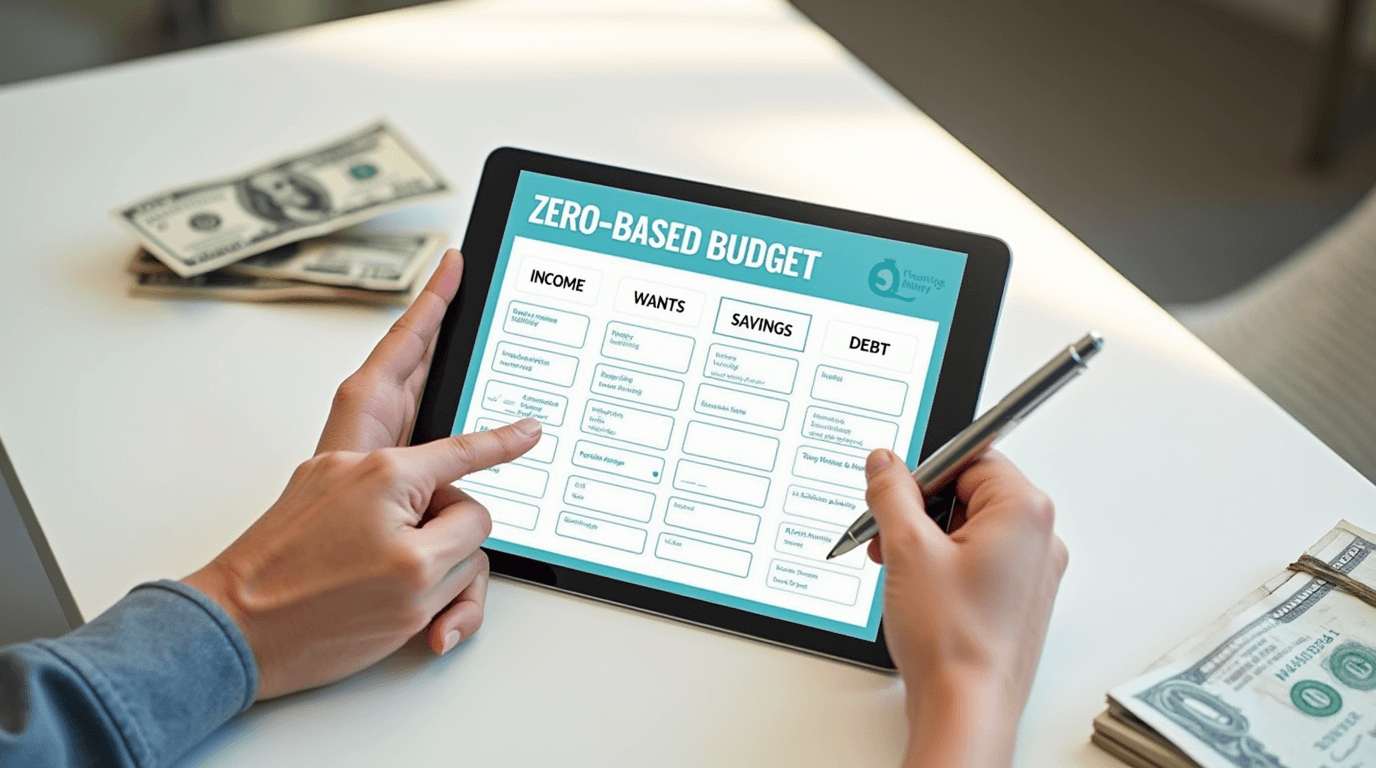
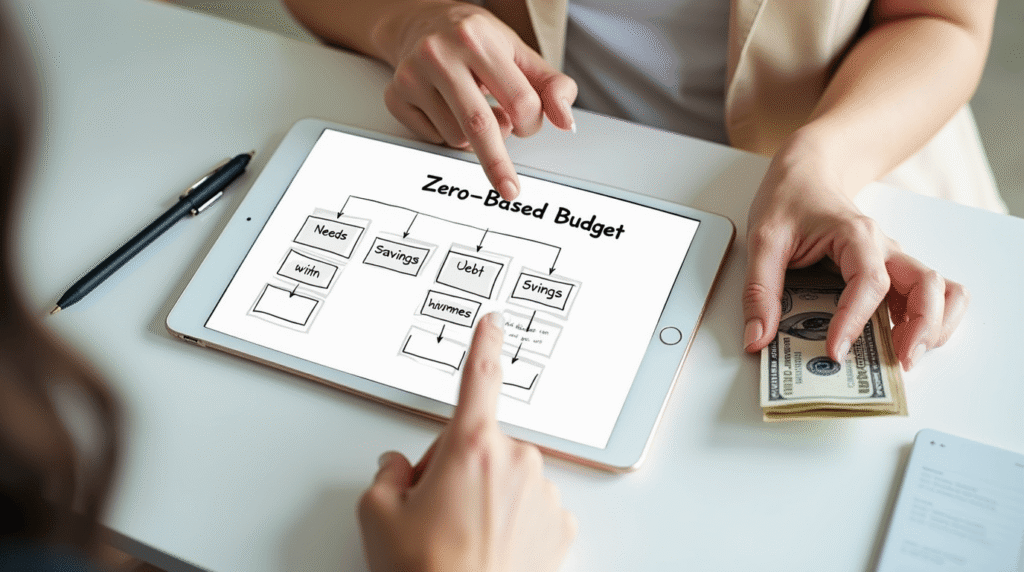
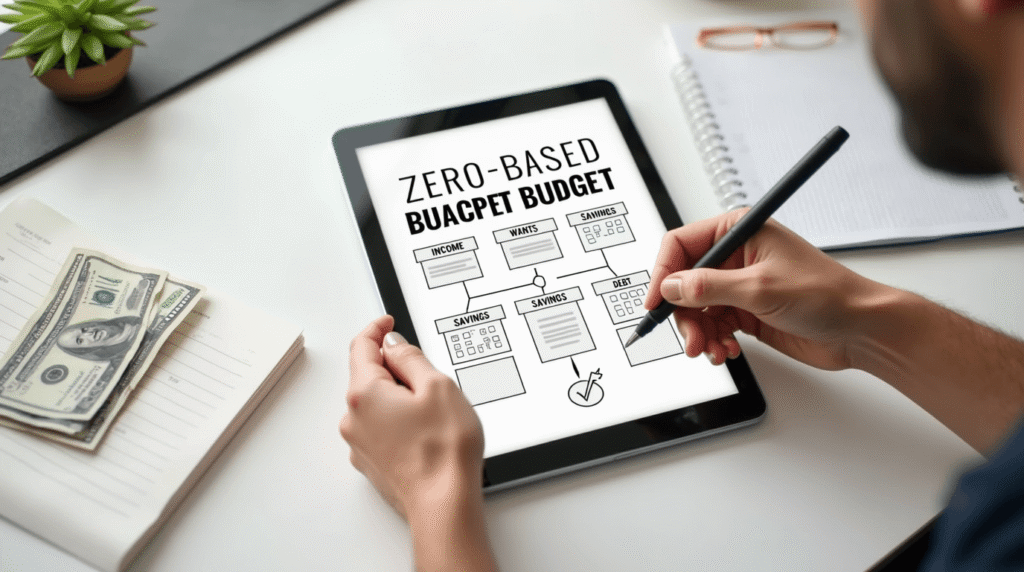
Zero-based budgeting is a financial planning method where you allocate every dollar of your income to specific categories, ensuring your income minus expenses equals zero. Unlike traditional budgeting that builds on previous spending patterns, zero-based budgeting requires you to justify each expense from scratch every month.
The Zero-Based Budgeting Formula: Income – Expenses = $0
This doesn’t mean you have zero dollars left in your bank account. Instead, it means every dollar has been assigned a purpose – whether that’s paying bills, saving for goals, or building your emergency fund.
Why Traditional Budgets Fail
Most budgeting methods fail because they’re reactive rather than proactive:
Traditional Budget Problems:
- Based on past spending habits rather than intentional choices
- Allows “leftover money” to disappear into miscellaneous spending
- Lacks specific allocation for unexpected expenses
- Creates guilt and restriction rather than empowerment
- Focuses on limiting spending rather than optimizing allocation
The Zero-Based Budgeting Advantage
Key Benefits:
| Traditional Budgeting | Zero-Based Budgeting |
|---|---|
| “I’ll try to spend less” | “Every dollar has a specific job” |
| Reactive to overspending | Proactive planning prevents overspending |
| Vague spending guidelines | Precise spending allocations |
| Money disappears into “miscellaneous” | All money accounted for |
| Monthly budgets often forgotten | Ongoing money management system |
Scientific Backing for Zero-Based Budgeting
Research from behavioral economics supports zero-based budgeting principles:
Supporting Studies:
- Mental accounting theory: People manage money better when it’s categorized into specific “mental buckets”
- Choice architecture: Having predetermined spending categories reduces decision fatigue
- Implementation intentions: Specific if-then plans (like zero-based budgets) increase goal achievement by 300%
- Loss aversion: Assigning money to categories makes people more reluctant to “steal” from other categories
Love financial peace of mind? Check out these top budgeting methods and get inspired to share your own financial game plan!
How to Create a Bi-Weekly Budget That Actually Works (Perfect If You Get Paid Every Two Weeks)
7 Best Budgeting Apps of 2024 to Take Control of Your Money
The 50/30/20 Rule: Master Your Money with This Simple Budgeting Method for Beginners
How to Create a Zero-Based Budget That Actually Works
Zero-Based Budgeting: Transform Your Finances with a Budget That Actually Works in 2025
Zero-Based Budgeting vs Traditional Budgeting Methods
Method Comparison Analysis
Understanding how zero-based budgeting differs from other popular budgeting methods helps you choose the right approach:
Detailed Method Comparison:
| Method | Complexity | Time Investment | Flexibility | Success Rate | Best For |
|---|---|---|---|---|---|
| Zero-Based Budget | High | 3-4 hours/month | Medium | 85% | Detail-oriented people |
| 50/30/20 Budget | Low | 30 minutes/month | High | 60% | Budgeting beginners |
| Envelope Method | Medium | 2 hours/month | Low | 70% | Cash-heavy spenders |
| Pay Yourself First | Low | 1 hour/month | High | 65% | Consistent savers |
| Percentage-Based | Medium | 1-2 hours/month | Medium | 75% | Stable income earners |
When Zero-Based Budgeting Works Best
Ideal Candidates for Zero-Based Budgeting:
- People who have struggled with traditional budgets
- Those with variable or irregular income
- Individuals paying off debt aggressively
- Anyone wanting maximum control over their money
- People who enjoy detailed planning and tracking
Situations Where Zero-Based Budgeting Excels:
- Tight financial situations requiring precise control
- Major financial goal pursuit (debt payoff, home purchase)
- Income transitions (job changes, career shifts)
- Building emergency funds from scratch
- Preparing for major life changes
Success Rate Factors
Elements That Increase Zero-Based Budgeting Success:
| Factor | Impact on Success | Implementation Strategy |
|---|---|---|
| Monthly planning sessions | +40% | Schedule recurring calendar appointments |
| Partner/spouse involvement | +35% | Weekly money meetings |
| Digital tracking tools | +25% | Use budgeting apps or spreadsheets |
| Regular category reviews | +30% | Monthly budget analysis |
| Emergency fund buffer | +20% | Build $1,000 starter emergency fund |
The Psychology Behind Zero-Based Budgeting Success
Behavioral Economics Principles
Zero-based budgeting succeeds because it leverages proven psychological principles:
Mental Accounting Effect:
- People naturally compartmentalize money into different “accounts”
- Zero-based budgeting formalizes this natural tendency
- Creates psychological barriers against overspending in categories
- Increases satisfaction when staying within allocated amounts
Commitment and Consistency Principle:
- Writing down specific dollar amounts creates psychological commitment
- People strive to remain consistent with their written commitments
- Monthly planning sessions reinforce commitment renewal
- Tracking progress provides positive reinforcement
Overcoming Common Psychological Barriers
Barrier #1: Perfectionism Paralysis
- Problem: Waiting for the “perfect” budget before starting
- Solution: Start with an 80% accurate budget and adjust monthly
- Mindset shift: Progress over perfection
Barrier #2: All-or-Nothing Thinking
- Problem: Abandoning the budget after overspending in one category
- Solution: Adjust other categories to compensate
- Mindset shift: Flexibility within structure
Barrier #3: Guilt and Shame Around Money
- Problem: Negative emotions sabotage budgeting efforts
- Solution: Focus on empowerment and control rather than restriction
- Mindset shift: Budget as freedom tool, not punishment
Building Sustainable Money Habits
The Habit Formation Process:
| Stage | Duration | Focus | Key Actions |
|---|---|---|---|
| Honeymoon Phase | Weeks 1-2 | High motivation | Create initial budget, track daily |
| Disillusionment | Weeks 3-6 | Reality sets in | Adjust categories, troubleshoot problems |
| Second Nature | Months 2-3 | Routine building | Automate where possible, refine system |
| Integration | Months 4+ | Lifestyle change | Expand to long-term financial planning |
Step-by-Step Guide to Creating Your Zero-Based Budget
Phase 1: Income Calculation and Documentation
Step 1: Calculate Your Monthly Take-Home Income
Start with your after-tax, after-deduction income – the actual money that hits your bank account:
Regular Salary Calculation:
- Monthly salary after taxes and deductions
- Include consistent overtime or bonuses
- Add regular side hustle income
- Include investment dividends or rental income
Variable Income Calculation:
- Use lowest monthly income from the past 6 months
- Alternative: Use average of lowest 3 months
- Build irregular income into a separate category
- Create income smoothing system for fluctuations
Phase 2: Expense Tracking and Categorization
Step 2: Track All Expenses for One Month
Before creating your zero-based budget, understand your current spending patterns:
Expense Tracking Methods:
- Bank and credit card statement analysis
- Receipt collection and categorization
- Expense tracking app for 30 days
- Daily spending journal
Essential Expense Categories:
| Category Type | Examples | Typical Percentage |
|---|---|---|
| Housing | Rent/mortgage, utilities, insurance | 25-30% |
| Transportation | Car payment, gas, insurance, maintenance | 10-15% |
| Food | Groceries, restaurants, work lunches | 10-15% |
| Insurance | Health, life, disability | 5-10% |
| Debt Payments | Credit cards, student loans, personal loans | 5-20% |
| Savings | Emergency fund, retirement, goals | 10-20% |
| Personal | Entertainment, hobbies, subscriptions | 5-10% |
Step 3: List All Fixed and Variable Expenses
Fixed Expenses (Same Amount Monthly):
- Rent or mortgage payment
- Insurance premiums
- Loan payments
- Subscription services
- Phone and internet bills
Variable Expenses (Amount Changes Monthly):
- Utilities
- Groceries
- Gas and transportation
- Entertainment
- Dining out
- Personal care
Phase 3: Budget Creation and Dollar Assignment
Step 4: Create Your Zero-Based Budget Template
Basic Zero-Based Budget Structure:
| Income Sources | Amount |
|---|---|
| Primary job (after taxes) | $4,200 |
| Side hustle | $300 |
| Total Monthly Income | $4,500 |
| Expense Categories | Budgeted Amount | Actual Spent | Difference |
|---|---|---|---|
| Housing | |||
| Rent | $1,350 | ||
| Utilities | $150 | ||
| Internet | $60 | ||
| Transportation | |||
| Car payment | $320 | ||
| Gas | $120 | ||
| Insurance | $100 | ||
| Food | |||
| Groceries | $400 | ||
| Restaurants | $200 | ||
| Personal | |||
| Phone | $80 | ||
| Subscriptions | $45 | ||
| Entertainment | $100 | ||
| Savings & Debt | |||
| Emergency fund | $500 | ||
| Retirement (401k) | $450 | ||
| Credit card payment | $300 | ||
| Total Allocated | $4,175 | ||
| Remaining (Buffer) | $325 |
Step 5: Assign Every Dollar Until You Reach Zero
Continue allocating money until Income – Total Allocated = $0:
Remaining Money Allocation Options:
- Increase emergency fund contribution
- Add to debt payment amounts
- Create sinking funds for annual expenses
- Boost retirement savings
- Add buffer for budget category overages
Phase 4: Implementation and Tracking System
Step 6: Choose Your Tracking Method
Option 1: Spreadsheet Method
- Pros: Complete customization, one-time setup
- Cons: Manual entry required, no automatic categorization
- Best for: People who prefer detailed control
Option 2: Budgeting App Method
- Pros: Automatic transaction import, mobile access
- Cons: Monthly fees, less customization
- Best for: People wanting automated tracking
Option 3: Hybrid Approach
- Planning: Spreadsheet for monthly budget creation
- Tracking: App for daily expense monitoring
- Review: Spreadsheet for monthly analysis

Essential Tools and Apps for Zero-Based Budgeting
Free Zero-Based Budgeting Tools
Spreadsheet Templates:
- Google Sheets: Free, cloud-based, shareable with partners
- Microsoft Excel: Advanced formulas, offline access
- Apple Numbers: Mac-friendly interface, visual appeal
- LibreOffice Calc: Open-source, full-featured alternative
Free Budgeting Apps:
| App Name | Platform | Key Features | Best For |
|---|---|---|---|
| Mint | iOS, Android, Web | Automatic categorization, bill reminders | Beginners wanting automation |
| Personal Capital | iOS, Android, Web | Investment tracking, net worth analysis | Investment-focused users |
| EveryDollar (Free) | iOS, Android, Web | Zero-based budgeting focus | Dave Ramsey followers |
| Goodbudget | iOS, Android, Web | Envelope method, partner sharing | Cash envelope users |
Premium Zero-Based Budgeting Solutions
Paid App Comparison:
| App | Monthly Cost | Key Premium Features | Zero-Based Focus |
|---|---|---|---|
| YNAB | $14/month | Real-time sync, goal tracking | Excellent |
| EveryDollar Plus | $13/month | Bank connection, automatic import | Excellent |
| PocketGuard | $8/month | Overspending prevention, bill negotiation | Good |
| Tiller | $6.58/month | Spreadsheet-based, customizable | Good |
DIY Zero-Based Budget Spreadsheet Setup
Essential Spreadsheet Components:
Tab 1: Monthly Budget Planning
- Income sources and amounts
- All expense categories with allocated amounts
- Calculation formulas for category totals
- Zero-balance verification
Tab 2: Daily Expense Tracking
- Date, amount, category, description columns
- Running balance calculations
- Category spending progress indicators
Tab 3: Monthly Review Analysis
- Budget vs. actual spending comparison
- Variance analysis by category
- Success rate tracking
- Notes for next month’s improvements
Advanced Formulas for Automation:
=Income_Total - Expense_Total (Zero verification)
=SUMIF(Tracking!Category_Column,"Groceries",Tracking!Amount_Column) (Category totals)
=Budget_Amount - Actual_Spent (Remaining balance)
Zero-Based Budget Categories and Allocation Strategy
Core Category Framework
The Four Walls Philosophy: Dave Ramsey’s “Four Walls” concept prioritizes essential expenses in zero-based budgeting:
- Food: Groceries and basic nutrition needs
- Shelter: Housing costs including utilities
- Transportation: Getting to work and essential travel
- Clothing: Basic clothing needs and work attire
Extended Category System:
| Priority Level | Categories | Description |
|---|---|---|
| Level 1: Survival | Food, shelter, transportation, basic clothing | Non-negotiable essentials |
| Level 2: Obligations | Debt payments, insurance, taxes | Legal and financial commitments |
| Level 3: Security | Emergency fund, retirement savings | Future financial protection |
| Level 4: Goals | Vacation fund, home down payment | Personal financial objectives |
| Level 5: Lifestyle | Entertainment, dining out, hobbies | Quality of life improvements |
Recommended Allocation Percentages
Income-Based Allocation Guidelines:
| Income Level | Housing | Transportation | Food | Savings | Debt | Personal |
|---|---|---|---|---|---|---|
| Under $40k | 25-30% | 15-20% | 15-20% | 10-15% | 10-20% | 5-10% |
| $40k-$80k | 25-28% | 12-15% | 12-15% | 15-20% | 5-15% | 10-15% |
| Over $80k | 20-25% | 10-12% | 8-12% | 20-25% | 5-10% | 15-20% |
Sinking Fund Categories
Sinking funds prevent budget-busting irregular expenses:
Essential Sinking Funds:
| Category | Monthly Amount | Annual Total | Purpose |
|---|---|---|---|
| Car maintenance | $50 | $600 | Repairs, oil changes, tires |
| Medical expenses | $75 | $900 | Deductibles, prescriptions |
| Home maintenance | $100 | $1,200 | Repairs, improvements |
| Holiday gifts | $60 | $720 | Birthday and holiday presents |
| Annual subscriptions | $25 | $300 | Software, memberships |
| Clothing replacement | $40 | $480 | Seasonal wardrobe updates |
Category Customization Strategies
By Life Stage:
Young Adult (22-30):
- Higher entertainment allocation
- Lower housing percentage (roommates/smaller space)
- Aggressive debt payoff
- Career development fund
Family Stage (30-45):
- Childcare and education costs
- Larger housing allocation
- Life insurance premiums
- College savings funds
Pre-Retirement (45-65):
- Maximum retirement contributions
- Reduced debt service
- Healthcare cost increases
- Long-term care planning
Retirement (65+):
- Fixed income optimization
- Healthcare expense emphasis
- Legacy planning considerations
- Reduced transportation needs
How to Handle Irregular Income with Zero-Based Budgeting
Variable Income Challenges
Freelancers, commission-based workers, and seasonal employees face unique budgeting challenges:
Common Irregular Income Scenarios:
- Freelance or consulting work
- Sales commissions
- Seasonal employment
- Small business ownership
- Gig economy participation
The Irregular Income Zero-Based Budget Method
Step 1: Establish Your Baseline Budget
Use your lowest monthly income from the past 12 months as your baseline:
Baseline Calculation Example:
- Lowest month: $2,800
- Second lowest: $3,100
- Third lowest: $3,200
- Baseline budget: $2,800
Step 2: Create Priority-Based Spending Lists
List 1: Survival Budget ($2,800)
- Four walls expenses
- Minimum debt payments
- Basic insurance premiums
- Essential transportation costs
List 2: Stability Budget ($3,500)
- List 1 expenses plus:
- Emergency fund contributions
- Increased food budget
- Basic personal expenses
List 3: Growth Budget ($4,500)
- Lists 1 & 2 expenses plus:
- Accelerated debt payments
- Increased retirement savings
- Entertainment and lifestyle upgrades
Step 3: Income Allocation Protocol
Monthly Implementation Process:
| Income Received | Action Plan |
|---|---|
| $0-$2,800 | Fund List 1 priorities only |
| $2,801-$3,500 | Complete List 1, then fund List 2 |
| $3,501-$4,500 | Complete Lists 1 & 2, then fund List 3 |
| Over $4,500 | Complete all lists, excess to emergency fund |
Income Smoothing Strategies
Strategy 1: The Buffer Account
- Save excess income during high-earning months
- Draw from buffer during low-earning months
- Maintain 2-3 months of baseline expenses in buffer
- Separate from emergency fund
Strategy 2: Percentage-Based Allocation
- Allocate percentages instead of fixed amounts
- Adjust lifestyle spending based on monthly income
- Maintain consistent savings percentage
- Example: Always save 20% regardless of income level
Buffer Account Management:
| Month | Income | Baseline Budget | Excess/Deficit | Buffer Balance |
|---|---|---|---|---|
| Jan | $4,200 | $2,800 | +$1,400 | $1,400 |
| Feb | $2,200 | $2,800 | -$600 | $800 |
| Mar | $3,800 | $2,800 | +$1,000 | $1,800 |
| Apr | $2,500 | $2,800 | -$300 | $1,500 |
Common Zero-Based Budgeting Mistakes and How to Avoid Them {#common-mistakes}
Mistake #1: Perfectionist Budgeting
The Problem: New zero-based budgeters often create overly restrictive budgets that don’t account for real-world spending patterns.
Warning Signs:
- Allocating unrealistically low amounts for variable categories
- Not including any “fun money” or personal spending
- Creating too many micro-categories that are impossible to track
- Setting savings goals that require extreme lifestyle changes
Solutions:
- Start with realistic amounts based on past spending
- Include a “miscellaneous” category for unexpected expenses
- Begin with broader categories, then narrow down over time
- Increase savings gradually rather than dramatically
Example Fix:
| Instead Of | Try This |
|---|---|
| Groceries: $200 (when you typically spend $400) | Groceries: $350 (reduce gradually) |
| No entertainment budget | Entertainment: $50 (small but realistic) |
| 12 separate categories for personal expenses | Personal: $200 (one broader category initially) |
Mistake #2: Not Planning for Irregular Expenses
The Problem: Failing to account for expenses that don’t occur monthly but happen regularly throughout the year.
Common Forgotten Expenses:
- Car registration and inspections
- Annual insurance premiums
- Holiday gifts and celebrations
- Home maintenance and repairs
- Medical and dental check-ups
- Annual subscription renewals
Solution: The Sinking Fund System
Annual Expense Planning:
| Expense | Annual Cost | Monthly Sinking Fund |
|---|---|---|
| Car insurance | $1,200 | $100 |
| Home maintenance | $1,500 | $125 |
| Holiday gifts | $800 | $67 |
| Medical expenses | $600 | $50 |
| Annual subscriptions | $300 | $25 |
| Total | $4,400 | $367 |
Mistake #3: Abandoning the Budget After Overspending
The Problem: Many people view budget overages as complete failures and abandon their zero-based budgeting system.
Healthy Mindset Shifts:
- Overspending in one category doesn’t negate the entire budget
- Adjust other categories to compensate when possible
- Learn from overspending patterns to improve future budgets
- Focus on overall spending trends rather than perfect monthly execution
Budget Correction Strategies:
Option 1: Category Reallocation
- Move money from underspent categories to overspent ones
- Adjust next month’s budget to reflect realistic spending
- Maintain the zero-based principle through rebalancing
Option 2: Learn and Adjust
- Analyze why overspending occurred
- Increase budget for that category if overage was justified
- Implement systems to prevent similar overspending
- Use overage as valuable budgeting data
Mistake #4: Not Involving Your Partner or Family
The Problem: Zero-based budgeting without family buy-in creates conflict and undermines success.
Family Integration Strategies:
- Hold monthly family budget meetings
- Give each family member input on category allocations
- Assign age-appropriate budget responsibilities to children
- Create shared financial goals that motivate everyone
Partner Communication Framework:
| Discussion Topic | Frequency | Key Questions |
|---|---|---|
| Budget review | Monthly | What worked? What needs adjustment? |
| Goal progress | Monthly | Are we on track for our shared goals? |
| Spending concerns | As needed | How can we support each other better? |
| Budget philosophy | Annually | Are our financial values still aligned? |
Mistake #5: Ignoring the Emergency Fund Priority
The Problem: Focusing on other financial goals before establishing an emergency fund leaves budgets vulnerable to unexpected expenses.
Emergency Fund Building Strategy:
- Start with $1,000 mini-emergency fund
- Prioritize emergency fund over extra debt payments initially
- Build to 3-6 months of expenses gradually
- Keep emergency fund in separate, easily accessible account
Emergency Fund Progress Plan:
| Month | Emergency Fund Goal | Monthly Contribution | Total Saved |
|---|---|---|---|
| 1-3 | $1,000 | $334 | $1,000 |
| 4-9 | $5,000 | $667 | $5,000 |
| 10-15 | $10,000 | $833 | $10,000 |
Monthly Zero-Based Budget Maintenance and Review {#maintenance-review}
Weekly Budget Check-ins
Mid-Week Budget Review (15 minutes):
- Check spending progress in each category
- Identify categories approaching their limits
- Plan remaining week’s spending within budget constraints
- Adjust if major unexpected expenses occurred
Weekly Review Questions:
- Which categories are on track?
- Where am I overspending and why?
- Can I reallocate money between categories?
- What spending decisions do I need to make carefully this week?
Monthly Budget Analysis
Month-End Review Process (60-90 minutes):
Step 1: Calculate Actual vs. Budgeted Spending
- Review all transactions and categorize them
- Compare actual spending to budgeted amounts
- Calculate percentage over/under for each category
- Identify patterns and trends
Step 2: Analyze Budget Performance
Budget Performance Scorecard:
| Category | Budgeted | Actual | Variance | Percentage | Grade |
|---|---|---|---|---|---|
| Groceries | $400 | $380 | -$20 | -5% | A |
| Dining out | $150 | $210 | +$60 | +40% | D |
| Gas | $120 | $95 | -$25 | -21% | A |
| Entertainment | $100 | $85 | -$15 | -15% | B |
Performance Grading System:
- A (Within 5%): Excellent budget accuracy
- B (5-15% variance): Good performance, minor adjustments needed
- C (15-25% variance): Acceptable, requires attention
- D (Over 25% variance): Needs significant improvement
Step 3: Create Next Month’s Budget
- Adjust categories based on actual spending patterns
- Account for known upcoming expenses
- Incorporate lessons learned from current month
- Set specific improvement goals for problematic categories
Quarterly Budget Optimization
Quarterly Review Focus Areas:
Income Analysis:
- Average monthly income over 3 months
- Income stability and predictability
- Opportunities for income increases
- Side hustle or additional income stream development
Expense Optimization:
- Identify consistently underspent categories (reduce allocation)
- Address consistently overspent categories (increase allocation or find reduction strategies)
- Review subscription services and recurring expenses
- Negotiate better rates for insurance, phone, internet
Goal Progress Evaluation:
- Emergency fund growth progress
- Debt payoff acceleration opportunities
- Savings rate improvement potential
- Long-term financial goal alignment
Annual Budget Strategy Review
Year-End Comprehensive Analysis:
Financial Progress Metrics:
| Metric | Starting Value | Ending Value | Change | Goal Achievement |
|---|---|---|---|---|
| Net worth | $5,000 | $12,000 | +$7,000 | 115% of goal |
| Emergency fund | $500 | $8,000 | +$7,500 | 100% of goal |
| Credit card debt | $8,000 | $3,000 | -$5,000 | 83% of goal |
| Retirement savings | $15,000 | $22,000 | +$7,000 | 105% of goal |
Strategy Adjustments for Next Year:
- Income growth planning and career development
- Expense reduction opportunities and lifestyle optimization
- Financial goal setting and priority adjustment
- Investment strategy evaluation and optimization
Zero-Based Budgeting Success Stories and Case Studies {#success-stories}
Case Study 1: Debt Freedom Journey
Background: Sarah, 28, marketing manager with $45,000 income and $23,000 in credit card debt.
Zero-Based Budgeting Implementation:
| Category | Before ZBB | After ZBB | Change |
|---|---|---|---|
| Debt payments | $350 | $800 | +$450 |
| Dining out | $400 | $150 | -$250 |
| Entertainment | $250 | $75 | -$175 |
| Miscellaneous | $300 | $0 | -$300 |
Results After 18 Months:
- Total debt paid off: $18,500
- Remaining debt: $4,500
- Emergency fund built: $3,000
- Monthly stress level: Decreased significantly
Key Success Factors:
- Tracked every expense for first 3 months
- Used cash envelopes for problem categories
- Found accountability partner
- Celebrated small wins monthly
Case Study 2: Irregular Income Success
Background: Mike, 35, freelance web developer with monthly income ranging from $3,200 to $8,500.
Income Smoothing Strategy:
Baseline Budget: $3,500
- Housing: $900
- Food: $400
- Transportation: $250
- Insurance: $200
- Utilities: $150
- Debt payment: $300
- Emergency fund: $200
- Personal: $100
Buffer Account Management:
| Month | Income | Used from Buffer | Added to Buffer | Buffer Balance |
|---|---|---|---|---|
| Jan | $6,800 | $0 | $3,300 | $3,300 |
| Feb | $2,900 | $600 | $0 | $2,700 |
| Mar | $4,200 | $0 | $700 | $3,400 |
| Apr | $3,100 | $400 | $0 | $3,000 |
Results After 12 Months:
- Eliminated income-related financial stress
- Built 6-month emergency fund
- Increased average monthly savings by 150%
- Achieved consistent lifestyle regardless of monthly income
Case Study 3: Family Budget Transformation
Background: The Johnson family: two adults, two children, combined income $78,000, struggling with overspending.
Before Zero-Based Budgeting:
- No clear spending plan
- Frequent overdraft fees
- No emergency fund
- Credit card balances increasing monthly
After Zero-Based Budgeting Implementation:
Monthly Family Budget:
| Category | Amount | Family Member Responsible |
|---|---|---|
| Mortgage | $1,850 | Both parents |
| Utilities | $200 | Mom |
| Groceries | $600 | Mom |
| Kids activities | $300 | Dad |
| Transportation | $450 | Dad |
| Family fun | $150 | Kids help choose activities |
| Emergency fund | $400 | Both parents |
Results After 6 Months:
- Zero overdraft fees
- $2,400 emergency fund established
- Credit card debt reduced by $3,200
- Children learned basic money management skills
- Reduced family financial arguments by 80%
Advanced Zero-Based Budgeting Strategies {#advanced-strategies}
Automation Integration
Smart Automation for Zero-Based Budgets:
Automatic Transfers Setup:
| Transfer Type | Amount | Frequency | Destination |
|---|---|---|---|
| Emergency fund | $200 | Monthly | High-yield savings |
| Retirement | $500 | Monthly | 401(k) or IRA |
| Car maintenance fund | $75 | Monthly | Dedicated savings account |
| Vacation fund | $100 | Monthly | Vacation savings account |
Bill Payment Automation:
- All fixed expenses set to autopay
- Variable expenses (utilities) set to autopay with spending alerts
- Credit card autopay for full balance monthly
- Investment contributions automated on payday
Zero-Based Budgeting with Investment Goals
Investment-Focused Budget Categories:
| Investment Type | Monthly Allocation | Annual Total | Long-term Goal |
|---|---|---|---|
| Retirement (401k) | $500 | $6,000 | Employer match maximization |
| Roth IRA | $450 | $5,400 | Tax-free retirement growth |
| Taxable investments | $300 | $3,600 | Early retirement fund |
| Real estate fund | $200 | $2,400 | Investment property down payment |
Business Owner Zero-Based Budgeting
Separating Personal and Business Finances:
Personal Zero-Based Budget for Business Owners:
| Category | Fixed Amount | Variable Component | Total Allocation |
|---|---|---|---|
| Personal salary | $4,000 | Performance bonus (10% of profit) | $4,000-$6,000 |
| Business emergency fund | $500 | Additional in high-revenue months | $500-$1,000 |
| Personal emergency fund | $300 | Stable regardless of business performance | $300 |
| Retirement (SEP-IRA) | $800 | Up to 25% of self-employment income | $800-$2,000 |
Business Cash Flow Integration:
- Pay yourself first from business revenue
- Maintain separate business emergency fund
- Plan for irregular business income
- Account for quarterly tax payments
Multi-Account Zero-Based System
Advanced Account Structure:
Checking Accounts:
- Primary checking: Monthly living expenses
- Bills checking: Automated bill payments
- Buffer checking: Irregular income smoothing
Savings Accounts:
- Emergency fund: 3-6 months expenses
- Sinking funds: Annual and irregular expenses
- Goal-specific savings: Vacation, home down payment
- Investment holding: Money waiting for investment
Account Flow Management:
| Payday Action | Amount | Destination | Purpose |
|---|---|---|---|
| 1st priority | Fixed amount | Bills checking | Automated payments |
| 2nd priority | Fixed amount | Emergency fund | Financial security |
| 3rd priority | Fixed amount | Investment accounts | Wealth building |
| 4th priority | Remainder | Primary checking | Monthly expenses |
FAQ {#faq}
What is zero-based budgeting and how does it differ from traditional budgeting?
Zero-based budgeting is a method where you assign every dollar of income to specific categories, making your income minus expenses equal zero. Unlike traditional budgeting that builds on past spending habits, zero-based budgeting requires you to justify each expense category from scratch every month. This ensures every dollar has a purpose and prevents money from disappearing into “miscellaneous” spending.
How long does it take to see results with zero-based budgeting?
Most people see immediate awareness improvements within the first week of zero-based budgeting, but significant behavioral changes typically occur after 2-3 months of consistent implementation. Financial results like increased savings or debt reduction usually become apparent within 3-6 months, depending on your starting financial situation and commitment level.
Can zero-based budgeting work with irregular or variable income?
Yes, zero-based budgeting actually works exceptionally well for irregular income. The key is creating a baseline budget using your lowest monthly income and establishing priority-based spending lists. You fund essential categories first, then add lifestyle categories as income increases. Many freelancers and commission-based workers find zero-based budgeting more effective than traditional methods.
What tools do I need to start zero-based budgeting successfully?
You can start zero-based budgeting with just a simple spreadsheet or even paper and pen. Popular free options include Google Sheets, Excel templates, or apps like EveryDollar and Mint. The most important tool is commitment to tracking expenses and reviewing your budget monthly. Many successful zero-based budgeters use a combination of digital tools for tracking and spreadsheets for planning.
How do I handle overspending in zero-based budgeting categories?
Overspending doesn’t mean budget failure – it means adjustment time. You can reallocate money from underspent categories to cover overages, reduce spending in other areas for the remainder of the month, or use this information to adjust next month’s budget. The key is maintaining the zero-based principle by ensuring every dollar is still accounted for, even if it moves between categories.
Should I include my partner or spouse in zero-based budgeting?
Absolutely. Zero-based budgeting works best when all adults in the household participate. Hold monthly budget meetings to plan expenses together, ensure both partners understand category allocations, and give each person input on spending priorities. Many couples find zero-based budgeting reduces money-related arguments because spending expectations are clear and agreed upon in advance.
How detailed should my zero-based budgeting categories be?
Start with broader categories (like “Personal” instead of separate categories for haircuts, coffee, and hobbies) and narrow down as you gain experience. Most successful zero-based budgeters use 10-15 main categories with subcategories for detailed tracking. Too many categories initially can feel overwhelming, while too few categories make it difficult to identify spending patterns.
What’s the biggest mistake people make when starting zero-based budgeting?
The biggest mistake is creating an unrealistically restrictive budget that doesn’t account for real spending patterns. New zero-based budgeters often cut categories too drastically or forget to include irregular expenses like car maintenance or gifts. Start with realistic amounts based on past spending, include some “fun money,” and adjust gradually rather than making dramatic changes that are impossible to maintain.
Conclusion
Zero-based budgeting isn’t just another financial fad – it’s a complete transformation in how you think about and manage money. By giving every dollar a specific job before you spend it, you transform from a passive money manager into an intentional wealth builder.
The journey from financial chaos to complete money control doesn’t happen overnight, but the framework you’ve learned in this guide provides everything needed to make that transformation. Remember that perfect execution isn’t the goal – consistent improvement is. Your first zero-based budget won’t be perfect, and that’s completely normal. Each month provides new data to refine your system and improve your results.
The psychological shift from “I hope I don’t overspend” to “I know exactly where every dollar is going” creates a sense of financial confidence that extends far beyond budgeting. You’ll find yourself making better financial decisions automatically because you understand the true cost of every choice within your overall financial plan.
Zero-based budgeting succeeds where other methods fail because it works with human psychology rather than against it. By acknowledging that every spending decision has trade-offs and making those trade-offs explicit, you eliminate the guilt and confusion that sabotage most budgets.
The families and individuals who master zero-based budgeting don’t just improve their finances – they fundamentally change their relationship with money. They stop feeling controlled by their finances and start feeling empowered by their choices. They replace financial stress with financial confidence and money arguments with money cooperation.
Your financial future depends not on how much you earn, but on how intentionally you direct what you earn toward your most important goals. Zero-based budgeting provides the framework to make every dollar count, every month, every year, until your financial dreams become your financial reality.
Ready to take complete control of your money? Start your zero-based budget today by calculating your monthly income, listing all your expenses, and assigning every dollar a specific purpose. Download a free budgeting template, set aside two hours this weekend for your first budget planning session, and begin the journey from financial chaos to complete money mastery. Your future self will thank you for taking action today instead of waiting for the “perfect” time that never comes.
Zero-Based Budgeting: Transform Your Finances with a Budget That Actually Works in 2025