Dropshipping vs. E-commerce: Which Business Model is Best for You?
Standing at the crossroads of your entrepreneurial journey, you face a decision that could define your financial future. Marcus, a software engineer from Portland, spent months agonizing over this exact choice. Should he invest his $15,000 savings into inventory for a traditional e-commerce store, or start lean with a dropshipping business model? Six months later, his dropshipping store was generating $8,000 monthly, but his friend Jake, who chose traditional e-commerce, was struggling with cash flow despite higher profit margins.
This scenario plays out thousands of times every day as aspiring entrepreneurs grapple with the fundamental question: dropshipping vs. e-commerce—which path offers the best route to online success? The answer isn’t universal, but rather depends on your unique circumstances, risk tolerance, available capital, and long-term business vision.
Both business models have created millionaire entrepreneurs, and both have left others with empty bank accounts and broken dreams. The key lies not in finding the “better” model, but in understanding which approach aligns with your resources, goals, and entrepreneurial personality. This comprehensive analysis will dissect both models, revealing the hidden advantages, overlooked challenges, and critical success factors that determine whether you thrive or merely survive in the competitive world of online retail.
Understanding Dropshipping: The Low-Risk Entry Model
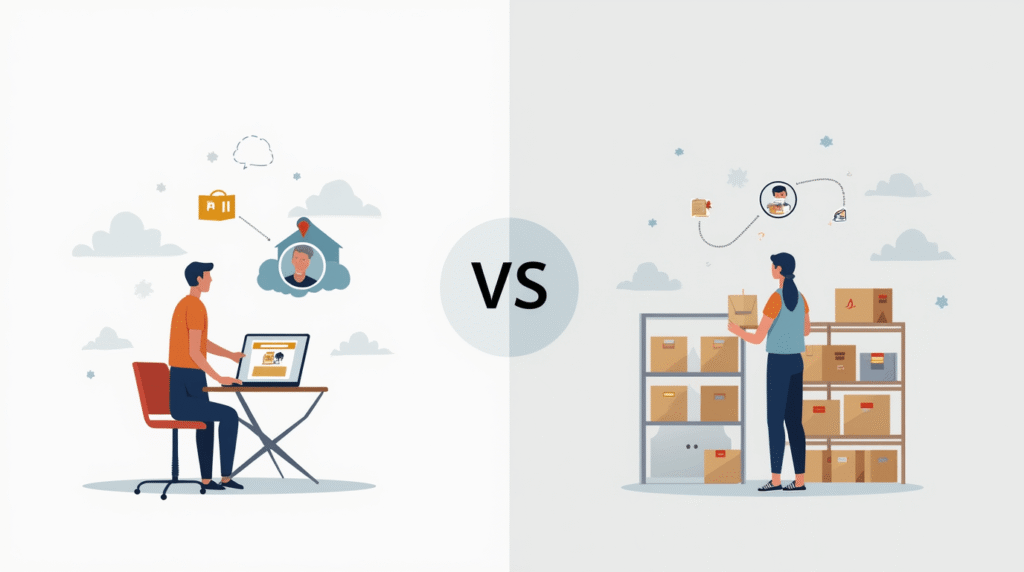
Dropshipping has revolutionized how entrepreneurs approach online retail by eliminating the traditional barriers of inventory investment and warehouse management. This business model enables you to sell products without ever touching physical inventory.
What is Dropshipping and How Does It Work?
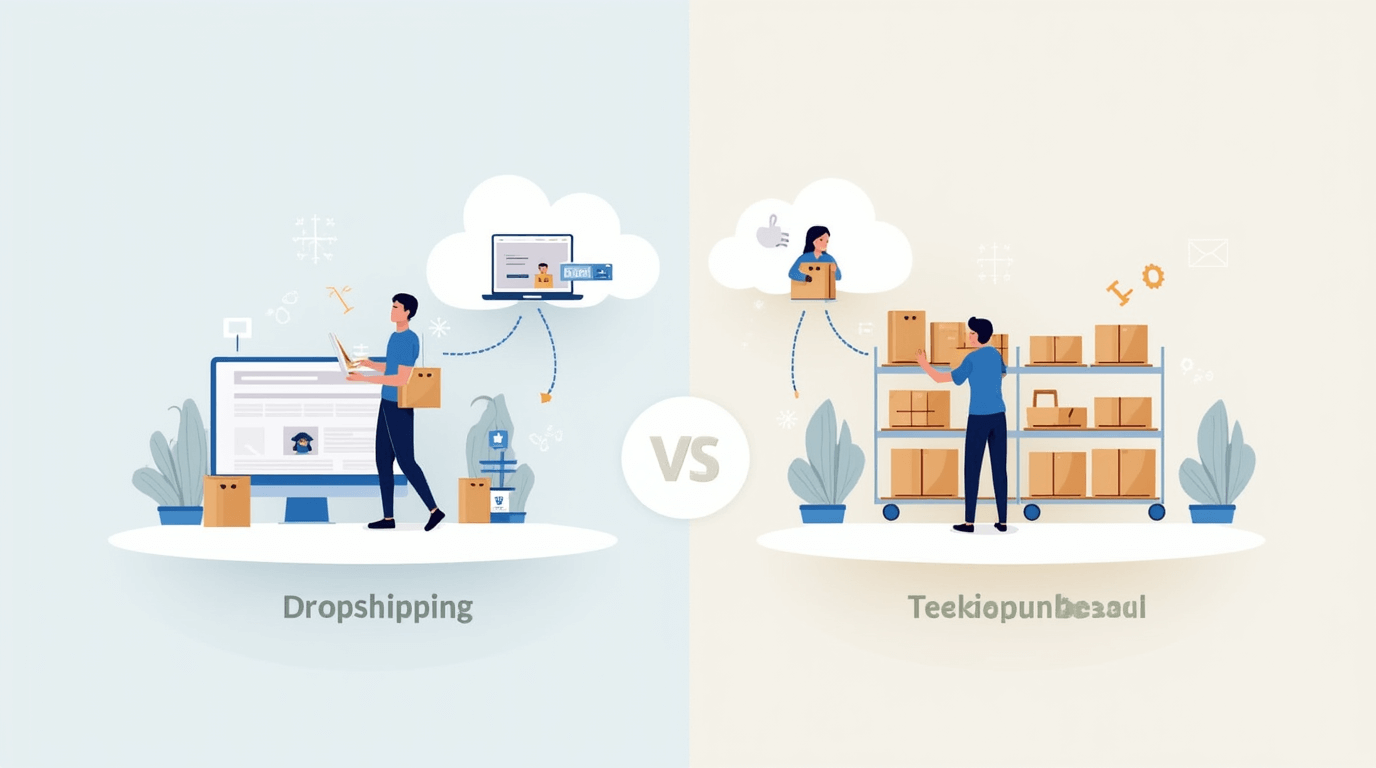
In the dropshipping model, you act as a middleman between customers and suppliers. When a customer places an order on your website, you forward that order to your supplier, who then ships the product directly to the customer. Your profit comes from the difference between what the customer pays and what you pay the supplier.
The dropshipping process flow:
- Customer browses your online store and places an order
- You receive the order and payment through your e-commerce platform
- You forward the order details to your supplier
- Supplier processes the order and ships directly to your customer
- You keep the profit margin between retail and wholesale price
Key stakeholders in dropshipping:
- You (Retailer): Market products, handle customer service, and manage the online store
- Supplier: Manufactures or stocks products, fulfills orders, handles shipping
- Customer: Purchases products through your online store
- Payment Processor: Facilitates secure transactions between all parties
Advantages of the Dropshipping Business Model
Dropshipping’s appeal lies in its accessibility and low barrier to entry, making it attractive for first-time entrepreneurs and those with limited capital.
Financial benefits:
- Minimal upfront investment required (typically $500-2,000)
- No inventory carrying costs or storage expenses
- Reduced risk of unsold inventory and dead stock
- Cash flow advantages since you collect payment before paying suppliers
- Ability to test products without significant financial commitment
Operational advantages:
- No warehouse management or shipping logistics
- Ability to operate from anywhere with internet connection
- Suppliers handle customer service for shipping and product issues
- Easy to scale product offerings without additional infrastructure
- Quick market entry and product testing capabilities
Strategic flexibility:
- Ability to pivot quickly based on market trends
- Wide product selection without storage constraints
- Geographic expansion without physical presence requirements
- A/B test different product lines with minimal risk
Disadvantages and Challenges of Dropshipping
Despite its advantages, dropshipping comes with significant challenges that can impact profitability and customer satisfaction.
Profit margin limitations:
- Lower profit margins due to supplier markups (typically 10-30%)
- Intense price competition from other dropshippers
- Limited pricing flexibility compared to inventory-based models
- Difficulty achieving economies of scale with multiple suppliers
Operational challenges:
- Limited control over product quality and shipping times
- Dependency on supplier reliability and inventory levels
- Complex logistics when working with multiple suppliers
- Potential for stockouts and backorders beyond your control
Customer experience issues:
- Longer shipping times compared to local fulfillment
- Inconsistent packaging and branding across different suppliers
- Difficulty handling returns and exchanges
- Limited ability to provide detailed product information or support
Want a tastier portfolio? Get the recipe for success with these market-tested strategies and share your own financial creations!
From Side Hustle to Full-Time: How I Replaced My 9-5 Income Online
How to Start a Profitable Blog in 2026: A Beginner’s Blueprint
Affiliate Marketing for Beginners: How to Earn Your First $1,000
The 5 Most Profitable Online Business Niches That Will Transform Your Financial Future This Year
How to Start a Blog and Make Money: The Ultimate Beginner’s Blueprint for 2026
Dropshipping vs. E-commerce: Which Online Business Model is Right for You?
How to Build a Niche Website from Scratch and Generate Passive Income Through Affiliate Marketing
Traditional E-commerce: The High-Control Inventory Model
Traditional e-commerce involves purchasing inventory upfront, storing products, and fulfilling orders directly to customers. This model provides greater control but requires significantly more capital and operational complexity.
What is Traditional E-commerce?
Traditional e-commerce, also known as inventory-based retail, requires you to purchase products wholesale, store them in a warehouse or fulfillment center, and ship them to customers when orders are placed. This model gives you complete control over the customer experience from purchase to delivery.
Traditional e-commerce process flow:
- Research and source products from manufacturers or wholesalers
- Purchase inventory and store in warehouse or fulfillment center
- Create product listings with your own photos and descriptions
- Customer places order on your website
- Pick, pack, and ship products from your inventory
- Handle customer service, returns, and exchanges directly
Advantages of Traditional E-commerce
The traditional e-commerce model offers greater control and higher profit potential, making it attractive for entrepreneurs with adequate capital and long-term vision.
Profit and pricing advantages:
- Higher profit margins (typically 40-60% gross margins)
- Bulk purchasing discounts and wholesale pricing
- Complete pricing control and flexibility
- Ability to create bundled offerings and upsells
- Better economies of scale as volume increases
Operational control benefits:
- Complete control over product quality and customer experience
- Faster shipping times through local fulfillment
- Consistent branding and packaging across all orders
- Direct relationship with customers for service and support
- Ability to implement custom fulfillment processes
Strategic advantages:
- Build brand equity and customer loyalty
- Create unique product offerings and exclusivity
- Develop proprietary products or private label opportunities
- Better data collection and customer insights
- Potential for higher business valuation and exit opportunities
Disadvantages of Traditional E-commerce
Traditional e-commerce requires significant upfront investment and carries operational complexities that can overwhelm inexperienced entrepreneurs.
Financial barriers and risks:
- High upfront capital requirements ($10,000-100,000+)
- Inventory carrying costs and storage expenses
- Risk of unsold inventory and seasonal fluctuations
- Cash flow challenges with inventory investment cycles
- Need for working capital to maintain stock levels
Operational complexities:
- Warehouse management and inventory tracking systems
- Shipping logistics and carrier relationship management
- Staff requirements for picking, packing, and customer service
- Returns processing and inventory management
- Regulatory compliance for product safety and taxes
Dropshipping vs. E-commerce: Direct Comparison Analysis
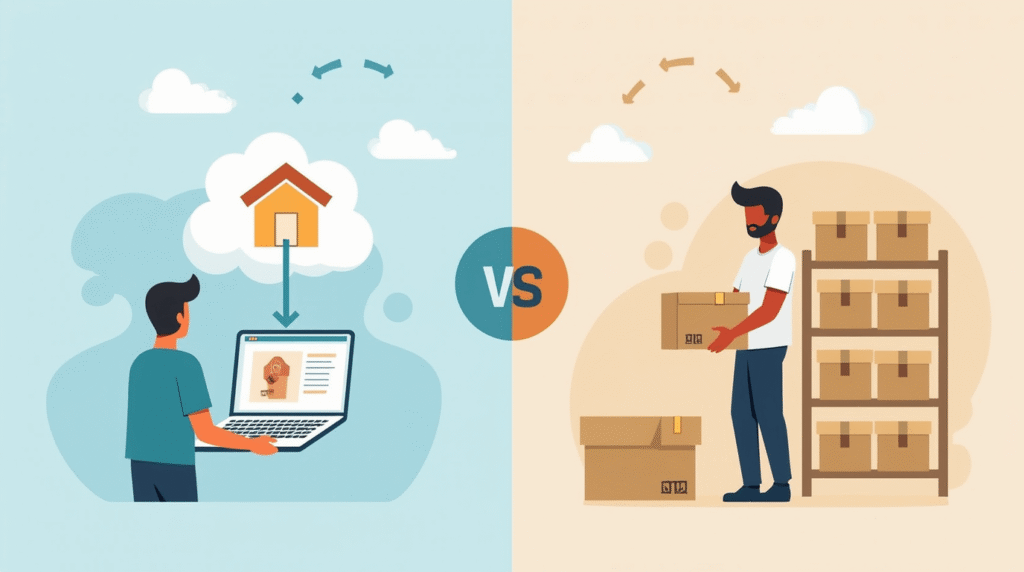
Understanding the key differences between these business models helps you make an informed decision based on your specific situation and goals.
Startup Costs and Capital Requirements
The financial barriers to entry represent one of the most significant differences between these business models.
| Factor | Dropshipping | Traditional E-commerce |
|---|---|---|
| Initial Investment | $500 – $2,000 | $10,000 – $100,000+ |
| Inventory Costs | $0 | $5,000 – $50,000+ |
| Warehouse/Storage | $0 | $500 – $5,000/month |
| Shipping Supplies | $0 | $200 – $1,000/month |
| Staff Requirements | 0-1 person | 2-10+ people |
| Technology Setup | $100 – $500 | $1,000 – $10,000 |
Profit Margins and Revenue Potential
Profit margins vary significantly between models, affecting long-term financial outcomes and growth potential.
Dropshipping profit margins:
- Gross margins typically range from 10-30%
- Net profit margins after marketing costs: 5-15%
- Revenue potential: $1,000-50,000+ monthly (highly variable)
- Scalability limited by competition and supplier relationships
Traditional e-commerce profit margins:
- Gross margins typically range from 40-60%
- Net profit margins after all expenses: 15-25%
- Revenue potential: $5,000-500,000+ monthly (more predictable scaling)
- Scalability limited by capital and operational capacity
Time Investment and Management Requirements
The time commitment and management complexity differ substantially between these business models.
Dropshipping time investment:
- Initial setup: 2-4 weeks
- Daily operations: 2-6 hours
- Primary focus: Marketing, customer acquisition, and supplier management
- Scaling complexity: Moderate (managing multiple suppliers)
Traditional e-commerce time investment:
- Initial setup: 1-3 months
- Daily operations: 6-12+ hours
- Primary focus: Inventory management, fulfillment, and operations
- Scaling complexity: High (systems, staff, and infrastructure)
Customer Experience and Brand Control
Brand building and customer experience capabilities vary dramatically between these approaches.
Dropshipping customer experience:
- Limited control over packaging and presentation
- Longer shipping times (7-21 days internationally)
- Potential inconsistencies across different suppliers
- Difficulty building brand loyalty and repeat customers
- Reactive customer service due to supplier dependency
Traditional e-commerce customer experience:
- Complete control over branding and packaging
- Fast shipping times (1-3 days domestically)
- Consistent experience across all customer touchpoints
- Strong brand building and customer loyalty opportunities
- Proactive customer service and relationship management
Choosing the Right Model for Your Business Goals
Selecting between dropshipping and traditional e-commerce requires honest assessment of your resources, risk tolerance, and long-term objectives.
Assess Your Financial Situation and Risk Tolerance
Your available capital and comfort with financial risk should heavily influence your decision.
Choose dropshipping if you have:
- Limited startup capital ($500-2,000)
- Low risk tolerance for inventory investment
- Need for immediate cash flow generation
- Desire to test multiple product categories
- Preference for location independence
Choose traditional e-commerce if you have:
- Substantial startup capital ($10,000+)
- Tolerance for inventory investment risk
- Long-term business building perspective
- Desire for higher profit margins
- Willingness to manage complex operations
Evaluate Your Available Time and Resources
Consider your current commitments and available time for business development.
Dropshipping time considerations:
- Part-time operation possibility (10-20 hours/week)
- Flexible scheduling around other commitments
- Focus on marketing and customer acquisition
- Limited operational complexity management
Traditional e-commerce time considerations:
- Full-time commitment typically required (40+ hours/week)
- Fixed operational responsibilities and schedules
- Complex systems management and staff oversight
- Higher operational learning curve
Consider Your Long-term Business Vision
Your ultimate business goals should align with your chosen model’s capabilities and limitations.
Dropshipping aligns with goals of:
- Quick market entry and testing
- Location-independent lifestyle business
- Multiple income streams and diversification
- Low-risk entrepreneurial experience
- Cash generation with minimal investment
Traditional e-commerce aligns with goals of:
- Building valuable, sellable business assets
- Creating strong brand equity and customer loyalty
- Achieving higher profit margins and stability
- Developing operational expertise and systems
- Long-term wealth building through business ownership
Success Strategies for Each Business Model
Maximizing your chances of success requires implementing model-specific strategies that leverage each approach’s strengths while mitigating weaknesses.
Dropshipping Success Strategies
Succeeding in dropshipping requires focus on marketing excellence and efficient supplier relationships.
Product research and selection:
- Use tools like Google Trends, Facebook Audience Insights, and Amazon Best Sellers
- Focus on products with high demand but manageable competition
- Test multiple products with small advertising budgets
- Analyze competitor pricing and marketing strategies
- Verify supplier reliability and product quality before promotion
Marketing and traffic generation:
- Develop expertise in Facebook and Google advertising
- Create compelling ad copy and high-converting landing pages
- Implement retargeting campaigns for abandoned cart recovery
- Build email lists for customer lifetime value optimization
- Leverage influencer partnerships for credible product promotion
Supplier relationship management:
- Work with 3-5 reliable suppliers to ensure backup options
- Negotiate better pricing and shipping terms as volume grows
- Establish clear communication channels and expectations
- Regularly audit supplier performance and customer feedback
- Develop exclusive arrangements for unique product access
Traditional E-commerce Success Strategies
Traditional e-commerce success requires operational excellence and strategic inventory management.
Inventory management optimization:
- Implement inventory management software for accurate tracking
- Use ABC analysis to prioritize high-value products
- Develop reorder points based on sales velocity and lead times
- Negotiate favorable payment terms with suppliers
- Plan for seasonal fluctuations and promotional inventory needs
Customer experience enhancement:
- Invest in professional product photography and descriptions
- Implement live chat and responsive customer service
- Create branded packaging that reinforces your identity
- Develop loyalty programs and repeat customer incentives
- Collect and analyze customer feedback for continuous improvement
Operational efficiency development:
- Automate repetitive tasks through technology integration
- Optimize warehouse layout and fulfillment processes
- Negotiate competitive shipping rates with multiple carriers
- Implement quality control processes for consistent standards
- Develop standard operating procedures for scalability
Hybrid Approaches and Alternative Models
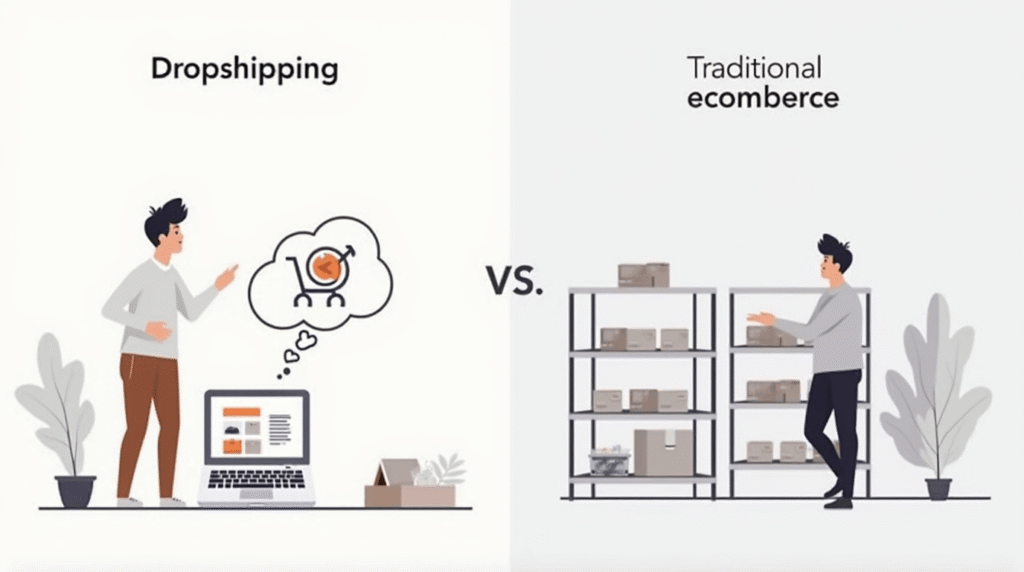
Many successful entrepreneurs combine elements of both models or explore alternative approaches that blend the benefits while minimizing drawbacks.
Dropshipping to E-commerce Transition Strategy
Starting with dropshipping and transitioning to inventory-based fulfillment allows you to test markets with minimal risk before making larger investments.
Transition process steps:
- Start with dropshipping to validate product demand
- Identify best-selling products with consistent demand
- Gradually purchase inventory for top-performing products
- Maintain dropshipping for new or seasonal products
- Scale inventory-based fulfillment as cash flow improves
Benefits of the transition approach:
- Reduces initial risk while building toward higher margins
- Provides market validation before inventory investment
- Maintains flexibility for product testing and expansion
- Allows gradual operational complexity increase
- Enables cash flow reinvestment for sustainable growth
Print-on-Demand Alternative Model
Print-on-demand combines aspects of both models, offering customization without inventory investment for specific product categories.
Print-on-demand characteristics:
- Products created only when orders are placed
- Higher profit margins than traditional dropshipping
- Enables custom designs and personalization
- Suitable for apparel, home décor, and gift products
- Requires creative skills for design development
Third-Party Logistics (3PL) Hybrid Model
Using third-party logistics providers allows inventory control without warehouse management complexity.
3PL model advantages:
- Professional fulfillment without operational overhead
- Scalable infrastructure without capital investment
- Access to discounted shipping rates and zones
- Integration with e-commerce platforms and automation
- Focus on marketing while outsourcing logistics
Financial Planning and Projections
Understanding the financial implications of each model helps you plan for sustainable growth and profitability.
Dropshipping Financial Projections
| Month | Revenue | Cost of Goods (70%) | Marketing (20%) | Operations (5%) | Net Profit |
|---|---|---|---|---|---|
| 1-3 | $2,000 | $1,400 | $400 | $100 | $100 |
| 4-6 | $8,000 | $5,600 | $1,600 | $400 | $400 |
| 7-12 | $15,000 | $10,500 | $3,000 | $750 | $750 |
| Year 2 | $25,000 | $17,500 | $5,000 | $1,250 | $1,250 |
Traditional E-commerce Financial Projections
| Month | Revenue | COGS (40%) | Inventory Investment | Operations (15%) | Net Profit |
|---|---|---|---|---|---|
| 1-3 | $5,000 | $2,000 | $3,000 | $750 | -$750 |
| 4-6 | $12,000 | $4,800 | $2,000 | $1,800 | $3,400 |
| 7-12 | $20,000 | $8,000 | $3,000 | $3,000 | $6,000 |
| Year 2 | $35,000 | $14,000 | $5,000 | $5,250 | $10,750 |
Note: These projections are estimates and actual results vary significantly based on niche, execution, and market conditions.
Legal and Tax Considerations
Both business models involve legal and tax obligations that affect your operational structure and financial planning.
Business Registration and Structure
Regardless of your chosen model, proper business registration protects your personal assets and provides tax benefits.
Recommended business structures:
- LLC (Limited Liability Company): Provides liability protection with tax flexibility
- Corporation: Suitable for larger operations with multiple investors
- Sole Proprietorship: Simplest structure but offers no liability protection
Essential registrations and licenses:
- Business license in your operating jurisdiction
- Sales tax permit for states where you have nexus
- Employer Identification Number (EIN) for tax purposes
- Professional liability insurance for customer protection
Tax Implications and Compliance
Understanding tax obligations helps you avoid penalties and optimize your financial structure.
Dropshipping tax considerations:
- Sales tax collection based on nexus rules and customer location
- Income tax on profit margins and business expenses
- International shipping may involve customs and duty issues
- Quarterly estimated tax payments for profitable businesses
Traditional e-commerce tax considerations:
- Inventory valuation methods affect taxable income
- Depreciation of equipment and infrastructure investments
- Sales tax collection and remittance in multiple states
- Deductible expenses include storage, shipping, and operational costs
Common Mistakes to Avoid
Learning from others’ mistakes can save you time, money, and frustration in building your online business.
Dropshipping Mistakes to Avoid
Product selection errors:
- Choosing oversaturated markets without differentiation
- Failing to research supplier reliability and reputation
- Ignoring shipping times and customer expectations
- Not testing products before launching major campaigns
Marketing and customer service mistakes:
- Over-promising on shipping times and product quality
- Inadequate customer service and communication
- Focusing solely on customer acquisition without retention
- Ignoring negative reviews and customer feedback
Traditional E-commerce Mistakes to Avoid
Inventory management errors:
- Over-investing in inventory without demand validation
- Poor forecasting leading to stockouts or excess inventory
- Inadequate inventory tracking and management systems
- Failing to account for seasonal fluctuations and trends
Operational and financial mistakes:
- Underestimating operational complexity and staff needs
- Inadequate cash flow planning for inventory cycles
- Poor supplier relationship management and contingency planning
- Neglecting quality control and customer experience standards
Technology and Tools for Success
Leveraging the right technology stack can significantly impact your efficiency and profitability in either business model.
Essential Dropshipping Tools
E-commerce platforms:
- Shopify: User-friendly with extensive dropshipping apps
- WooCommerce: Flexible WordPress-based solution
- BigCommerce: Scalable platform with built-in features
Product research and management:
- Oberlo: Shopify integration for AliExpress products
- Spocket: EU/US supplier network for faster shipping
- SaleHoo: Supplier directory and market research
Marketing and analytics:
- Facebook Business Manager: Advanced advertising tools
- Google Analytics: Traffic and conversion tracking
- Klaviyo: Email marketing automation
- Hotjar: User behavior analysis and optimization
Essential Traditional E-commerce Tools
Inventory management systems:
- TradeGecko: Comprehensive inventory and order management
- Cin7: Multi-channel inventory synchronization
- inFlow: Small business inventory tracking
Fulfillment and shipping:
- ShipStation: Multi-carrier shipping platform
- Easyship: Global shipping rate comparison
- Fulfillment by Amazon (FBA): Amazon’s fulfillment network
Customer relationship management:
- HubSpot: Complete CRM and marketing platform
- Zendesk: Customer service and support ticketing
- Gorgias: E-commerce focused customer service
Future Trends and Industry Evolution
Staying ahead of industry trends positions your business for long-term success regardless of your chosen model.
E-commerce Industry Trends Affecting Both Models
Technology advancement impacts:
- Artificial intelligence for personalization and customer service
- Augmented reality for improved product visualization
- Voice commerce through smart speakers and devices
- Mobile-first design and progressive web applications
Consumer behavior shifts:
- Increased demand for fast and free shipping
- Growing emphasis on sustainability and ethical sourcing
- Personalization expectations and customized experiences
- Social commerce integration and influencer marketing
Market evolution factors:
- Increased competition from established retailers moving online
- Platform policy changes affecting dropshipping accessibility
- Rising advertising costs across major platforms
- Growing importance of customer lifetime value over acquisition
Preparing for Industry Changes
Adaptive strategies for long-term success:
- Diversify traffic sources beyond paid advertising
- Build email lists and owned media for direct communication
- Develop unique value propositions and brand differentiation
- Stay informed about platform policy changes and market trends
- Invest in customer relationship building and retention strategies
Want a tastier portfolio? Get the recipe for success with these market-tested strategies and share your own financial creations!
From Side Hustle to Full-Time: How I Replaced My 9-5 Income Online
How to Start a Profitable Blog in 2026: A Beginner’s Blueprint
Affiliate Marketing for Beginners: How to Earn Your First $1,000
The 5 Most Profitable Online Business Niches That Will Transform Your Financial Future This Year
How to Start a Blog and Make Money: The Ultimate Beginner’s Blueprint for 2026
Dropshipping vs. E-commerce: Which Online Business Model is Right for You?
How to Build a Niche Website from Scratch and Generate Passive Income Through Affiliate Marketing
Frequently Asked Questions About Dropshipping vs. E-commerce
Which is more profitable: dropshipping vs. e-commerce?
Traditional e-commerce typically offers higher profit margins (40-60%) compared to dropshipping (10-30%), but requires significantly more upfront investment. Your total profitability depends on your available capital, operational efficiency, and marketing effectiveness. Dropshipping can be more profitable for beginners with limited capital, while e-commerce offers better long-term profit potential for those with adequate resources.
Can you start dropshipping vs. e-commerce with no money?
Dropshipping can be started with minimal capital ($500-1,000), while traditional e-commerce typically requires $10,000+ for inventory and setup. However, both models require some investment for website development, marketing, and business registration. Consider starting with dropshipping to generate cash flow, then reinvesting profits into inventory-based fulfillment.
How long does it take to make money with dropshipping vs. e-commerce?
Dropshipping can generate revenue within weeks of launch, but building sustainable income typically takes 3-6 months. Traditional e-commerce may take longer to break even (6-12 months) due to inventory investment, but often provides more stable and predictable revenue growth. Success timelines vary significantly based on niche selection, marketing effectiveness, and execution quality.
Which business model is easier for beginners: dropshipping vs. e-commerce?
Dropshipping is generally easier for beginners due to lower startup costs, reduced operational complexity, and minimal risk. You can focus on marketing and customer acquisition without managing inventory and fulfillment. Traditional e-commerce requires more business experience, capital management, and operational expertise, making it better suited for entrepreneurs with prior business experience or significant resources.
Can you transition from dropshipping to traditional e-commerce?
Yes, many successful entrepreneurs start with dropshipping to validate products and markets, then transition to inventory-based fulfillment for higher margins. This approach allows you to test demand with minimal risk before making larger inventory investments. Keep detailed sales data to identify your best-performing products for potential inventory purchases.
What are the biggest challenges in dropshipping vs. e-commerce?
Dropshipping’s main challenges include low profit margins, intense competition, limited control over customer experience, and supplier dependency. Traditional e-commerce challenges include high startup costs, inventory management complexity, operational oversight, and cash flow management. Choose based on which challenges align better with your skills and risk tolerance.
Conclusion: Making Your Decision and Taking Action
The choice between dropshipping vs. e-commerce isn’t about finding the universally “better” business model—it’s about discovering which approach aligns with your unique situation, resources, and entrepreneurial vision. Both models have created countless success stories and provided financial freedom for dedicated entrepreneurs who understood their chosen path’s requirements and committed to excellence in execution.
If you’re working with limited capital, seeking location independence, or want to test the entrepreneurial waters with minimal risk, dropshipping provides an accessible entry point into online retail. The lower barriers to entry and reduced operational complexity make it ideal for first-time entrepreneurs or those balancing business development with other commitments. However, success in dropshipping requires dedication to marketing mastery, supplier relationship management, and customer service excellence despite limited control over the fulfillment process.
For entrepreneurs with adequate capital, operational experience, and long-term wealth-building goals, traditional e-commerce offers superior profit margins, complete brand control, and the potential to build valuable business assets. The higher investment requirements and operational complexity are offset by greater profitability, customer experience control, and scalability potential. This model suits those ready to commit fully to business development and operational excellence.
Remember that your initial choice isn’t permanent. Many successful online retailers started with dropshipping to validate products and markets before transitioning to inventory-based fulfillment as their businesses grew. Others have built hybrid models that combine the benefits of both approaches, using dropshipping for new product testing while maintaining inventory for proven bestsellers.
The most important step is to begin. Choose the model that best fits your current situation and resources, then commit to learning, testing, and optimizing your approach. Success in either model requires consistent effort, continuous learning, and adaptation to market changes and customer needs.
Your online business journey starts with a single decision followed by consistent action. Whether you choose dropshipping’s low-risk approach or traditional e-commerce’s higher-reward potential, the principles of providing value to customers, efficient operations, and strategic marketing remain constant. Take action today, learn from each step, and build the online business that provides the financial freedom and lifestyle flexibility you desire.
The opportunity to build a successful online business has never been greater, and both dropshipping and traditional e-commerce offer proven paths to entrepreneurial success. Choose your path, commit to excellence, and begin building the business that could transform your financial future.
Zero-Based Budgeting: Transform Your Finances with a Budget That Actually Works in 2025