
Biweekly Money Saving Challenge for Consistent Results
Did you know that over 70% of people trying to build wealth fail because their savings strategy doesn’t actually align with how they get paid? Most financial advice assumes you can save daily or weekly. But if you are like the majority of the workforce receiving a paycheck every two weeks, those daily micro-challenges can quickly derail your budget.
If you want to achieve true financial freedom, you must design a system that works with your life, not against it. That is where the Biweekly Money Saving Challenge comes in. By syncing your saving habits directly with your payday schedule, you eliminate the friction of manual transfers and reduce the temptation to overspend.
Whether your ultimate goal is to build an emergency fund, finance a new side hustle, or generate the initial capital required for lasting passive income, this step-by-step guide will show you exactly how to transform 26 paychecks into a powerful financial safety net.
What You’ll Need to Get Started
How much could YOU save in a year?
Customize your 26-paycheck challenge below to reveal your personalized 1-year potential.
How much will you save from Paycheck 1?
Will you increase the amount each paycheck? (Set to 0 for a fixed rate)
How much of your 3rd paycheck will you save during the 2 magic months?
You don’t need a background in accounting to succeed at the Biweekly Money Saving Challenge. The barrier to entry is low, and you likely already have everything you need.
- A Dedicated Savings Account: * Premium Option: A High-Yield Savings Account (HYSA) like Capital One 360, Ally, or Marcus to ensure your money earns interest while it sits.
- Free Alternative: A separate checking or standard savings account at your current bank (ensure there are no monthly maintenance fees).
- A Biweekly Tracking System: * Free Alternative: A printable 26-paycheck PDF tracker or a customizable Google Sheet.
- Initial Investment: As little as $3 to $4 for your first payday deposit.
- Skill Requirements: Basic discipline and the ability to set up an automated bank transfer. No advanced financial modeling required.
Love watching your savings grow? Check out these top saving strategies and get inspired to share your own smart money habits!
How to Save Money on Electricity: 15 Surprisingly Simple Tips That Could Cut Your Bills in Half
Best Cashback Apps: How I Earn Over $500 Back a Year on Normal Shopping
How to Lower Your Bills: The Ultimate Guide to Negotiating Your Cable, Phone, and Insurance Rates
Master Your No Spend Challenge: The Ultimate Guide to Rules, Tips, and Incredible Savings in 2025
50 Easy Ways to Save Money on Groceries Without Coupons: Transform Your Food Budget Today
Time Investment
Building complex digital income platforms can take months of grinding before you see a single dollar. In contrast, this challenge yields mathematically guaranteed results with minimal time investment.
- Setup Time Required: 15 to 20 minutes to open your dedicated account, print your tracker, and set up your bank automation.
- Daily/Weekly Time Commitment: Zero daily effort. You will spend about 5 minutes every two weeks checking off your progress on payday.
- Timeline to First Results: Immediate. You will secure your first savings milestone on your very next payday. Most beginners see a massive psychological shift in 60-90 days, as consistent effort turns into a visible, growing pile of cash.
- Comparison: Compared to traditional methods like negotiating a salary increase, this is the most immediate way to increase your available cash on hand.
Step-by-Step Implementation Guide
Ready to stop leaking cash and start widening your personal profit margins? Here is how to execute the Biweekly Money Saving Challenge flawlessly.
1. Map Out Your 26 Paydays
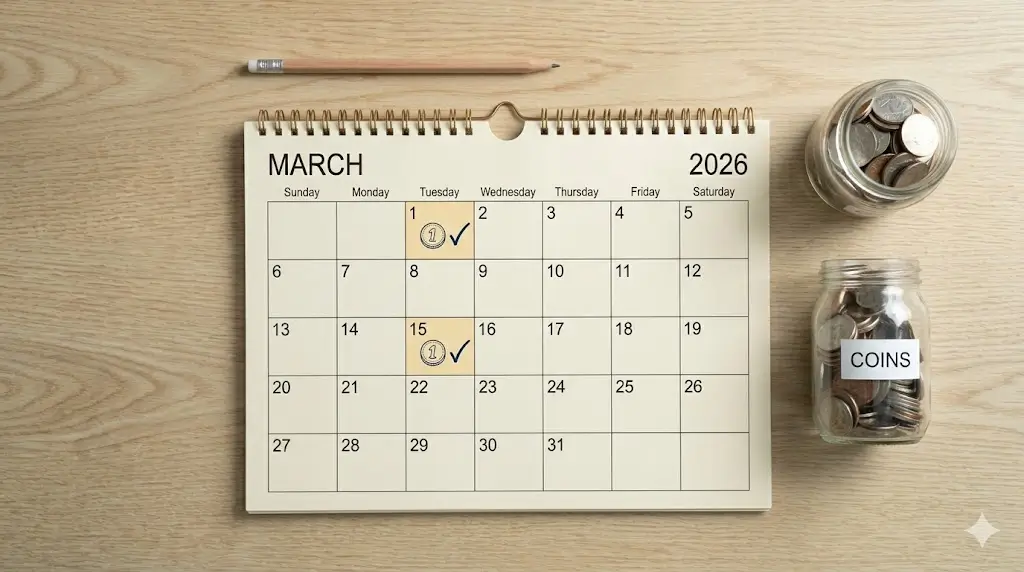
There are 52 weeks in a year, which means if you get paid biweekly, you receive exactly 26 paychecks. Take a calendar and circle every payday for the next 12 months. This is your roadmap.
2. Choose Your Saving Structure
The standard biweekly method involves escalating your savings.
- Paycheck 1: Save $4
- Paycheck 2: Save $8
- Paycheck 3: Save $12… and so on. By Paycheck 26, you will be saving $104, resulting in a total of $1,404 saved for the year.
3. Automate the Payday Transfer
Do not rely on willpower. The secret to this challenge is making the savings invisible.
- Pro Tip: Log into your employer’s payroll portal (like ADP or Gusto) and split your direct deposit. Have the exact challenge amount for that specific week routed directly into your dedicated HYSA. If you can’t split your paycheck, set up an automatic recurring transfer with your bank to occur the morning after payday.
4. Audit Your Expenses Before the “Heavy” Months
As you reach Paychecks 20 through 26, the biweekly deposits will range from $80 to $104.
- Insider Trick: Prepare for these larger deductions early by auditing your subscriptions, cutting back on dining out, or applying monetization strategies (like selling old electronics) to cover the difference without feeling the pinch.
5. Check the Box and Celebrate
Every payday, visually cross off the corresponding box on your printed tracker. This releases a hit of dopamine, reinforcing the positive habit and keeping you motivated for the next two weeks.
Income Potential & Earnings Breakdown
While saving money isn’t traditional “income,” every dollar you save is a tax-free dollar added to your net worth. Here is a realistic breakdown of the standard 26-paycheck escalating structure, showcasing your steady income potential:
| Paycheck Number | Deposit Amount | Total Account Balance |
|---|---|---|
| Paycheck 1 | $4.00 | $4.00 |
| Paycheck 5 | $20.00 | $60.00 |
| Paycheck 13 (Mid-Point) | $52.00 | $364.00 |
| Paycheck 20 | $80.00 | $840.00 |
| Paycheck 26 (Finish Line) | $104.00 | **$1,404.00** |
By simply aligning your savings with your paycheck, you effortlessly accumulate $1,404.00 over the course of a year. If you have a two-income household and both participate, that scales to $2,808.00.
Alternative Methods & Variations
If the escalating structure doesn’t fit your lifestyle, try these highly effective variations to fund your future online earnings:
- The Reverse Biweekly Challenge: Start by saving $104 on Paycheck 1, and work your way down to $4 on Paycheck 26. This is perfect for those who want to tackle the hardest milestones while their motivation is highest.
- The Fixed Biweekly Method: Divide your ultimate goal by 26. If you want to save $1,500 by the end of the year, simply automate a flat transfer of **$57.70 every payday**.
- The Percentage Method: Instead of fixed dollars, commit to saving 10% of your net pay every two weeks. This is highly recommended for freelancers or hourly workers whose paychecks fluctuate.
Best Practices & Optimization Tips
To guarantee you finish the challenge strong and maximize your seed capital, utilize these advanced strategies:
- Stack with a Side Hustle: Accelerate your timeline by using weekend gigs or freelance writing to fund the larger deposit weeks. Earning an extra $100 online can cover an entire biweekly milestone.
- Use Windfalls Intentionally: If you receive a tax refund or a work bonus, immediately check off the final, most expensive weeks of the challenge (Paychecks 24, 25, and 26) early.
- Leverage Cash-Back Tools: Use tools like Rakuten or a 2% cash-back credit card for your everyday essentials. Route all cash-back rewards directly into your biweekly challenge account to lighten the load.
Common Mistakes to Avoid
Even the most dedicated savers can stumble. Avoid these massive pitfalls that derail the challenge:
- Keeping the Money in Checking: If you leave your challenge funds in your primary checking account, you will eventually spend them on a whim. Separation is critical.
- Quitting When It Gets Hard: Paychecks 20 through 26 require dedication. Many people quit here because the deposit amounts feel too high. Anticipate this by temporarily reducing your “wants” budget during these crucial 12 weeks.
- Not Having a “Why”: Saving money just for the sake of it is boring. You need a powerful “Why.” Name your savings account after your goal (e.g., “Seed Money for Web Design Business” or “Down Payment Fund”).
Long-Term Sustainability & Growth
Successfully finishing the Biweekly Money Saving Challenge proves you have the rare financial discipline required to build lasting wealth. But true financial independence means moving beyond just saving.
Once you hit your $1,404 milestone, put that money to work. Transition from a saver to an investor by deploying smart reinvestment strategies. Use your accumulated capital to purchase index funds, fund a work from home business, or buy inventory to establish multiple revenue streams. By continuously running this challenge year after year and investing the proceeds, you create a self-sustaining ecosystem of compounding growth and lasting wealth.
Conclusion
The Biweekly Money Saving Challenge is the ultimate financial hack for anyone who wants to build steady wealth without completely overturning their daily life. By aligning your savings with your employer’s payroll schedule, starting small, and automating your success, you can easily accumulate over $1,400 in deployable capital in just one year.
Remember, wealth isn’t built overnight—it is built one paycheck at a time.
Ready to start your journey today? Which variation of the challenge are you going to use? Drop your plan in the comments below! Be sure to subscribe for weekly strategies on maximizing your money, and share your progress in our community.
FAQs
How much money can I realistically make or save with this challenge?
If you follow the standard escalating biweekly formula (saving $4 on paycheck one, up to $104 on paycheck 26), you will save exactly $1,404 over the course of one year.
Do I need prior experience with budgeting?
Not at all. This challenge is highly recommended for beginners because it requires action only twice a month. It slowly builds your budgeting discipline without demanding daily tracking.
What’s the initial investment to start?
The initial investment is incredibly low. For the standard biweekly method, you only need $4.00 for your very first paycheck deposit.
How long until I see results?
You will see a physical result in your bank account immediately after your first payday transfer. The psychological shift—where saving feels automatic and empowering—usually occurs within 60 to 90 days.
Is this method still working in 2026?
Absolutely. With the rising cost of living and inflation, syncing your savings directly to your payday before you have a chance to spend the money is one of the most effective, inflation-resistant financial strategies available today.
What are the risks involved?
There are no financial risks to saving your own money. The primary risk is losing motivation during the later, more expensive weeks of the challenge (paychecks 20-26). You can mitigate this by using the “Fixed” or “Reverse” biweekly variations outlined in this guide.
Your Feedback Informs Our Service
There are no reviews yet. Be the first one to write one.