
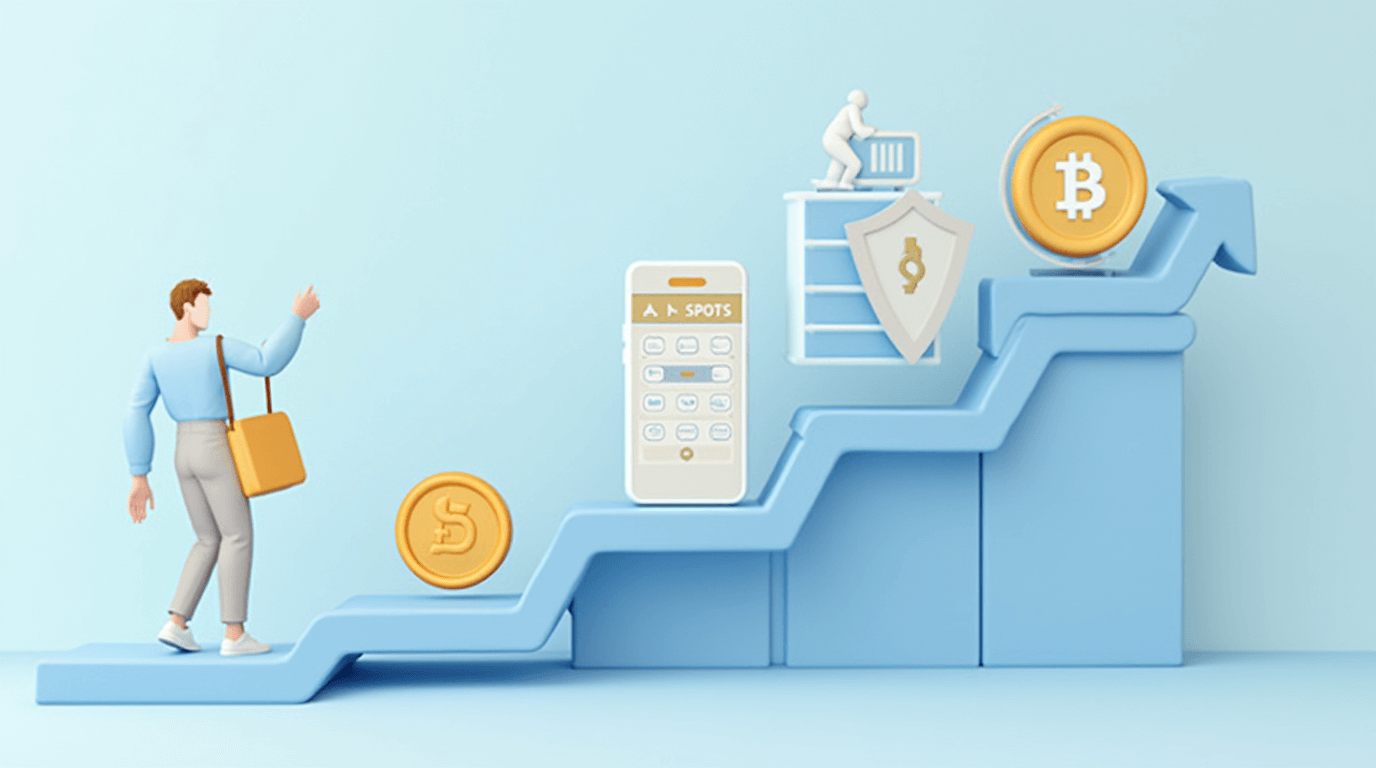
How to Invest in Cryptocurrency: A Practical and Clear Guide
Remember that moment when your friend mentioned they made thousands from Bitcoin, and you felt that familiar pang of regret? That “what if” feeling that keeps you awake at night, wondering if you missed the boat on the greatest wealth opportunity of our generation. You’re not alone in this feeling – millions of people worldwide share your curiosity about cryptocurrency, yet feel overwhelmed by its complexity. The good news? You haven’t missed your chance, and investing in cryptocurrency doesn’t require a computer science degree or a massive bank account.
Whether you’re a complete novice or someone who’s been hesitating on the sidelines, this comprehensive guide will transform you from cryptocurrency curious to confidently invested. You’ll discover practical strategies, avoid costly mistakes, and learn how to navigate this exciting digital frontier safely and profitably.
What Is Cryptocurrency and Why Should You Care?
Understanding Digital Currency Basics
Cryptocurrency represents a revolutionary form of digital money that operates independently of traditional banking systems. Unlike conventional currencies controlled by governments, cryptocurrencies utilize blockchain technology – a decentralized ledger system that records transactions across multiple computers simultaneously.
Think of cryptocurrency as digital cash with superpowers. It can:
- Transfer anywhere globally within minutes
- Operate 24/7 without banking hours
- Maintain transparency through public ledgers
- Provide potential investment returns exceeding traditional assets
The Investment Opportunity Landscape
The cryptocurrency market has evolved from a niche experiment to a multi-trillion-dollar ecosystem. Major corporations like Tesla, MicroStrategy, and Square have allocated portions of their treasuries to Bitcoin, while traditional financial institutions now offer cryptocurrency services to their clients.
Key Market Statistics:
- Total cryptocurrency market capitalization: Over $1 trillion
- Number of cryptocurrencies available: 10,000+
- Countries with cryptocurrency regulations: 50+
- Institutional adoption growth: 300% year-over-year
Getting Started: Your Cryptocurrency Investment Foundation
Step 1: Educate Yourself Before Investing
Before you invest in cryptocurrency, understanding fundamental concepts prevents costly mistakes. Start with these essential topics:
- Blockchain technology basics
- Different types of cryptocurrencies
- Market volatility patterns
- Security best practices
- Tax implications
Dedicate at least two weeks to learning before making your first purchase. Read whitepapers, follow reputable cryptocurrency news sources, and join educational communities.
Step 2: Assess Your Financial Readiness
Cryptocurrency investing requires honest self-evaluation of your financial situation. Apply the golden rule: never invest more than you can afford to lose completely.
Financial Checklist Before Investment:
| Financial Factor | Recommendation |
|---|---|
| Emergency Fund | 3-6 months expenses saved |
| High-Interest Debt | Pay off credit cards first |
| Investment Timeline | Minimum 2-3 years |
| Risk Tolerance | Comfortable with 50%+ swings |
| Investment Amount | Maximum 5-10% of portfolio |
Step 3: Choose Your Investment Strategy
Different approaches suit different personalities and financial goals. Select a strategy that matches your risk tolerance and time commitment.
Dollar-Cost Averaging (DCA)
This strategy involves purchasing fixed dollar amounts at regular intervals, regardless of price fluctuations. DCA reduces the impact of volatility and removes emotional decision-making from your investment process.
DCA Example:
- Invest $100 monthly in Bitcoin
- Purchase occurs same day each month
- Continue for 12-24 months minimum
- Benefits: Smooths price volatility, builds discipline
Lump-Sum Investment
Investing a larger amount at once can maximize gains during bull markets but increases risk if you buy at peak prices.
Portfolio Percentage Allocation
Treat cryptocurrency as one asset class within a diversified portfolio, typically allocating 5-10% of total investment funds.
Love building wealth? Check out these top investment strategies and get inspired to share your own winning portfolio!
5 Passive Income Investing Strategies to Build Wealth in 2026
Index Funds vs. Mutual Funds: Which is the Better Investment for You?
7 Critical Investing Mistakes for Beginners That Could Devastate Your Financial Future
What is a Roth IRA? The Ultimate Guide for Young Investors in 2025
5 Passive Income Investing Strategies to Build Wealth While You Sleep
5 Passive Income Investing Strategies to Build Wealth While You Sleep
Index Funds vs Stocks: The Smart New Investor’s Guide to Building Wealth in 2025
Selecting Your First Cryptocurrencies
Understanding Major Cryptocurrency Categories
The cryptocurrency ecosystem contains thousands of digital assets, but understanding major categories helps narrow your choices:
Store of Value Cryptocurrencies
- Bitcoin (BTC): Digital gold, limited supply of 21 million coins
- Litecoin (LTC): Faster transaction speeds than Bitcoin
Smart Contract Platforms
- Ethereum (ETH): Enables decentralized applications and smart contracts
- Solana (SOL): High-speed blockchain for decentralized applications
Utility Tokens
- Chainlink (LINK): Connects blockchain to real-world data
- Polygon (MATIC): Scaling solution for Ethereum
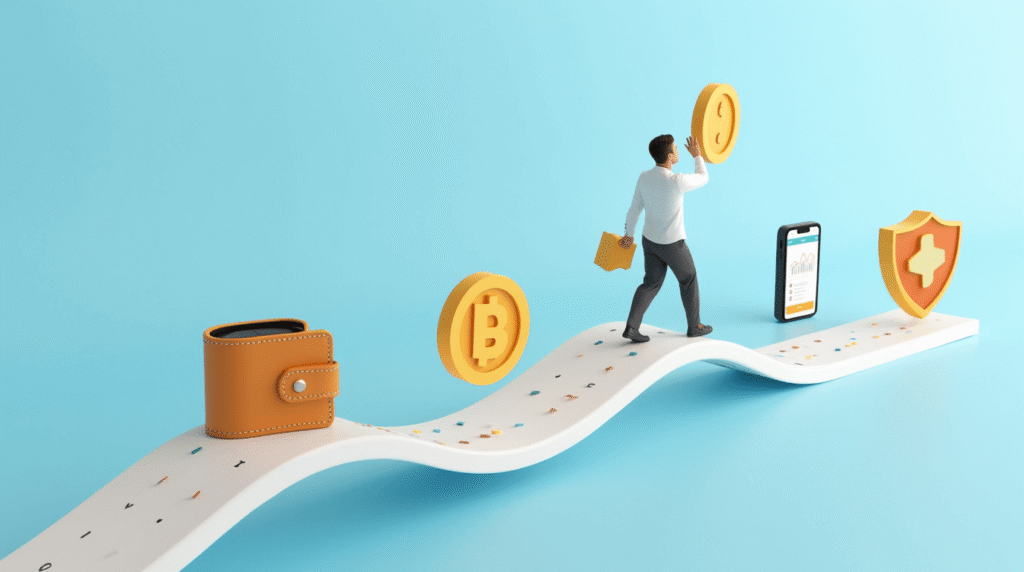
Beginner-Friendly Cryptocurrency Recommendations
For your initial investments, focus on established cryptocurrencies with strong track records:
- Bitcoin (40-50% of crypto allocation)
- Most established and widely accepted
- Store of value properties
- Institutional adoption leader
- Ethereum (30-40% of crypto allocation)
- Second-largest cryptocurrency by market cap
- Powers decentralized finance (DeFi) ecosystem
- Smart contract functionality
- Diversification options (10-20% of crypto allocation)
- Research smaller altcoins after gaining experience
- Consider index-style cryptocurrency funds
- Explore stablecoins for parking funds
Choosing a Cryptocurrency Exchange
Factors to Consider When Selecting an Exchange
Your choice of cryptocurrency exchange significantly impacts your investment experience. Prioritize these factors:
Security Features
- Two-factor authentication (2FA)
- Cold storage for user funds
- Insurance coverage for digital assets
- Regulatory compliance in your jurisdiction
User Experience
- Intuitive interface for beginners
- Mobile app availability
- Educational resources
- Customer support quality
Fees and Costs
- Trading fees (maker/taker rates)
- Deposit and withdrawal fees
- Spread costs on purchases
- Additional service charges
Top Beginner-Friendly Exchanges
| Exchange | Pros | Cons | Best For |
|---|---|---|---|
| Coinbase | User-friendly, regulated, insured | Higher fees, limited coins | Complete beginners |
| Kraken | Low fees, strong security | Complex interface | Cost-conscious users |
| Gemini | Regulated, good security | Limited altcoins | Security-focused investors |
| Binance.US | Low fees, many coins | Regulatory uncertainty | Experienced beginners |
Setting Up Your Exchange Account
Follow these steps to create your cryptocurrency exchange account securely:
- Choose a reputable exchange from the recommendations above
- Complete identity verification (KYC process)
- Enable two-factor authentication immediately
- Link your bank account or debit card
- Start with small test transactions before larger investments
- Verify all security settings before depositing funds
Making Your First Cryptocurrency Purchase
Step-by-Step Purchase Process
Once your exchange account is verified and funded, follow these steps for your first cryptocurrency purchase:
Market Orders vs. Limit Orders
- Market Order: Buys immediately at current market price
- Limit Order: Sets specific price for purchase execution
- Recommendation: Use market orders for first purchases, learn limit orders later
Purchase Execution Steps
- Log into your exchange account
- Navigate to the trading section
- Select your desired cryptocurrency
- Choose order type (market recommended for beginners)
- Enter purchase amount in dollars or cryptocurrency units
- Review transaction details carefully
- Execute the purchase
- Confirm transaction completion
Understanding Transaction Fees
Every cryptocurrency transaction involves fees that reduce your investment returns. Common fee types include:
- Trading fees: 0.25-1.5% per transaction
- Network fees: Variable based on blockchain congestion
- Deposit fees: Usually free for bank transfers
- Withdrawal fees: Fixed amounts per cryptocurrency
Cryptocurrency Storage and Security
Hot Wallets vs. Cold Wallets
Understanding storage options protects your investments from theft and loss:
Hot Wallets (Online Storage)
- Examples: Exchange wallets, mobile apps, web wallets
- Pros: Convenient for trading, easy access
- Cons: Vulnerable to hacking, not your private keys
- Best for: Small amounts, active trading
Cold Wallets (Offline Storage)
- Examples: Hardware wallets, paper wallets
- Pros: Maximum security, you control private keys
- Cons: Less convenient, upfront cost
- Best for: Long-term storage, larger amounts
Hardware Wallet Recommendations
For serious cryptocurrency investors, hardware wallets provide optimal security:
| Wallet | Price Range | Supported Coins | Best Feature |
|---|---|---|---|
| Ledger Nano S Plus | $79 | 5,500+ | Established reputation |
| Trezor Model One | $69 | 1,600+ | Open-source software |
| Ledger Nano X | $149 | 5,500+ | Bluetooth connectivity |
Security Best Practices
Implement these security measures to protect your cryptocurrency investments:
Essential Security Steps
- Use unique, strong passwords for all accounts
- Enable two-factor authentication on exchanges and wallets
- Write down recovery phrases and store them securely offline
- Never share private keys with anyone
- Use reputable antivirus software on your devices
- Avoid public Wi-Fi for cryptocurrency transactions
Red Flags to Avoid
- Phishing emails requesting login credentials
- Social media investment “opportunities”
- Promises of guaranteed returns
- Pressure to invest immediately
- Requests for private keys or recovery phrases
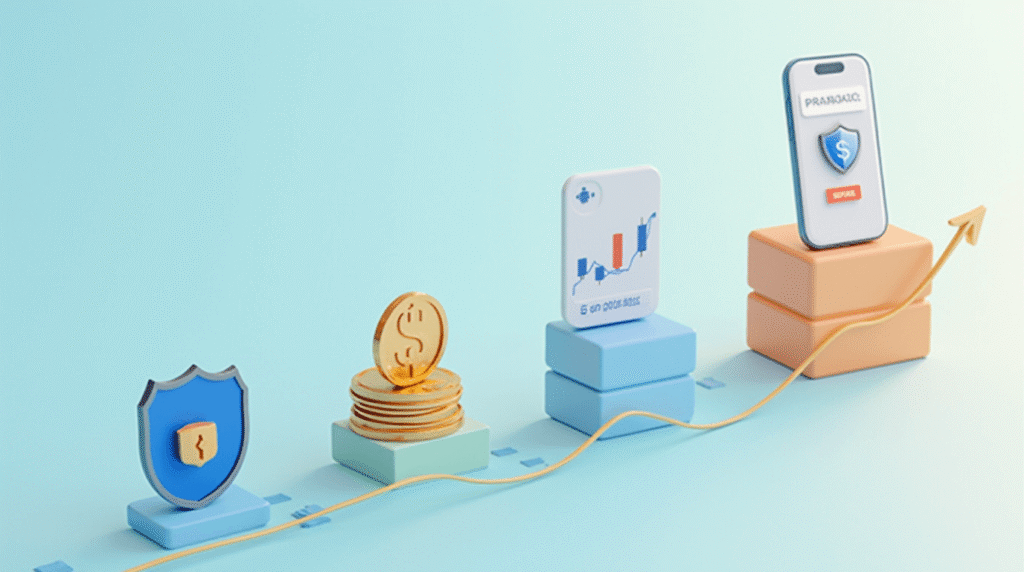
Managing Your Cryptocurrency Portfolio
Portfolio Tracking and Monitoring
Successful cryptocurrency investing requires regular portfolio monitoring without obsessive checking. Use these approaches:
Portfolio Tracking Tools
- CoinGecko: Free portfolio tracking, market data
- CoinMarketCap: Comprehensive market information
- Blockfolio: Mobile app for portfolio management
- Delta: Advanced portfolio analytics
Monitoring Frequency Recommendations
- Daily: Check major news and market trends
- Weekly: Review portfolio performance and rebalance if needed
- Monthly: Assess investment strategy effectiveness
- Quarterly: Consider taking profits or adding positions
Rebalancing Your Portfolio
Market volatility can shift your portfolio allocation significantly. Rebalancing maintains your desired risk profile:
When to Rebalance
- Asset allocation deviates 10%+ from target
- Major market events create opportunities
- New investment funds become available
- Your risk tolerance changes
Rebalancing Methods
- Calendar rebalancing: Set schedule (monthly/quarterly)
- Threshold rebalancing: Act when allocation shifts significantly
- Combination approach: Regular reviews with threshold triggers
Tax Implications of Cryptocurrency Investment
Understanding Cryptocurrency Taxation
The IRS treats cryptocurrency as property for tax purposes, creating specific obligations for investors:
Taxable Events
- Selling cryptocurrency for fiat currency
- Trading one cryptocurrency for another
- Using cryptocurrency for purchases
- Receiving cryptocurrency as income
Tax Rates
- Short-term gains (held <1 year): Ordinary income tax rates
- Long-term gains (held >1 year): Capital gains rates (0%, 15%, or 20%)
Record-Keeping Requirements
Maintain detailed records for tax compliance:
Essential Records:
- Purchase dates and prices
- Sale dates and prices
- Transaction fees paid
- Exchange records and statements
- Wallet addresses used
Recommended Tools:
- CoinTracker
- Koinly
- TaxBit
- Manual spreadsheet tracking

Common Cryptocurrency Investment Mistakes
Emotional Decision-Making Pitfalls
Cryptocurrency markets trigger strong emotions that lead to poor investment decisions:
FOMO (Fear of Missing Out)
- Problem: Buying during price spikes due to social media hype
- Solution: Stick to your investment plan and DCA strategy
- Prevention: Avoid checking prices constantly
Panic Selling
- Problem: Selling during market downturns due to fear
- Solution: Remember your investment timeline and goals
- Prevention: Only invest amounts you can afford to lose
Technical Mistakes to Avoid
Inadequate Security Measures
- Using weak passwords
- Ignoring two-factor authentication
- Storing large amounts on exchanges
- Falling for phishing scams
Poor Investment Strategies
- Putting all funds into one cryptocurrency
- Day trading without experience
- Following social media “tips”
- Ignoring fundamental analysis
Advanced Strategies for Growing Investors
Dollar-Cost Averaging Refinements
As you gain experience, refine your DCA strategy:
Smart DCA Approaches
- Buy the dip: Increase purchases during market downturns
- Value averaging: Adjust purchase amounts based on portfolio value
- Momentum DCA: Vary timing based on market conditions
Exploring DeFi (Decentralized Finance)
Once comfortable with basic investing, explore DeFi opportunities:
DeFi Investment Options
- Staking: Earn rewards for validating network transactions
- Liquidity mining: Provide liquidity to earn token rewards
- Yield farming: Optimize returns across multiple DeFi protocols
- Lending: Earn interest by lending your cryptocurrency
DeFi Risks to Consider
- Smart contract vulnerabilities
- Impermanent loss in liquidity pools
- Regulatory uncertainty
- Complex user interfaces
Frequently Asked Questions
How much money do I need to start investing in cryptocurrency?
You can begin investing in cryptocurrency with as little as $10-$50 on most major exchanges. However, consider transaction fees when making small purchases, as they can represent a significant percentage of your investment. A practical starting amount ranges from $100-$500, allowing you to learn without risking substantial funds.
What’s the best cryptocurrency to invest in for beginners?
Bitcoin and Ethereum represent the safest starting points for beginners learning how to invest in cryptocurrency. Bitcoin offers the most established track record and institutional adoption, while Ethereum provides exposure to smart contract technology and the growing DeFi ecosystem. Start with these two before exploring alternative cryptocurrencies.
Should I invest in cryptocurrency if I’m new to investing entirely?
If cryptocurrency represents your first investment experience, consider building a foundation with traditional investments first. Establish an emergency fund, pay off high-interest debt, and understand basic investment principles before adding cryptocurrency to your portfolio. When you do invest in cryptocurrency, limit it to 5-10% of your total investment portfolio.
How do I know when to buy or sell cryptocurrency?
Successful cryptocurrency investing relies more on time in the market than timing the market. Dollar-cost averaging eliminates the need to time purchases perfectly, while maintaining a long-term perspective helps avoid emotional selling during downturns. Set clear goals and stick to your investment plan rather than reacting to short-term price movements.
Is it safe to keep my cryptocurrency on an exchange?
While major exchanges have improved security significantly, keeping large amounts of cryptocurrency on exchanges still carries risks. Use exchanges for small amounts and active trading, but transfer larger holdings to hardware wallets for long-term storage. Remember: “Not your keys, not your coins.”
What happens if I lose access to my cryptocurrency wallet?
Losing access to your cryptocurrency wallet can result in permanent loss of funds. Always write down your recovery phrase (seed phrase) and store it securely offline. Consider using multiple backup methods and never store recovery phrases digitally where they could be hacked. Hardware wallet manufacturers provide detailed recovery procedures for lost or damaged devices.
Conclusion: Your Cryptocurrency Investment Journey Starts Now
Learning how to invest in cryptocurrency successfully requires patience, education, and disciplined execution. You’ve now gained the knowledge to begin your cryptocurrency investment journey safely and strategically. Remember these key principles: start small, invest only what you can afford to lose, prioritize security, and maintain a long-term perspective.
The cryptocurrency market will continue evolving rapidly, presenting both opportunities and challenges. Stay informed, adapt your strategy as you gain experience, and never stop learning. Your future self will thank you for taking the first step today.
Ready to begin? Start with these immediate actions:
- Choose a reputable exchange from our recommendations
- Complete the account verification process
- Set up strong security measures including 2FA
- Make your first small purchase using dollar-cost averaging
- Research hardware wallet options for future security upgrades
The best time to start investing in cryptocurrency was yesterday. The second-best time is right now. Take action today, and begin building your position in the future of finance.