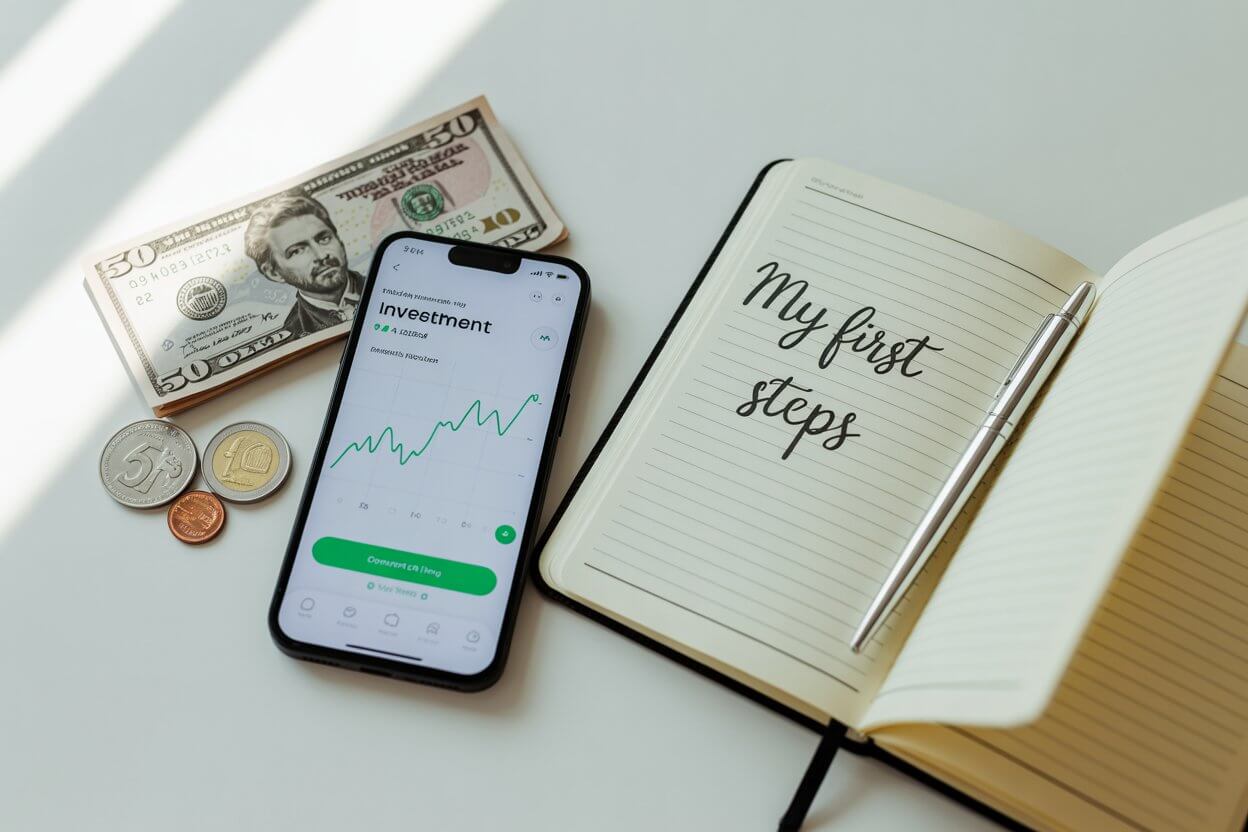
Investing For Beginners: How To Start With Just $50
Did you know that 92% of millionaires built their wealth through investing, yet only 55% of Americans own any stocks at all? If you’ve been sitting on the sidelines thinking you need thousands of dollars to start investing for beginners, you’re not alone—but you’re missing out on one of the most powerful wealth-building tools available to everyday people.
Here’s the truth that financial institutions don’t advertise: you can start building real wealth with as little as $50. Thanks to fractional shares, micro-investing apps, and commission-free platforms, the barriers that once kept regular people out of the stock market have completely crumbled. The teenager working part-time at a coffee shop now has access to the same investment opportunities that were once reserved for the wealthy elite.
But here’s where most beginners stumble—they either wait too long trying to learn everything before starting, or they jump in recklessly without understanding the basics. This guide walks you through a proven, step-by-step approach to investing for beginners that balances education with action. You’ll learn exactly how to start with just $50, what platforms to use, which investments make sense for newcomers, and how to avoid the costly mistakes that derail 60% of first-time investors within their first year.
Whether you’re looking to build passive income streams, achieve financial freedom, or simply make your money work harder than it does in a savings account earning 0.5% interest, you’re in the right place. Let’s transform you from a complete beginner into a confident investor who understands how to grow wealth sustainably over time.
Love watching your savings grow? Check out these top saving strategies and get inspired to share your own smart money habits!
How to Save Money on Electricity: 15 Surprisingly Simple Tips That Could Cut Your Bills in Half
Best Cashback Apps: How I Earn Over $500 Back a Year on Normal Shopping
How to Lower Your Bills: The Ultimate Guide to Negotiating Your Cable, Phone, and Insurance Rates
Master Your No Spend Challenge: The Ultimate Guide to Rules, Tips, and Incredible Savings in 2025
50 Easy Ways to Save Money on Groceries Without Coupons: Transform Your Food Budget Today
What You’ll Need to Get Started
The beauty of modern investing for beginners is that you need surprisingly little to begin building wealth. Here’s your complete starter kit:
Essential Tools & Platforms:
- A smartphone or computer with internet access (what you’re using right now)
- A brokerage account with one of these beginner-friendly platforms:
- Robinhood: $0 minimum, commission-free, intuitive interface
- Webull: $0 minimum, better research tools, free stock bonuses
- Fidelity or Charles Schwab: $0 minimum, more educational resources, traditional reliability
- Acorns: $3-12/month, automatic investing from spare change
- A bank account for linking and transferring funds
- Basic identification (driver’s license or passport for account verification)
Initial Investment Breakdown:
- Minimum to start: $1-50 depending on platform
- Recommended starting amount: $50-200 for diversification
- Monthly contribution goal: $25-100 (even $10 helps build the habit)
- No hidden fees with commission-free platforms
Skill Requirements:
- Basic reading comprehension (you’re already qualified!)
- Willingness to learn fundamental concepts
- Patience and long-term thinking
- No finance degree, stock market experience, or advanced math needed
- Free educational resources available on YouTube, Khan Academy, and platform tutorials
Free Alternatives & Resources:
- Practice with paper trading (virtual money) before risking real capital
- Use free stock screeners like Yahoo Finance or TradingView
- Access free investment calculators online
- Join Reddit communities like r/investing or r/Bogleheads for guidance
Time Requirements for Setup:
- Account opening: 10-15 minutes
- Identity verification: 1-3 business days
- Initial research and learning: 2-4 hours
- First investment execution: 5-10 minutes
The most important investment isn’t money—it’s your commitment to consistency and continuous learning.

Time Investment
Understanding the time commitment helps set realistic expectations for your investing for beginners journey.
Initial Setup & Learning Phase:
- Opening and funding your account: 20-30 minutes
- Completing beginner education (videos, articles): 3-5 hours over your first week
- Researching your first investments: 1-2 hours
- Total first-week time investment: 5-8 hours
Ongoing Time Commitment:
- Daily market checks (optional): 5-10 minutes
- Weekly portfolio review: 15-30 minutes
- Monthly performance assessment: 30-60 minutes
- Quarterly rebalancing: 1-2 hours
- Annual strategy review: 2-3 hours
Timeline to First Returns: Most beginners see their first positive returns within 30-90 days, though this varies based on market conditions. Here’s what realistic timelines look like:
- Immediate: Account growth from regular contributions (regardless of market performance)
- 3-6 months: Dividend payments if you invested in dividend stocks
- 6-12 months: Noticeable compound growth from consistent investing
- 1-3 years: Measurable portfolio growth averaging 7-10% annually (historical market average)
- 5+ years: Substantial wealth accumulation where compound interest becomes dramatically visible
According to Fidelity research, investors who check their portfolios less frequently actually outperform those who check daily by an average of 2-3% annually. The reason? Less emotional trading and better long-term decision-making.
Comparison with Traditional Income Methods:
- Savings account (0.5% APY): $50 becomes $50.25 in one year
- Investing (average 10% return): $50 becomes $55+ in one year
- Investing with monthly $50 contributions: $600 initial becomes $3,800+ in 5 years
The time you invest learning investing for beginners pays exponential dividends throughout your lifetime. Someone who starts investing at 25 versus 35 ends up with roughly twice the wealth at retirement, even with the same monthly contributions.
Step-by-Step Implementation Guide
Step 1: Choose Your Beginner-Friendly Investment Platform
Start by selecting a brokerage that matches your needs. For absolute beginners with $50, Robinhood or Webull offer the simplest interface with zero barriers to entry. If you want more educational support and plan to be a serious long-term investor, Fidelity or Charles Schwab provide excellent free resources alongside their platforms.
Download the app or visit the website, click “Open Account,” and provide basic information like your name, address, Social Security number, and employment details. The process takes about 15 minutes. You’ll need to link your bank account for transfers, which requires your routing and account numbers (found on your checks or bank app).
Pro Tip: Many platforms offer sign-up bonuses. Webull frequently gives 2-12 free stocks worth $6-1,600 for new accounts and deposits. Robinhood occasionally offers similar promotions. Check current offers before committing to a platform.
Step 2: Fund Your Account and Set Up Automatic Deposits
Transfer your initial $50 to your brokerage account. This typically takes 1-3 business days to process. While you’re waiting, set up automatic monthly deposits—even if it’s just $25. Automation removes the decision fatigue and ensures consistent investing regardless of your motivation levels.
Research shows that investors who automate their contributions invest 72% more over five years compared to those who transfer money manually when they “remember” or “have extra money.”
Pro Tip: Time your automatic deposits for right after payday. This “pay yourself first” strategy ensures investing happens before you spend on discretionary items.
Step 3: Understand Your Investment Options
Before buying anything, understand what you’re choosing between. Here are the main options for investing for beginners:
Index Funds/ETFs (Best for beginners): These are baskets of stocks that track market indices. Examples include:
- VOO or SPY: Tracks S&P 500 (500 largest US companies)
- VTI: Tracks entire US stock market (about 4,000 companies)
- VXUS: Tracks international stocks
- Cost: $50-500 per share, but fractional shares let you buy portions
Individual Stocks (Riskier but educational): Buying shares of specific companies like Apple, Microsoft, or Tesla. Good for learning but shouldn’t represent more than 10-20% of a beginner portfolio.
Dividend Stocks: Companies that pay regular cash distributions to shareholders. Examples include Coca-Cola, Johnson & Johnson, or Realty Income.
Robo-Advisors: Automated services that build and manage portfolios for you (Betterment, Wealthfront). Typically charge 0.25% annually.
Pro Tip: Warren Buffett, one of history’s greatest investors, recommends beginners put 90% of their money in a low-cost S&P 500 index fund and 10% in short-term government bonds. This strategy has proven successful for decades.
Step 4: Make Your First Investment
With your account funded, it’s time to buy. For your first $50 investment, consider this simple strategy:
Search for “VOO” or “VTI” in your brokerage app. These are S&P 500 ETFs that instantly diversify your money across hundreds of companies. Click “Buy,” enter your dollar amount ($50), and review the order. You can buy fractional shares, so $50 gets you a proportional piece of the ETF even if each share costs $400.
Execute a “market order” during trading hours (9:30 AM – 4:00 PM EST, Monday-Friday) for immediate purchase at the current price. Congratulations—you’re now a shareholder in hundreds of America’s largest companies, including Apple, Microsoft, Amazon, and Google.
Pro Tip: Consider “dollar-cost averaging” by splitting your initial $50 into five $10 purchases over five weeks. This reduces the risk of investing all your money right before a market dip.
Step 5: Build a Diversified Portfolio Over Time
Don’t stop at your first investment. As you add more money monthly, gradually build diversification:
- Months 1-3: Focus on broad market index funds (US stocks)
- Months 4-6: Add international exposure (VXUS or similar)
- Months 7-9: Consider adding bonds for stability (BND or AGG)
- Months 10-12: Optional: Add individual stocks you’ve researched (limit to 10-20% of portfolio)
A simple beginner portfolio might look like this:
- 70% US Total Stock Market (VTI)
- 20% International Stocks (VXUS)
- 10% Bonds (BND)
This diversification reduces risk while maintaining growth potential.
Pro Tip: Rebalance annually. If one category grows to represent more than your target allocation, sell some and buy the underweight categories. This forces you to “sell high, buy low” systematically.
Step 6: Educate Yourself Continuously
Investing for beginners is a journey, not a destination. Dedicate 30 minutes weekly to financial education:
- Read books: “The Simple Path to Wealth” by JL Collins, “The Little Book of Common Sense Investing” by John Bogle
- Watch YouTube channels: Graham Stephan, Andrei Jikh, The Plain Bagel
- Follow financial news sources: CNBC, Bloomberg, The Motley Fool
- Listen to podcasts: ChooseFI, BiggerPockets Money, The Dave Ramsey Show
The more you understand about market cycles, company fundamentals, and investment psychology, the better decisions you’ll make and the more confident you’ll feel during market volatility.
Pro Tip: Join online communities like Reddit’s r/Bogleheads or r/investing. Reading others’ questions and expert answers accelerates your learning dramatically.
Step 7: Track Your Progress and Stay Consistent
Create a simple spreadsheet or use your brokerage app’s tracking features to monitor your portfolio monthly. Track your total contributions, current value, and percentage gain/loss. This helps you understand your returns and stay motivated.
Remember that investing for beginners is about time in the market, not timing the market. The S&P 500 has returned an average of 10% annually over the past century, but only for investors who stayed invested through ups and downs.
Pro Tip: During market downturns (which happen regularly), remember you’re buying investments “on sale.” Investors who continued buying during the 2020 COVID crash saw 80%+ returns within two years.
Step 8: Increase Contributions as Income Grows
Start with whatever you can afford—even $10 monthly builds the habit. But as your income increases through raises, side hustles, or career advancement, increase your investment contributions proportionally.
A good rule of thumb: invest at least 15% of your gross income for retirement, plus additional amounts for other goals. If you earn $3,000 monthly, that’s $450 toward investing. Can’t afford that yet? Start with 5% and increase by 1% every six months.
Pro Tip: Invest any windfalls immediately—tax refunds, bonuses, gifts, or side hustle earnings. These lump sums can dramatically accelerate your wealth building without affecting your monthly budget.
Income Potential & Earnings Breakdown
Investing for beginners creates wealth through two mechanisms: capital appreciation (price increases) and dividend income. Here’s what realistic returns look like:
Historical Average Returns:
| Investment Type | Average Annual Return | Risk Level | Best For |
|---|---|---|---|
| S&P 500 Index Fund | 10-11% | Moderate | Long-term growth |
| Total Stock Market | 9-10% | Moderate | Diversified growth |
| Dividend Stocks | 7-8% + 2-4% dividends | Low-Moderate | Income generation |
| Individual Stocks | -50% to +200% | High | Experienced investors |
| Bonds | 3-5% | Low | Stability |
| High-Yield Savings | 0.5-4.5% | Very Low | Emergency fund |
Realistic Growth Projections (Starting with $50 + $100 monthly):
- Year 1: Contributions: $1,250, Value: $1,325 (assuming 10% average return)
- Year 3: Contributions: $3,650, Value: $4,200
- Year 5: Contributions: $6,050, Value: $7,600
- Year 10: Contributions: $12,050, Value: $19,500
- Year 20: Contributions: $24,050, Value: $68,000
- Year 30: Contributions: $36,050, Value: $197,000
Monthly Dividend Income Potential:
With a $10,000 portfolio invested in dividend stocks yielding 4%, you generate $400 annually or $33 monthly in passive income. As your portfolio grows, this income compounds:
- $25,000 portfolio: $83/month in dividends
- $50,000 portfolio: $167/month in dividends
- $100,000 portfolio: $333/month in dividends
- $500,000 portfolio: $1,667/month in dividends (meaningful passive income)
Real-World Case Study:
Sarah, a 28-year-old teacher, started investing for beginners with $100 in 2018. She automated $75 monthly contributions into a simple three-fund portfolio (US stocks, international stocks, bonds). Despite market volatility including the 2020 crash, her consistency paid off:
- Initial investment: $100
- Total contributions over 5 years: $4,600
- Portfolio value in 2023: $6,200
- Gain: $1,600 (34.8% total return)
- Average annual return: 9.2%
Sarah’s success came from consistency, not market timing or stock-picking genius. She simply stayed invested and kept contributing.
Important Disclaimer: Past performance doesn’t guarantee future results. Markets fluctuate, and you may experience years with negative returns. Investing carries risk, and you could lose money, especially in the short term. These projections assume historical average returns continue, which may not occur.
Alternative Methods & Variations
Investing for beginners isn’t one-size-fits-all. Here are different approaches based on your goals, risk tolerance, and time commitment:
Passive Index Investing (Recommended for most beginners): The “set it and forget it” approach using low-cost index funds. Requires minimal time, proven track record, and beats 90% of professional investors over 15+ year periods. Perfect for busy people who want wealth building without becoming investment experts.
Dividend Growth Investing: Focus on stocks with strong histories of increasing dividend payments annually. Companies like Johnson & Johnson, Procter & Gamble, and Coca-Cola have raised dividends for 50+ consecutive years. This strategy emphasizes current income over maximum growth and appeals to those who want tangible cash flow.
Robo-Advisor Approach: Platforms like Betterment, Wealthfront, or M1 Finance build and automatically rebalance portfolios based on your risk tolerance. They charge 0.25-0.50% annually but handle everything for you. Ideal for absolute beginners who want professional management without high fees.
Target-Date Fund Strategy: Single-fund solution that automatically becomes more conservative as you approach retirement. For example, a 2055 Target-Date Fund assumes you’ll retire around 2055 and adjusts its stock-to-bond ratio accordingly. Ultimate simplicity with good results.
Micro-Investing Apps: Acorns rounds up your purchases to the nearest dollar and invests the change. Spending $3.75 on coffee means $0.25 goes to investments. Requires zero discipline but charges $3-12 monthly, which can be significant for small portfolios.
401(k) or IRA Priority Approach: Many beginners should prioritize tax-advantaged retirement accounts before taxable brokerage accounts. A 401(k) with employer matching gives you immediate 50-100% returns through the match—impossible to beat anywhere else.
Growth Stock Speculation (Higher Risk): Some beginners prefer researching and buying individual growth companies like Tesla, Nvidia, or emerging tech stocks. This requires significantly more research, carries higher risk, but can yield exceptional returns if you choose well. Limit this to 10-20% of your portfolio.
Combination Strategy: Most successful long-term investors use a hybrid approach: 70-80% in diversified index funds for stability and growth, 10-20% in individual stocks they’ve researched, and 10% in bonds for balance. This provides stability with some excitement.
Best Practices & Optimization Tips
Maximize your investing for beginners success with these expert-backed strategies:
Psychological Optimization:
- Never check your portfolio during market crashes—emotional decisions destroy wealth
- Set up automatic investing to remove decision-making during volatile periods
- Remember that temporary losses on paper aren’t real losses unless you sell
- Focus on your contribution consistency, not daily market movements
Tax Optimization Strategies:
- Maximize contributions to tax-advantaged accounts (401k, IRA) before taxable accounts
- Use Roth IRAs for tax-free growth if you expect higher future tax rates
- Hold investments for 1+ years to qualify for lower long-term capital gains taxes
- Harvest tax losses in taxable accounts to offset gains (consult a tax professional)
Platform Optimization:
- For simplicity: Robinhood or Acorns
- For education: Fidelity or Charles Schwab (extensive free resources)
- For automation: Betterment or Wealthfront (robo-advisors)
- For active trading: Webull or TD Ameritrade (better tools and research)
- For retirement focus: Vanguard (retirement-oriented, excellent funds)
Time-Saving Hacks:
- Set up automatic monthly deposits on payday—never think about it again
- Use target-date funds or robo-advisors for fully automated portfolio management
- Limit portfolio checks to monthly or quarterly (weekly at most)
- Ignore financial news and market predictions—they create stress without improving results
Community Resources:
- Reddit communities: r/Bogleheads (index investing), r/investing (general), r/Fire (financial independence)
- Forums: Bogleheads.org forum (incredibly helpful community)
- Free courses: Khan Academy Finance, Coursera’s Introduction to Investments
- Podcasts: BiggerPockets Money, ChooseFI, The Money Guy Show
Advanced Optimization Techniques:
- Dollar-cost averaging: Invest fixed amounts regularly regardless of market conditions
- Rebalancing: Annually adjust your portfolio back to target allocations
- Asset location: Place tax-inefficient investments in tax-advantaged accounts
- Contribution laddering: Increase contributions by 1% every six months
- Emergency fund first: Keep 3-6 months of expenses in savings before aggressive investing
Performance Monitoring: Track these key metrics monthly:
- Total contributions to date
- Current portfolio value
- Percentage gain/loss
- Asset allocation (still matching your targets?)
- Annual return percentage
Use free portfolio trackers like Personal Capital, Mint, or your brokerage’s built-in tools.

Common Mistakes to Avoid
Learning from others’ mistakes saves you thousands of dollars and years of setbacks:
Waiting for the “Perfect Time” to Start (67% of beginners): There’s no perfect market entry point. Investors who waited for “the right time” during the 2010s missed a 300%+ bull market. Time in the market beats timing the market. The best time to start was yesterday; the second-best time is today.
Panic Selling During Market Downturns: The S&P 500 has experienced 26 corrections (10%+ drops) since 1970. Every single time, it recovered and reached new highs. Investors who sold during these drops locked in permanent losses, while those who held recovered fully. The 2020 crash saw a 34% drop in March, but the market gained 65% by year-end.
Not Diversifying Adequately: Putting all your money into one stock—even a “sure thing” like Tesla or Apple—exposes you to catastrophic loss if that company fails. Enron, Lehman Brothers, and countless others prove no single company is safe. Index funds spread your $50 across hundreds of companies instantly.
Chasing Hot Stocks Based on Social Media: The GameStop saga of 2021 left thousands of beginners with massive losses after buying at $300+ per share based on Reddit hype. By the time you hear about a “hot stock,” smart money has often already exited. Stick to your strategy instead of chasing trends.
Paying High Fees Unnecessarily: A 1% annual management fee sounds small but costs you 30% of your wealth over 30 years compared to a 0.04% index fund fee. Always compare expense ratios and choose low-cost options when possible. The difference between a 0.04% and 1% fee on a $100,000 portfolio is $9,600 annually.
Overcomplicating Your Strategy: Some beginners create portfolios with 30+ individual positions, spending hours weekly on research and management. Studies show simple three-fund portfolios typically outperform complex strategies while requiring 10% of the time investment.
Ignoring Tax-Advantaged Accounts: Investing in a taxable brokerage account before maxing out 401(k) matches and IRA contributions costs you thousands in unnecessary taxes. Always prioritize retirement accounts for their tax benefits and compound growth advantages.
Investing Money You Need Short-Term: The stock market can drop 30-50% and take years to recover. Only invest money you won’t need for at least 5 years, preferably 10+. Your emergency fund and money for near-term goals belongs in high-yield savings accounts, not the stock market.
Following “Expert” Predictions: Financial pundits predict market crashes constantly, and they’ll eventually be right—but missing the market while waiting costs you more. No one consistently predicts market movements. In 2019, experts predicted a recession; the market gained 29%. In 2020, no one predicted COVID; the market still ended up 16%.
Checking Your Portfolio Too Frequently: Studies show investors who check portfolios daily make more emotional trades and underperform those who check quarterly by 2-3% annually. Set your strategy, automate your contributions, and review quarterly at most.
Long-Term Sustainability & Growth
Building lasting wealth through investing for beginners requires evolving your approach over time:
Maintenance & Evolution:
- Years 1-2: Focus on consistency and basic education—build the foundation
- Years 3-5: Increase contributions as income grows, maintain your strategy through market volatility
- Years 6-10: Begin seeing significant compound growth, potentially add more sophisticated strategies
- Years 10+: Substantial portfolio that begins feeling “real,” continue discipline despite size
Progressive Contribution Strategy: Don’t keep your contributions static. As your career advances and income increases, scale up:
- Starting out: 5-10% of income
- Career building: 15-20% of income
- Peak earning years: 20-25%+ of income
- Each raise: Immediately increase investing by at least half the raise amount
Reinvestment Strategies: As your portfolio grows, optimize how you reinvest:
- Always reinvest dividends automatically (most platforms offer this option)
- As you reach $10,000+ in one category, consider tax-loss harvesting
- At $50,000+ portfolios, consult a fee-only financial advisor for optimization
- Consider I-Bonds or Treasury securities for emergency fund alternatives (better returns)
Diversification Evolution: Your asset allocation should become more sophisticated over time:
- 20s-30s: 90% stocks, 10% bonds (aggressive growth)
- 40s: 80% stocks, 20% bonds (moderate growth)
- 50s: 70% stocks, 30% bonds (balanced)
- 60s+: 60% stocks, 40% bonds (conservative preservation)
The rule of thumb: bonds percentage roughly equals your age, but can be adjusted based on risk tolerance and goals.
Multiple Account Strategy: As wealth builds, layer your investment accounts strategically:
- Emergency fund: 3-6 months expenses in high-yield savings (first priority)
- 401(k): At least enough to get full employer match
- HSA: If available, max this out (triple tax advantage)
- Roth IRA: Max annual contribution ($6,500-7,000 depending on age and year)
- Traditional IRA: If income limits allow
- Taxable brokerage: After maxing tax-advantaged accounts
- 529 plans: For children’s education if applicable
Automation & Passive Management: Set up systems that run without constant attention:
- Automatic contributions from every paycheck
- Automatic dividend reinvestment
- Annual automatic rebalancing (some platforms offer this)
- Quarterly portfolio reviews calendared in advance
- Limit active decisions to once annually unless major life changes occur
Income Stream Development: As your portfolio grows into six figures, you can shift focus:
- Build dividend income streams for supplemental cash flow
- Consider real estate investment trusts (REITs) for diversified property income
- At $500,000+ portfolios, begin considering early retirement scenarios
- Explore other asset classes like bonds, commodities, or real estate
Future-Proofing & Adaptation: Markets and economies evolve; your strategy should too:
- Stay informed about tax law changes affecting investment accounts
- Adjust international exposure as global economic dynamics shift
- Consider inflation-protected securities (TIPS) as you approach retirement
- Remain flexible—the best strategies adapt to changing conditions while maintaining core principles
Knowledge Expansion: Continue education throughout your investing journey:
- Read annual letters from successful investors (Warren Buffett, Howard Marks)
- Take advanced courses once basics are mastered
- Consider CFA or CFP materials (even without pursuing credentials)
- Learn about estate planning and wealth transfer as assets grow
The most successful long-term investors report that after 10+ years, their systems run almost automatically. The habits built early compound just like your money, making wealth-building feel effortless over time.
Conclusion
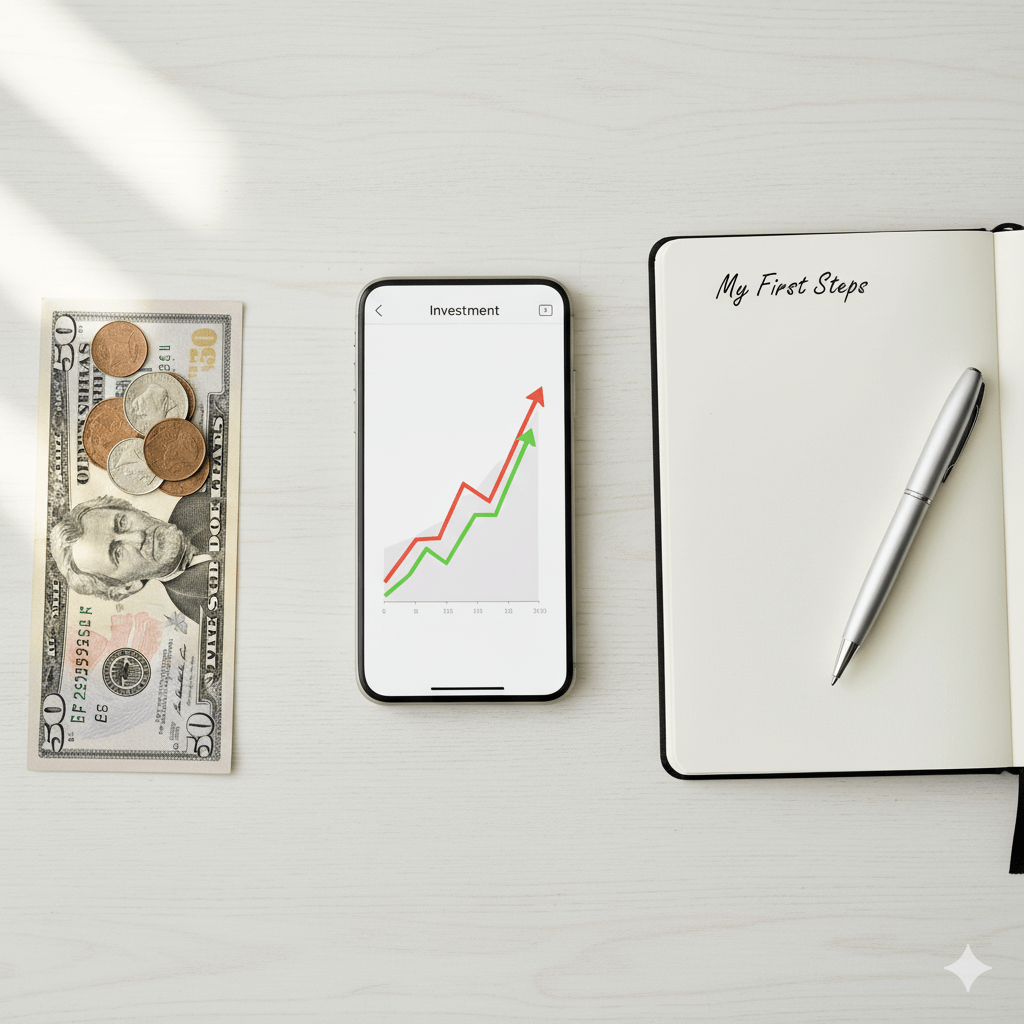
Investing for beginners doesn’t require a finance degree, thousands of dollars, or perfect market timing. You’ve learned that with just $50 and a smartphone, you can begin building real wealth through simple, proven strategies like index fund investing. The key takeaways: start immediately with whatever amount you have, automate your contributions to build consistency, diversify through low-cost index funds, and maintain discipline through market volatility.
Remember that the average American who starts investing at 25 instead of 35 retires with approximately twice the wealth, even with identical contribution amounts. Every day you delay costs you compound growth. The difference between beginning today versus next year could mean tens of thousands of dollars by retirement—all from postponing a 15-minute account setup.
Your next step is clear: choose a platform, open your account, and make that first $50 investment. It doesn’t need to be perfect; it needs to happen. Whether you’re building passive income streams, working toward financial freedom, or creating a safety net for your family, this journey begins with a single decision to start.
Ready to transform from a complete beginner into a confident investor? Open your brokerage account this week and drop your questions in the comments below! Subscribe for weekly investing tips tailored to beginners, and share your progress in our community using #InvestingForBeginners. Download our free investment calculator and beginner’s checklist to track your wealth-building journey!
FAQs
How much money can I realistically make from investing as a beginner?
Based on historical S&P 500 returns, you can expect an average of 10% annual growth over long periods (20+ years), though individual years vary dramatically from -30% to +40%. Starting with $50 and contributing $100 monthly, you could realistically have $19,500 after 10 years and $197,000 after 30 years. However, these are projections based on historical averages—actual returns vary based on market conditions, your investment choices, and contribution consistency. Some years you’ll lose money; others you’ll gain significantly. The key is time and consistency, not getting rich quickly.
Do I need prior experience or financial knowledge to start investing?
Absolutely not. While basic financial literacy helps, you can start investing for beginners with zero prior experience. Modern platforms like Robinhood, Fidelity, and Webull are designed for complete newcomers with intuitive interfaces and educational resources. You’ll learn by doing, and starting with simple index funds requires minimal knowledge—you’re essentially betting on the entire economy growing over time, which it has consistently done for over a century. Dedicate 2-4 hours to learning basics before your first investment, then continue educating yourself as you go. Many successful investors started knowing nothing and learned through experience.
What’s the initial investment required to start?
You can start with as little as $1 on platforms supporting fractional shares. However, $50-100 is recommended as a starting point because it’s substantial enough to feel real and motivate continued contributions, yet small enough that most people can afford it without financial stress. Many platforms have $0 minimum account requirements (Robinhood, Webull, Fidelity, Charles Schwab). The bigger question isn’t what’s required to start, but what you can consistently contribute monthly. Even $25-50 monthly contributions compound significantly over decades.
How long until I see actual results and returns?
You’ll see your account value fluctuate from day one, but meaningful growth typically becomes visible after 6-12 months of consistent investing. Dividend-paying investments may provide cash payments within 3 months. However, investing for beginners is fundamentally a long-term strategy—think 5, 10, 20+ years rather than months. In the short term (under 3 years), you might even lose money depending on market conditions. The real “results” aren’t just returns; they’re the habits you build and the compound growth that accelerates dramatically after 10+ years of consistency.
Is investing still working in 2025, or has the opportunity passed?
Investing works in every era because it’s based on economic growth, not temporary opportunities. While specific strategies and platforms evolve, the fundamental principle—owning productive assets that increase in value over time—has worked for centuries and shows no signs of stopping. The S&P 500 has delivered positive returns in 70% of years since its creation and has never failed to recover from crashes when given sufficient time. In fact, 2025 might be an excellent entry point depending on current market conditions. The best time to start was 10 years ago; the second-best time is today. Future returns are unknowable, but historical precedent strongly favors long-term investors.
What are the risks involved in investing for beginners?
All investing carries risk, primarily the risk of losing money, especially in the short term. The stock market can drop 20-50% during recessions, and individual stocks can become worthless if companies fail. Other risks include inflation eroding purchasing power if you don’t invest, opportunity cost of missing gains while money sits in savings, and emotional risk of panic-selling during downturns. However, the risk of not investing is actually greater—money in savings accounts loses purchasing power to inflation (typically 2-3% annually), while diversified stock portfolios have averaged 10% annual gains historically. Mitigate risk through diversification (index funds), long time horizons (10+ years), and only investing money you won’t need short-term.
Can I lose all my money when investing?
While theoretically possible with individual stocks (if the company goes bankrupt), you cannot lose all your money with diversified index funds unless every major company in the economy simultaneously fails—essentially economic collapse. Even during the Great Depression, the market eventually recovered. With S&P 500 index funds, you’d need all 500 of America’s largest companies to fail simultaneously. Your bigger risk is losing 30-50% during market crashes (which has happened multiple times), but these have always recovered given time. This is why financial advisors emphasize investing only money you won’t need for 5-10+ years. Short-term losses are part of investing; permanent losses only happen if you sell during downturns or choose extremely risky individual investments.
Should I pay off debt before investing?
It depends on interest rates. High-interest debt (credit cards at 15-25% APY) should absolutely be paid off before investing, as no investment reliably returns 20%+ annually.
Your Feedback Informs Our Service
This article was the push I needed! I always thought investing was for rich people, but the $50 starting point made it feel so accessible. The step-by-step guide on which platforms to use was incredibly helpful. Finally, a finance article that speaks to real beginners.
Finally, a guide that demystifies the entire process! The language is clear and not full of intimidating jargon. I appreciated the specific examples of what a $50 investment could actually look like. It made the whole concept feel less abstract and much more actionable.
As a total newbie, I found this post incredibly empowering. It cuts through the noise and gives you a straightforward, no-nonsense plan. The tip about starting small to build confidence was key for me. I’ve already opened my first investment account thanks to this guide!
What a refreshing and practical read! It addresses the biggest hurdle for most beginners: the belief that you need a lot of money. The article provides not just the “how” but also the “why,” which is so important for motivation. Highly recommend for anyone feeling hesitant to start.