Simple Ways to Save Money on Electric Bill to Fund Your Side Hustle
Did you know that the average household overpays for electricity by up to 25% every single month due to invisible “vampire” energy drains? If you are actively searching for ways to save money on electric bill expenses, you are already making a crucial pivot in your wealth-building journey. Most aspiring online entrepreneurs focus 100% of their energy on increasing their online earnings, while completely ignoring the “leaky buckets” right inside their own homes.
Think of your home as a business. When you lower your operating costs, you instantly increase your profit margins. Every dollar you shave off your utility bill is a tax-free dollar that can be redirected toward funding a new side hustle, investing for passive income, or accelerating your path to financial freedom. In this comprehensive guide, we are going to break down exactly how you can slash your energy costs, optimize your living space, and create a stealthy new source of capital.
What You’ll Need to Get Started
How much could YOU save on your electric bill?
Enter your average monthly electric bill below to reveal your hidden “vampire” energy savings.
You don’t need a degree in electrical engineering to see immediate results. Sourcing these basic tools will help you monitor your usage and implement effective monetization strategies for your saved cash.
- A Baseline Benchmark: Your last 3-6 months of electric bills to track your progress.
- Smart Power Strips: To eliminate “vampire” energy draw from electronics (Cost: $15-$25).
- LED Bulbs: To replace outdated, energy-guzzling incandescent bulbs (Cost: $10-$20 for a multi-pack).
- Energy Monitoring App: Many local utility companies offer free mobile apps to track daily usage.
- Initial Investment: $0 to $50. You can start with completely free behavioral changes before buying smart home tech.

Time Investment & ROI Timeline
Treating your household utilities like a business overhead requires a minor upfront time investment, but the monthly recurring savings function exactly like reliable digital income.
- Setup Time: 1 to 2 hours for a full home energy audit and swapping out bulbs/power strips.
- Daily/Weekly Commitment: 2-5 minutes a day (adjusting thermostats, unplugging specific devices).
- Timeline to First Earnings (Savings): Most beginners see a 15% to 20% reduction on their very next billing cycle (within 30-60 days) with consistent effort.
- Comparison: Unlike building an affiliate website which might take 6 months to see a return, lowering your electric bill yields guaranteed, immediate financial results.
Love watching your savings grow? Check out these top saving strategies and get inspired to share your own smart money habits!
How to Save Money on Electricity: 15 Surprisingly Simple Tips That Could Cut Your Bills in Half
Best Cashback Apps: How I Earn Over $500 Back a Year on Normal Shopping
How to Lower Your Bills: The Ultimate Guide to Negotiating Your Cable, Phone, and Insurance Rates
Master Your No Spend Challenge: The Ultimate Guide to Rules, Tips, and Incredible Savings in 2025
50 Easy Ways to Save Money on Groceries Without Coupons: Transform Your Food Budget Today
Step-by-Step Implementation Guide
Follow these actionable, sequential steps to strategically lower your energy overhead and maximize your home’s efficiency.
1. Slay the “Energy Vampires”
Devices like gaming consoles, coffee makers, and phone chargers consume electricity even when turned off. Plug your home office and entertainment setups into smart power strips. When you switch off the main device (like your TV or PC), the strip cuts power to all peripherals, instantly stopping phantom loads.
2. Optimize Your Work-From-Home Station
If you work from home, your computer is running 8-10 hours a day.
- Pro Tip: Switch your PC’s power settings to “Energy Saver” mode.
- Reduce screen brightness to 70%.
- Use a laptop instead of a desktop when possible, as laptops consume up to 80% less electricity.
3. Master Strategic Climate Control
Heating and cooling account for roughly 47% of an average home’s energy use.
- Set your thermostat to 68°F (20°C) in the winter while awake, and lower it while sleeping.
- In the summer, aim for 78°F (26°C).
- Insider Trick: Use thermal curtains to block out the summer sun and trap winter heat, reducing the workload on your HVAC system.
4. Shift to “Off-Peak” Operations
Many utility companies use Time-of-Use (TOU) pricing. This means electricity is cheaper during hours when overall grid demand is low (usually late at night or mid-day). Run your heavy appliances—like dishwashers, washing machines, and dryers—during these off-peak hours to slash your rates.
5. Lower the Water Heater Temperature
By default, most water heaters are set to 140°F, which is unnecessarily high and wastes energy keeping the water continuously hot. Dial it back to 120°F. You won’t notice a difference in your shower, but you will notice a difference in your wallet.
Income Potential & Earnings Breakdown
How much capital can you realistically generate when you systematically save money on electric bill costs? Let’s look at these savings as new revenue streams for your digital ventures.
| Experience Level | Monthly Savings | Annual “Income” | Potential Reinvestment |
|---|---|---|---|
| Beginner (Behavior changes) | $20 – $40 | $240 – $480 | Web hosting, domain names, basic courses |
| Intermediate (Smart strips, LEDs) | $50 – $80 | $600 – $960 | Premium software tools, starter ad budget |
| Advanced (Smart thermostats, TOU) | $100+ | $1,200+ | Index funds, hiring freelance assistants |
Every $1,200 saved annually is equivalent to earning $1,500+ in gross income, assuming a 20-25% tax bracket. This is pure income potential that requires no customer service or marketing.
Alternative Methods & Variations
If you want to take your savings to the next level, consider these higher-tier variations:
- Community Solar Programs: If you can’t install solar panels, look into community solar. You subscribe to a local solar farm and receive credits on your utility bill, often saving 10-15% annually with zero upfront costs.
- Budget Billing (Levelized Billing): Call your utility provider and ask to be put on a budget billing plan. This averages your annual usage into 12 equal monthly payments, making it infinitely easier to budget your cash flow for your online business.
- Energy Provider Shopping: If you live in a deregulated energy market (like Texas or parts of the Northeast US), you can literally shop around for a cheaper electricity provider online.
Best Practices & Optimization Tips
To maximize your efficiency and automate your savings:
- Automate with a Smart Thermostat: Devices like Nest or Ecobee learn your schedule and automatically adjust temperatures when you leave the house.
- HVAC Maintenance: Change your air filters every 60-90 days. A clogged filter forces your HVAC system to work 15% harder, draining your profit margins.
- Clean Your Appliances: Vacuum the coils behind your refrigerator twice a year. Dust buildup makes the compressor run longer, wasting electricity.
Common Mistakes to Avoid
Even smart budgeters fall into common traps. Avoid these pitfalls to protect your hard-earned capital:
- Closing Vents in Empty Rooms: Many people think this saves energy. In reality, modern HVAC systems are balanced. Closing vents increases duct pressure, causes leaks, and forces the blower to work harder, actually increasing your bill.
- Leaving Ceiling Fans On in Empty Rooms: Fans cool people, not rooms (via the wind-chill effect). Leaving them on when no one is there just burns electricity.
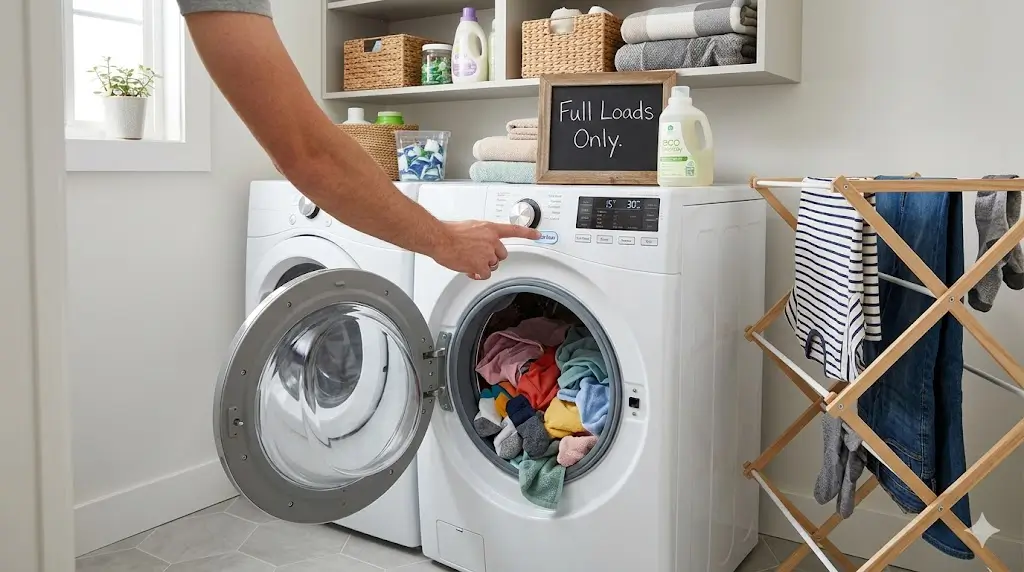
- Washing Clothes in Hot Water: 90% of the energy used by a washing machine goes toward heating the water. Modern detergents are designed to work perfectly in cold water. Statistic: Switching to cold water can save up to $60 a year.
Long-Term Sustainability & Growth
Once you successfully figure out how to save money on electric bill expenses, the secret to true wealth is what you do with the difference.
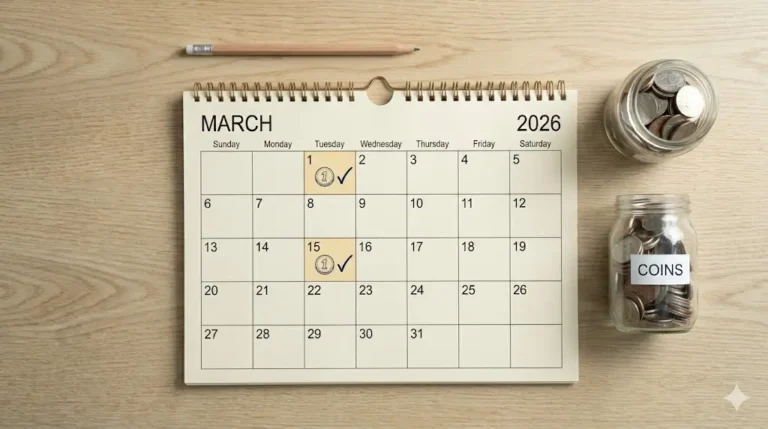
- Reinvestment Strategy: Set up an automatic bank transfer on the 1st of every month. If you lowered your bill by $50, automatically transfer $50 from your checking to an investment account or a dedicated business account.
- Future-Proofing: As you build your online earnings, reinvest a portion back into your home. Upgrade to Energy Star appliances or add attic insulation. This creates a compounding loop of lower overhead and higher disposable income.
Conclusion
Learning to save money on electric bill costs isn’t just about being frugal; it is a strategic maneuver to increase your personal cash flow. By slaying energy vampires, adjusting your climate control, and shifting your usage to off-peak hours, you are essentially generating tax-free capital every single month. Treat your household overhead exactly like a business, and use those freed-up funds to fuel your investments and online side hustles.
Ready to start your journey to lower bills and higher income? Drop your biggest utility-saving question in the comments below!
- Subscribe for weekly money-making and money-saving strategies.
- Share this post with a friend who works from home.
- Download our Free “Household Overhead Audit” Checklist to start tracking today!
Frequently Asked Questions (FAQs)
1. How much money can I realistically make (save) by lowering my electric bill?
Depending on your starting usage, most households can realistically cut their electric bill by 15% to 25%. For an average $150/month bill, this translates to $22 to $37 a month, or up to $450 a year in pure savings.
2. Do I need prior experience or technical skills to do this?
No. 90% of electric savings come from simple behavioral changes—like turning off lights, washing in cold water, and adjusting the thermostat—that require zero technical experience.
3. What is the initial investment required?
You can start for $0. If you choose to optimize further, a pack of LED bulbs ($15) and a couple of smart power strips ($25) will pay for themselves in energy savings within 3 to 4 months.
4. How long until I see results from these changes?
You will see a difference on your very next billing cycle. Most utility companies process bills every 30 days, making this one of the fastest ways to improve your personal cash flow.
5. Is this method still working in 2026?
Absolutely. With global energy prices fluctuating and remote work becoming standard, optimizing your home energy usage is more critical—and profitable—than ever.
6. What are the risks involved?
There are virtually no risks. The only potential downside is a slight adjustment period to a home that is a degree or two warmer in the summer or cooler in the winter, which most people adapt to within days.
Your Feedback Informs Our Service
There are no reviews yet. Be the first one to write one.